RetroSound spotlights Roland SR-JV80-04 vintage synth expansion board
RetroSound’s look at the SR-JV80-04 shows why this discontinued card still matters: it loads Minimoog, Prophet-5, and Oberheim color into Roland JV and JD racks.

RetroSound’s spotlight on the Roland SR-JV80-04 lands in the sweet spot where vintage credibility meets real-world rack use. This is not a novelty card for collectors to admire in a drawer, it is Roland’s own “definitive collection of vintage synth sounds,” built for JV and JD owners who still want classic oscillator DNA sitting inside a workstation-era rig.
Why the SR-JV80-04 still earns rack space
The first thing that matters here is that Roland has already done the hard part for you. The SR-JV80-04 is a discontinued board, and its sound set reaches straight into the families people still chase by name: Minimoog, Oberheim 2-Voice, Sequential Prophet 5, and Roland’s own classics. Roland’s owner’s manual says the board contains 255 waves, which tells you exactly what kind of expansion this is, a broad palette rather than one-lane imitation.
That breadth is why the board still lands differently from a lot of other vintage add-ons. It gives you a working library of classic timbres, from thick mono lines to synth brass, pads, and other studio staples, without forcing you to rebuild a vintage setup module by module. If you already own a JV or JD box, the SR-JV80-04 is one of the few expansion boards that still feels like it changes the personality of the instrument instead of merely widening the menu.
RetroSound’s own background helps explain why this kind of board gets attention. The project has been active since 2007, and Marko Ettlich says he started it for sound design in 1998. That matters because this is the kind of channel that understands why a single expansion card can be more useful than another round of generic “vintage-inspired” software talk.
Where it fits in the Roland ecosystem
The practical case for the SR-JV80-04 starts with compatibility. Roland says the board was designed for the JV-80, JV-880, JV-90, JV-1000, JV-1080, JD-990, and XP-50 and XP-80. In other words, this is not a niche accessory for one flagship, it is part of the broader SR-JV80 ecosystem that defined Roland’s expansion strategy across multiple instruments.
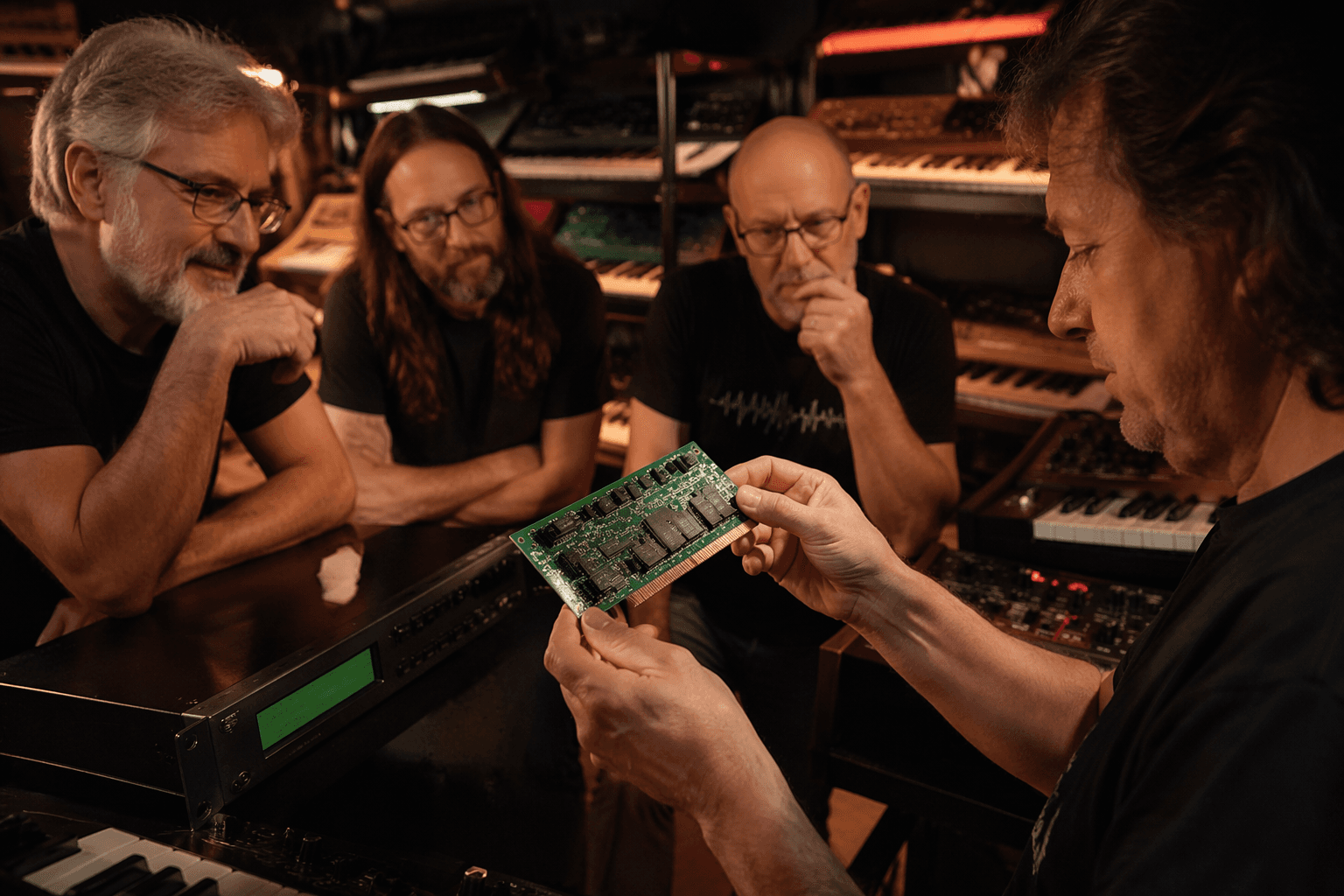
That ecosystem is where the board becomes a smart buy rather than just a collector’s object. Roland’s JV-2080 features page lists eight expansion board slots, which makes it the obvious heavyweight host if you want to stack SR-JV80 cards and build a deep rack around them. The JV-1010 is the opposite kind of machine, compact and limited to one expansion slot, but that one slot still gives access to the SR-JV80 library. For a lot of players, that makes the JV-1010 a tidy way to keep one prized board in rotation without dedicating half a rack to it.
The JD-990 sits in its own category. Roland says it can use SR-JV80 boards, but patches have to be loaded into memory before use. That extra step is worth knowing before you buy, because it changes the experience from plug-and-play expansion to something a little more hands-on. If you want instant access and less menu friction, the JV hosts are the cleaner fit.
What it gives you sonically
The SR-JV80-04 is interesting because it is not trying to be a museum piece. The board’s wave set leans on the names people recognize immediately, Minimoog, Oberheim 2-Voice, Sequential Prophet 5, and classic Roland synths, but the value is in how those ingredients show up inside a Roland workstation voice structure. The result is the kind of card that can cover bread-and-butter vintage color without asking you to set up a whole studio around a single flagship synth.
That is why later demos keep circling back to it. One user demo says the SR-JV80-04 works with Roland JV, Super JV, and some XV series modules. Another demo notes that it can be loaded into a JV-2080 slot. Separate demo videos have gone further, playing through all 255 patches or comparing the board with the JV-880 and XV-5080. That kind of afterlife says a lot: people are not just remembering the board, they are still auditioning it against other Roland hardware because the sounds remain useful.
Buying it secondhand without romanticizing it
Because the SR-JV80-04 is discontinued, the used market is the only market that matters now. That immediately turns the hunt into a mix of availability, price, and whether the seller actually has the right board listed, not just some vague “Roland vintage card” description. Scarcity is part of the appeal, but it is also the reason prices can drift upward when the right listing appears.
When you are evaluating one, the compatibility list is the first filter, not the last. A board can be desirable and still be useless to your setup if your host does not support it the way you expect. The cleanest matches are the JV-2080 if you want expansion-room to spare, the JV-1010 if you want one focused slot, and the JD-990 if you are comfortable with memory loading before use. If you are buying for a specific rack, that official host list matters more than whatever a demo video happened to run it in.
Roland’s support documents help here in a practical way because they include a patch listing, waveform listing, and compatibility guide. That means you can compare what is being offered against what the board actually contains instead of guessing from a seller’s adjectives. For a card built around 255 waves and a concentrated set of vintage references, that kind of paperwork is part of the utility.
The board that still makes sense
The SR-JV80-04 keeps showing up in demos, comparisons, and patch walkthroughs for the same reason it still makes sense in a JV or JD rack. It is discontinued, it is rooted in recognizable vintage synth families, and it fits hardware that many players still use for real work. That combination is what separates a board with pedigree from one that survives only as nostalgia, and this one still earns its place the hard way, by continuing to solve the vintage-sound problem inside Roland’s own ecosystem.
This article was produced by Prism’s automated news system from verified source data, official records, and press releases, then run through automated quality and moderation checks before publishing. The system is built and supervised by the people who set the standards it runs under. Read our full AI policy.
Did this article answer your question?