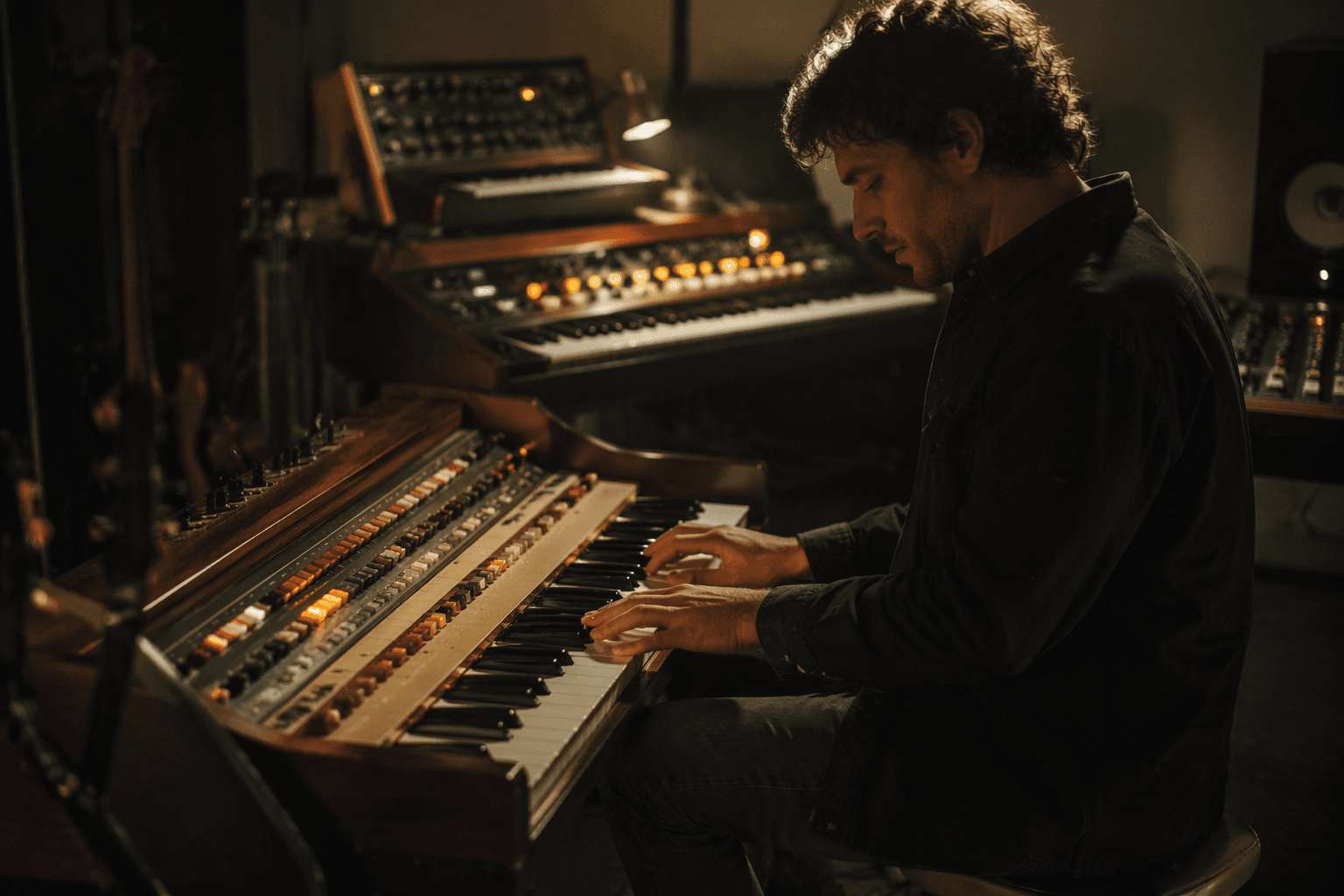
Rick Smith Shows Why the ARP 2600 Still Matters
Rick Smith’s 2600 demo shows why semi-modular flow still beats menu-diving for feel, surprise, and real-world sound design.
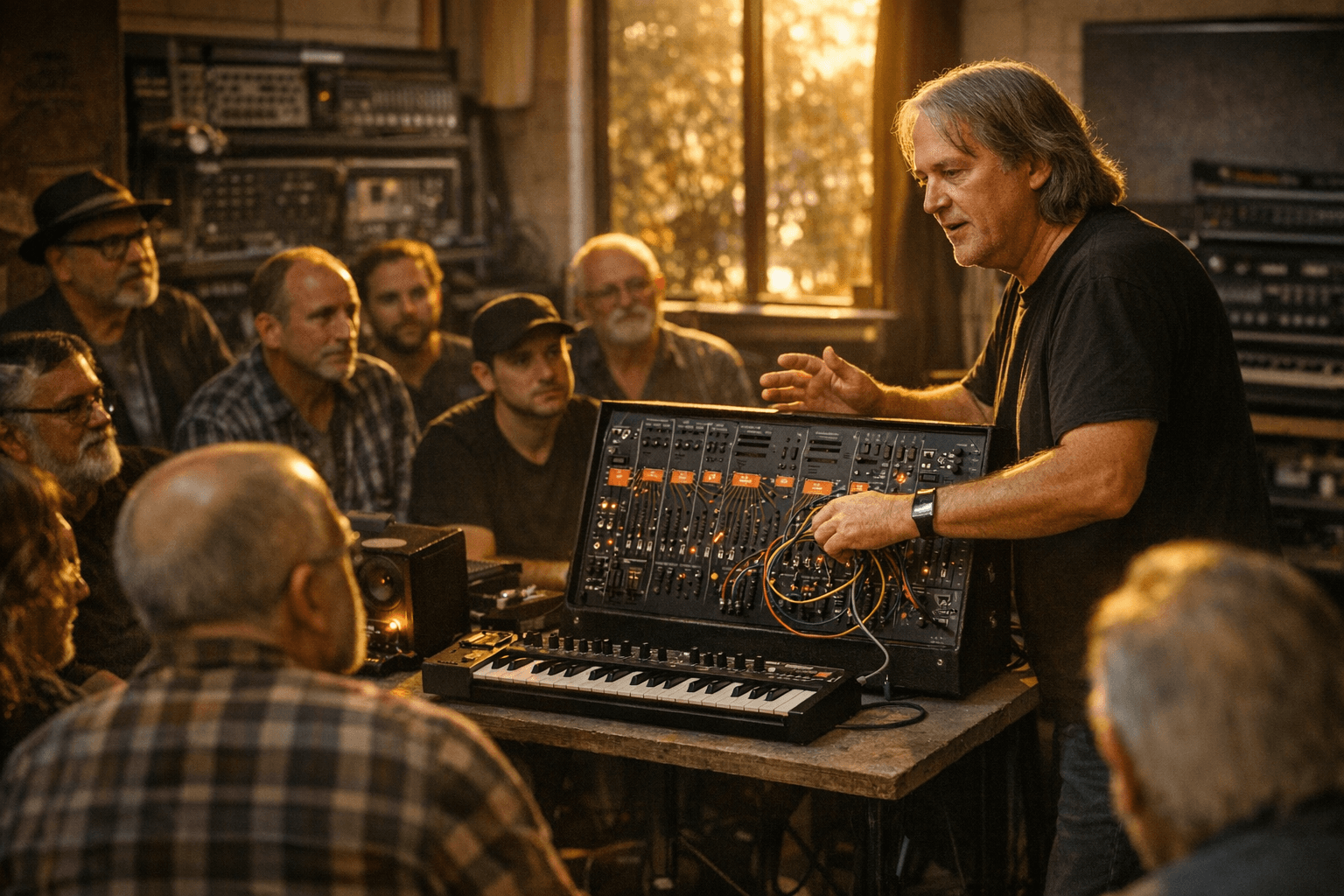
Rick Smith’s case for the 2600
Rick Smith does not treat the ARP 2600 like a trophy. In the video hosted by Jabril 4 Real and surfaced through Sonicstate, the Underworld cofounder demonstrates the synth, explains the sounds that “turn him on,” and walks through its internal architecture in a way that feels built for players, not collectors. That is exactly why the piece lands so well with vintage synth readers: it shows a legendary machine working in the hands of someone who has spent decades making electronic music matter.
The setting matters too. The channel collecting Underworld-related rarities and oddities gives the clip an archival, fan-driven feel rather than a corporate promo sheen. Rick Smith is speaking as a working musician from a band formed in Cardiff, Wales in 1987, not as someone reciting lore from a museum placard. Underworld’s 1994 breakthrough, *dubnobasswithmyheadman*, still anchors that authority, so when Smith leans into the 2600, it reads as a living endorsement from one of electronic music’s most durable acts.
Why this instrument still feels alive
The ARP 2600 earned its reputation early for a reason. Introduced in 1971, sold originally for $2,600, and widely described as the first semi-modular synthesizer, it was designed as a more accessible alternative to large modular systems. It went through nine revisions during its 1971 to 1981 lifespan, which tells you how much the instrument was refined without losing the core idea that made it compelling in the first place.
That balance is the whole story. The Alan R. Pearlman Foundation describes the 2600 as striking a balance of clarity, flexibility, and sound, and Rick Smith’s demo makes that description feel practical instead of academic. Semi-modular design gives you enough structure to make music quickly, but enough patch freedom to make every decision feel personal. That is why the 2600 still invites experimentation without demanding a full rack’s worth of commitment.
The 2600’s cultural proof is already written into synth history
The reason this demo matters now is that the 2600 has never relied on nostalgia alone. Ben Burtt used it to create the voice of R2-D2 in *Star Wars*, which means the instrument is part of one of the most recognizable sound-design stories in modern film. It also has long-standing associations with Stevie Wonder, Herbie Hancock, Edgar Winter, and Pete Townshend, names that helped define what analog synthesis could do in popular music.
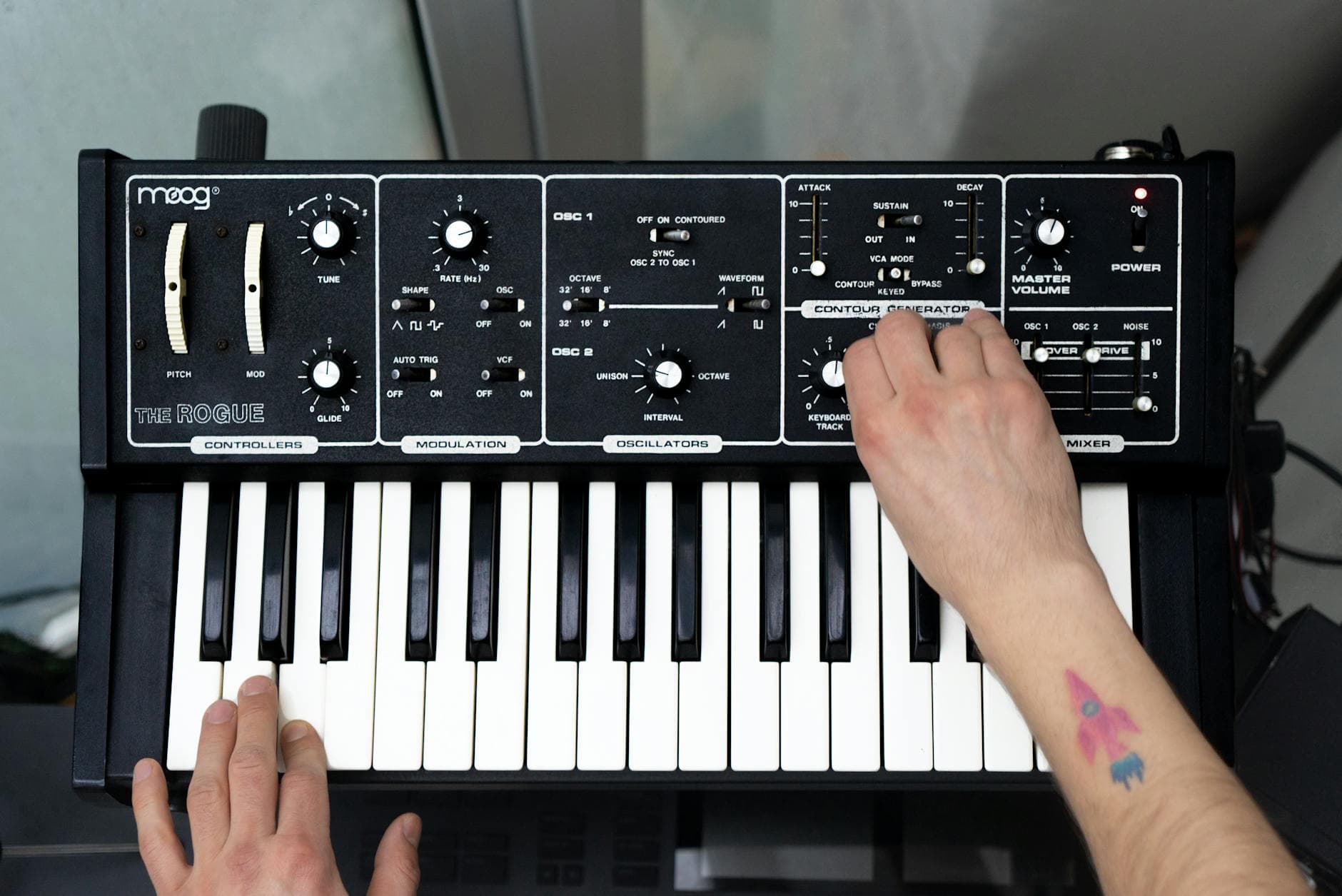
That legacy was reinforced again in 2020, when Korg reissued the ARP 2600 and Reverb marked the occasion with a documentary on the instrument. That kind of renewed attention is important because it shows the 2600 still occupies a rare position: classic enough to be culturally fixed, but active enough to keep generating new demonstrations, new clones, and new debates about what a true analog panel really gives you. Rick Smith’s video sits squarely in that tradition.
What owners, clone buyers, and plugin users can take from the video
What makes this clip valuable is not just that Rick Smith likes the 2600. It is that he shows how he thinks through the instrument, how the internal architecture shapes the sound, and why the patching logic itself becomes part of the performance. That is the lesson to carry into any modern setup, whether the panel in front of you is vintage, newly built, or running inside a screen.
- If you own a real 2600, treat the panel as a workflow map, not just a set of knobs. Smith’s approach reinforces that the sound comes from understanding the signal path as much as from twisting a filter or envelope control.
- If you are shopping for a clone, the key question is not only whether it looks authentic. It is whether it preserves the 2600’s semi-modular balance of structure and freedom, because that is where the instrument’s identity lives.
- If you rely on plugins, the demo is a reminder that modelled tone is only part of the story. Modern software can get close to a familiar color, but the 2600’s appeal also lives in the tactile logic of patching, the speed of rerouting, and the way the physical layout pushes you toward different choices.
That is why the clip resonates beyond collectors and historians. Rick Smith is showing an instrument that still behaves like a creative partner, and that is harder to fake than a waveform. The ARP 2600 remains one of the clearest bridges between vintage synth culture and modern sound design, because it still rewards hands-on decisions with immediate, musical results.
This article was produced by Prism’s automated news system from verified source data, official records, and press releases, then run through automated quality and moderation checks before publishing. The system is built and supervised by the people who set the standards it runs under. Read our full AI policy.
Did this article answer your question?