Roland Juno-106 and MKS-80 brochure set surfaces for collectors
A clean Roland paper cache has surfaced with Juno-106 brochures in English and German, plus MKS-80 and 1984 catalog material that helps verify the originals.
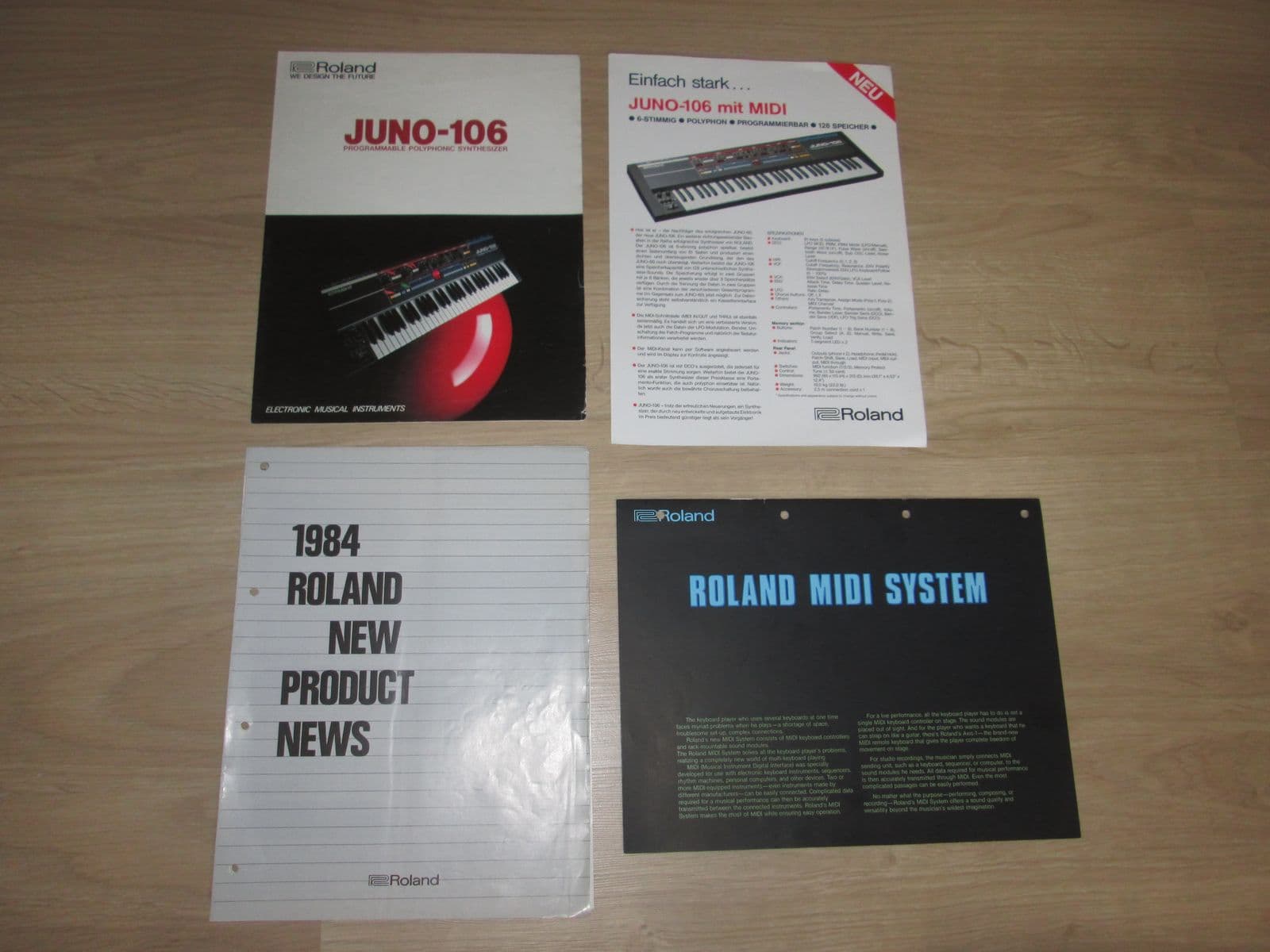
Paper can do something a thumbnail photo cannot: it can pin down the exact Roland era a synth came from. The June 1 listing bundled an English Juno-106 brochure, a German Juno-106 brochure, a Roland Midi-System catalog for the MKS-80, and a 1984 New Product News catalog, giving owners and restorers a compact reference set for model-year accuracy, feature sets, and the way Roland chose to present these instruments when they were new.
That matters most with the Juno-106, because Roland says the synth arrived in 1984, carried a $1,195 original retail price, and shipped as a 61-key, six-voice programmable polyphonic synthesizer with MIDI and 128 patch memories. Roland’s own heritage material places it as the third and most advanced model in the affordable JUNO line, following the JUNO-6 and JUNO-60. For anyone checking a restored unit, a seller’s photos and a service receipt are useful; an original brochure is better, because it preserves the period language, the feature order, and the exact product identity Roland was pushing at launch.
The condition notes make the package even more practical. The Juno-106 brochures were described as very good, with no highlighting or underlining, while the Midi-System catalog was listed in very good condition with four punched holes. Other catalog pages were noted as good to very good, with binder holes and separated pages. That is not museum-perfect, but it is the sort of honest wear collectors expect from original literature that was actually filed, handled, and used.
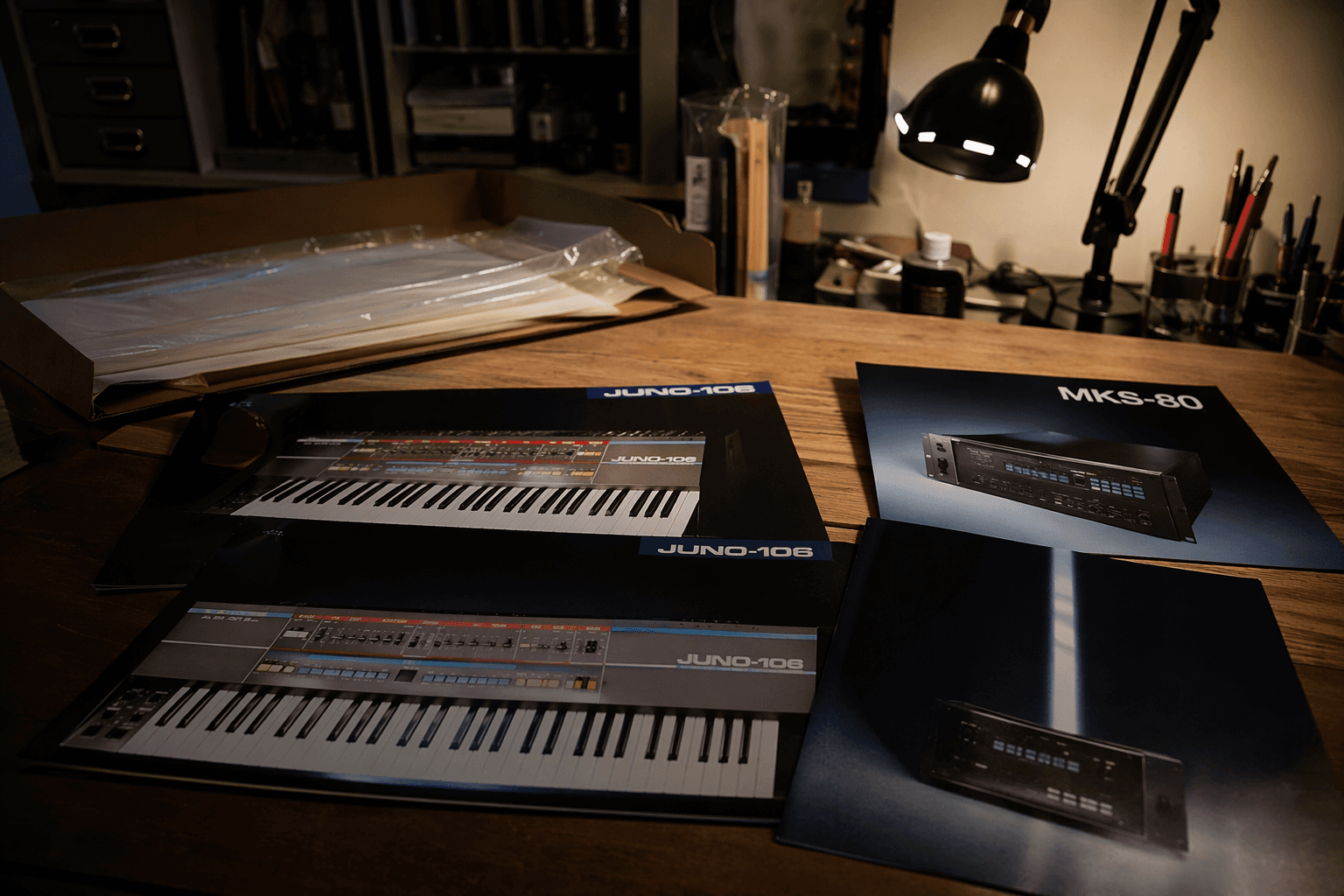
The MKS-80 material gives the set a second anchor. Vintage Synth Explorer describes the MKS-80 Super Jupiter as a rack-mount, eight-voice analog synthesizer made from 1984 to 1987, using analog VCOs rather than DCOs. In practice, that makes period documentation especially useful, because it helps separate the MKS-80 from later Roland modules and keeps the line clear between factory marketing and the assumptions that creep in decades later. The 1984 New Product News catalog sharpens that picture further, placing the Juno-106 in a broader Roland lineup that also included the Jupiter-8, Jupiter-6, Juno-60, Juno-6, JX-3P, SH-101, MC-202, and MIDI gear.
The German-language Juno-106 brochure is the small detail that makes the whole set feel complete. It points to Roland’s international footprint at the exact moment the company was folding analog synths into the new MIDI era, and it turns a stack of old paper into something more useful than memorabilia: a working record of how two of Roland’s defining 1984 instruments were introduced, named, priced, and remembered.
This article was produced by Prism’s automated news system from verified source data, official records, and press releases, then run through automated quality and moderation checks before publishing. The system is built and supervised by the people who set the standards it runs under. Read our full AI policy.
Know something we missed? Have a correction or additional information?
Submit a Tip