SwarmaDie 2 emulates Trent Reznor’s Swarmatron for macOS, Windows, iOS
SwarmaDie 2 brings the Swarmatron’s Reznor-Ross drone smear to Mac, Windows, and iOS, with eight detuned oscillators and ribbon-style control.
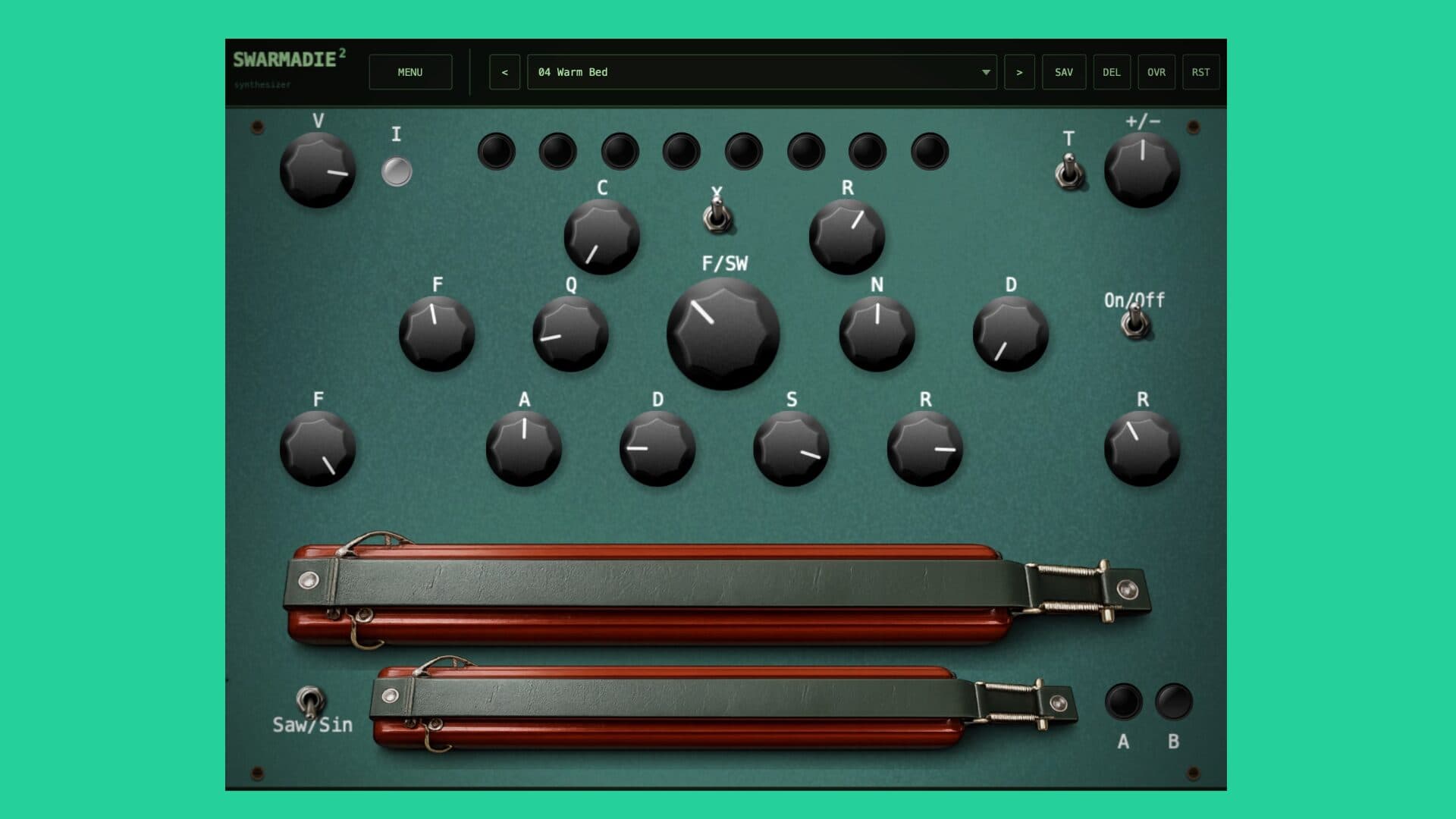
The Swarmatron became shorthand for the Trent Reznor and Atticus Ross drone sound because it did one very specific thing better than almost anything else: it turned a cluster of close-tuned analog oscillators into a living, breathing cloud. 34Audiovisuals’ SwarmaDie 2 chases that exact behavior in software, and now it runs on macOS, Windows, and iOS. For anyone who has wanted that ominous, shimmering, cinematic swarm without hunting down boutique hardware, this is the new entry point worth paying attention to.
Why the original Swarmatron still matters
The original Swarmatron is not famous because it is versatile. It is famous because it is unmistakable. Built around eight analog oscillators tuned close together, it uses ribbon-based control to spread those voices apart until the sound starts to beat, pulse, and hover like a storm front. That is the architecture behind the evolving drones and widescreen textures people associate with The Social Network, and it is why the instrument occupies such a strange, revered corner of synth history.
That matters when a plugin claims to emulate it. If the software only offers a vague “drone synth” vibe, it misses the point. The Swarmatron’s appeal is in the way it behaves under your fingers, how the pitch cluster moves as a single organism, and how quickly it goes from tight unison to a wide, unstable swarm. That physical, performative aspect is what SwarmaDie 2 is trying to preserve.
What SwarmaDie 2 keeps from the hardware
SwarmaDie 2 leans hard into the original’s core architecture. According to the available details, it uses eight detuned oscillators with independent analog drift, which is exactly the kind of detail that keeps a swarm from sounding sterile. The drift is not a decorative extra here, it is the point. It is what gives the stack that slightly imperfect motion that makes the sound feel alive instead of looped.
The other crucial piece is the Band control, which moves the sound from tight unison to a broad swarm. That simple control scheme is the whole game with this family of sounds. If you know the original hardware, you know the thrill comes from opening that band just enough to get the beating and shimmer, then pushing farther until the texture blooms into something huge and unsettling.
Ribbon-style performance is part of the package too, and that is a big deal. The Swarmatron’s identity is tied to the way it invites gestural playing rather than keyboard-piano habits, and SwarmaDie 2 keeps that logic intact. Instead of treating it like a standard polysynth, it behaves more like a performance surface for dragging tone clusters around in real time.
Why the platform support actually matters
The jump to macOS, Windows, and iOS makes this release more than a novelty for hardware nostalgists. It means the Swarmatron-style sound is no longer locked to a rare physical instrument or a single studio setup. You can sketch the idea in a DAW, refine it on a laptop, or push it around on an iPad without changing the basic character of the instrument.
That portability is not a small thing for this kind of sound. Drone work and score-ready textures often live in the margins of a session, where you need to try something fast, hear how it sits under a scene, and move on. SwarmaDie 2’s DAW integration is built for that workflow, while its 15-day functional demo lowers the barrier even further. You can actually spend time with the behavior of the instrument instead of deciding whether to commit after one quick audition.
What it is good for, and what it is not
This is not the plugin for chasing polite bread-and-butter synthesis. The sound is aimed squarely at cinematic scoring, ambient drone work, and sound design that needs to fill space without going static. That is the right lane for a Swarmatron emulation, because the original hardware was never about conventional lead lines or tidy chord work. It was about tension, motion, and the sensation that the note is alive in the room.
For practical use, the most useful approach is also the simplest:
- Start with the Band control tight, then open it gradually until the beating texture appears.
- Use ribbon-style movement for long swells rather than short, keyboard-like phrases.
- Treat the eight oscillators as a single organism, not eight separate voices.
- Lean into the instability created by independent analog drift instead of trying to smooth it out.
That kind of workflow is what makes the Swarmatron lineage so compelling in the first place. You are not buying a hundred sounds in one box. You are buying one very particular motion, and that motion is what gives a cue its emotional weight.
A credible way into a cult sound
The real question for vintage-synth people is whether SwarmaDie 2 feels like a serious shortcut or just another homage. Based on the feature set, it is the former. Eight detuned oscillators, independent analog drift, the Band control, ribbon-style performance, DAW integration, and support across Mac, Windows, and iOS all point toward a tool that understands the assignment: preserve the behavior of a cult instrument, then make it available to people who will actually use it.
That is what makes this release interesting. The Swarmatron’s reputation was built on rarity and a very specific sonic fingerprint, but SwarmaDie 2 turns that fingerprint into something you can reach for inside a modern setup. For anyone chasing the Reznor-Ross swarm, that is not just convenient. It is the first credible, affordable-feeling way to get close to the machine that defined the sound in the first place.
This article was produced by Prism’s automated news system from verified source data, official records, and press releases, then run through automated quality and moderation checks before publishing. The system is built and supervised by the people who set the standards it runs under. Read our full AI policy.
Did this article answer your question?