SynTesla MegaHertz Brings Hans Zimmer’s Giorgio III Dream to Customers
Hans Zimmer’s Giorgio III moved from myth to market as SynTesla showed the first commercial 5U system built from the monster rig.
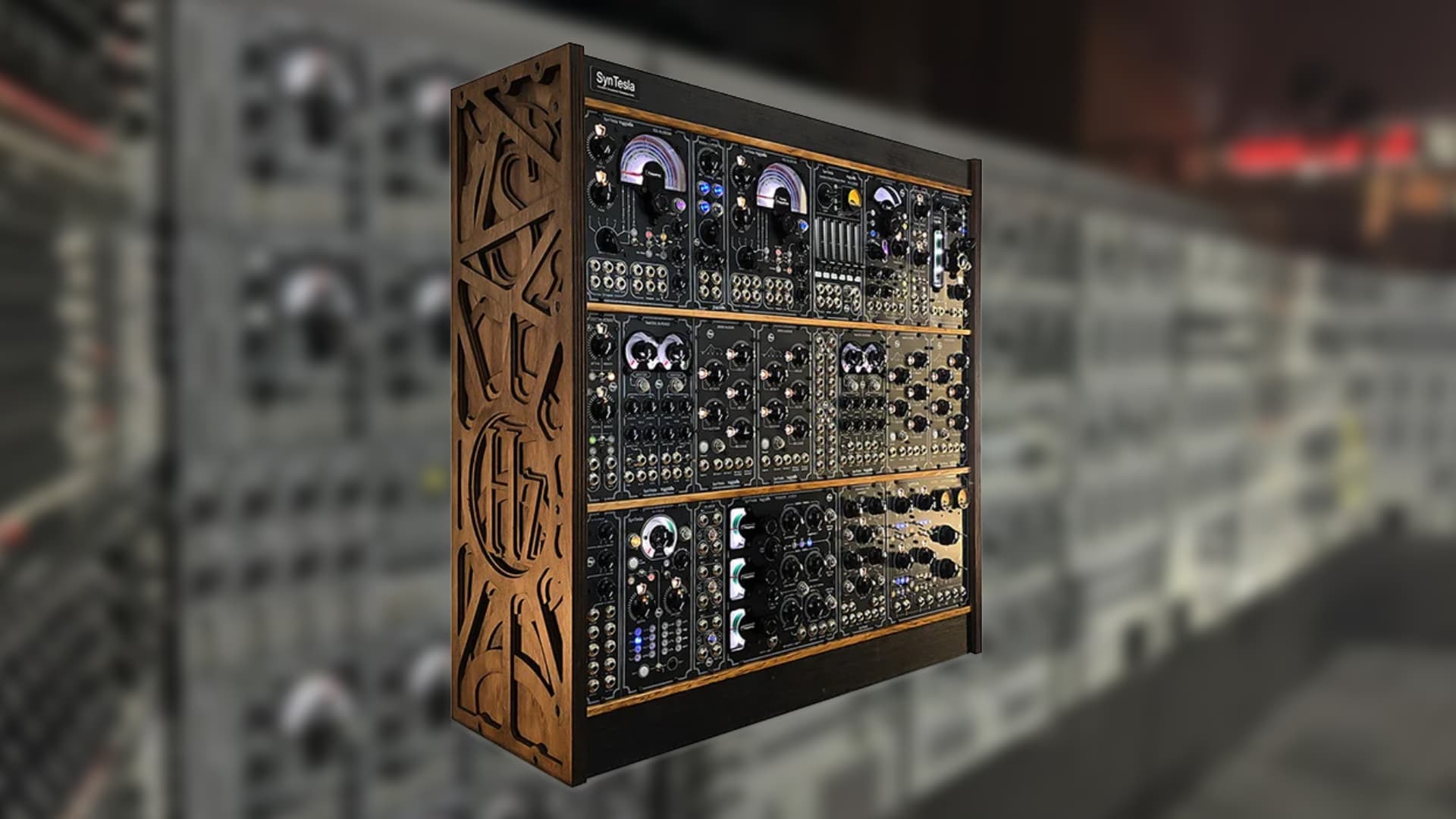
Hans Zimmer concepts almost never become purchasable hardware, which is why SynTesla’s MegaHertz landed with real weight at SynthFest France 2026. The new 5U modular system was the first commercial 5U synthesizer based on Zimmer’s Giorgio III monster rig, turning a studio legend into something customers could actually evaluate, order, and park in a very large rack.
SynTesla showed MegaHertz in person at the festival through developers Pierre Jean Tardiveau and Yves Usson, and the machine made its intent clear immediately: this was not a scaled-down tribute or a boutique naming exercise. It was a handcrafted French large-format system built around a 42 MU cabinet, arranged as three 5U sections of 14 MU each, with solid oak side panels to match the scale of the idea. For vintage modular readers, that alone puts the instrument in rare company. It is aimed squarely at people who want the discipline, bulk, and workflow of Moog-format modulars, not at anyone looking for a polite desktop synthesizer.
Inside, SynTesla said MegaHertz contained 20 newly developed modules. The core voice path centered on two analog VCOs offering classic waveforms, PWM, through-zero phase modulation, through-zero FM, soft sync, and hard sync. That combination signals a design that is not merely mimicking old-school modular syntax, but stretching it in the directions collectors and sound designers tend to prize most: unstable, harmonically rich, and physically hands-on. A wavefolder pushed it further toward West Coast-style timbres, while the constant-output-level mixer and the filter section, built around a diode-ladder filter and a separate 6-24 dB low-pass filter, gave the system enough classic weight to keep the lineage obvious.
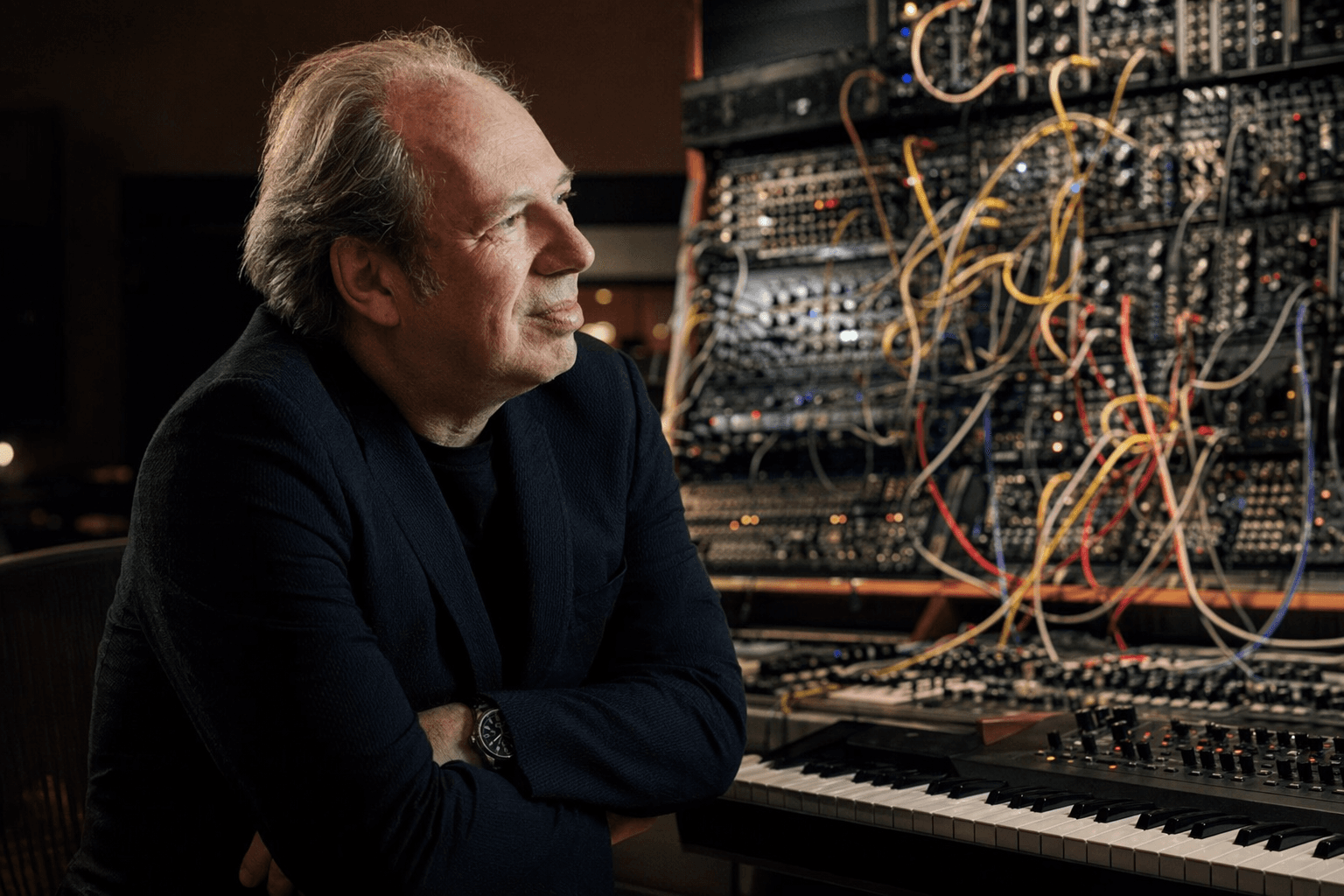
The larger story is that MegaHertz looks like the first concrete product to emerge from the Zimmer collaboration rather than a one-off artist setup. SynTesla has already mapped out follow-up systems called GigaHertz and TeraHertz, which makes the project read less like a commemorative showpiece and more like the beginning of a family. That matters because it gives collectors and modular historians something unusual to assess: not just prestige gear theater, but a serious design lineage with a real purchase path attached.
For vintage synth readers, the appeal is plain. Giorgio III was mythology. MegaHertz is the moment that mythology became a customer-facing instrument, and the rarity of that transformation is the whole story.
This article was produced by Prism’s automated news system from verified source data, official records, and press releases, then run through automated quality and moderation checks before publishing. The system is built and supervised by the people who set the standards it runs under. Read our full AI policy.
Did this article answer your question?