SynthStamp Brings ARP 2600 and Casio SK-1 Emulations to iOS and macOS
SynthStamp's $4.99 iOS app is the first ARP 2600 semi-modular emulation to land on iPhone; its SK-1 model pairs 4-voice polyphony with a circuit-bending section built for lo-fi mayhem.
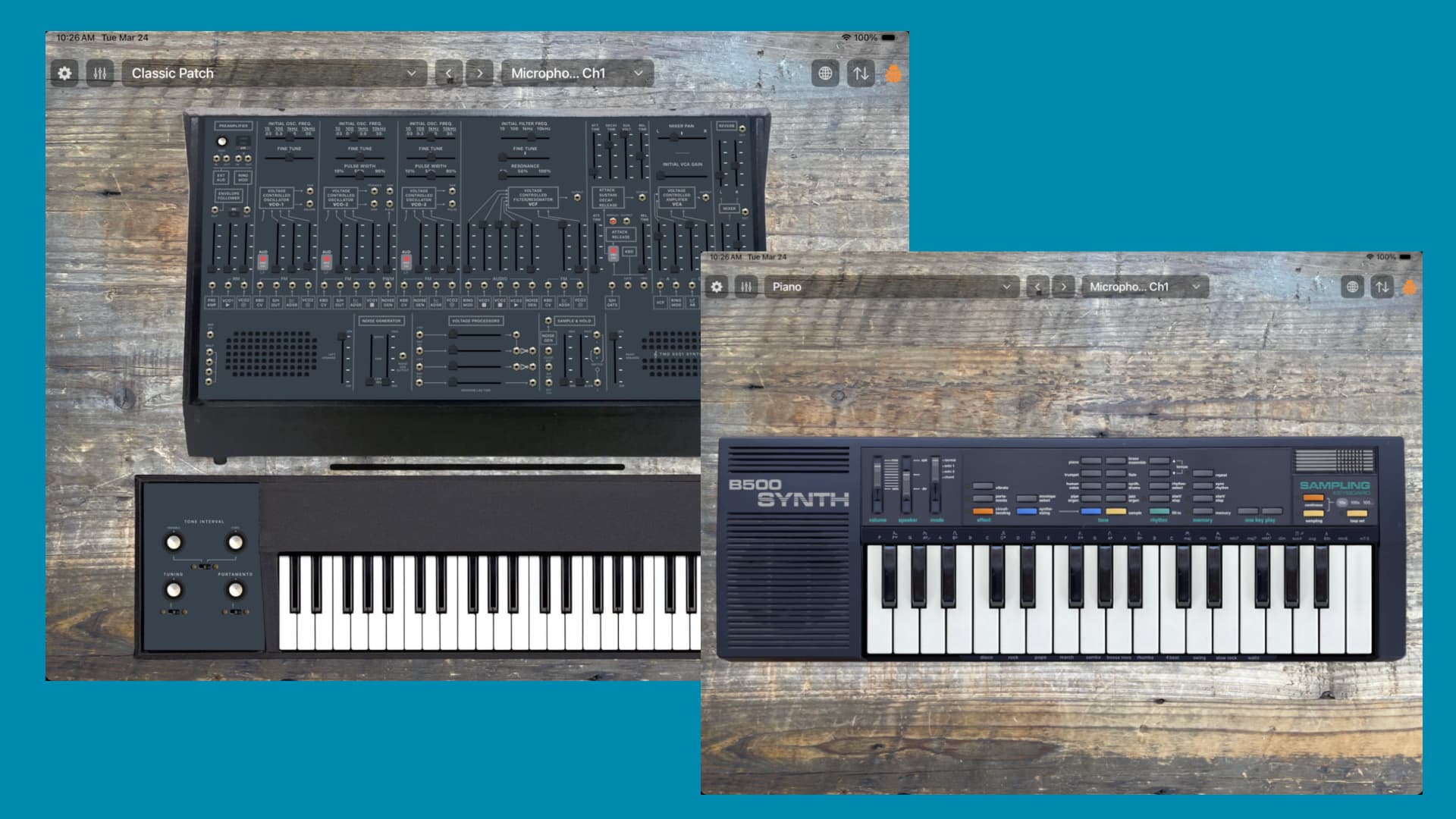
The ARP 2600 has lived comfortably on desktop plugin rosters for years. A convincing semi-modular emulation native to iOS has been another matter entirely. The Musicology Group, the studio behind AmpStamp, changed that on April 4, releasing SynthStamp at $4.99: a 38.58 MB download that runs on iPhone, iPad, and Mac and ships with two landmark instrument models in version 0.9.
The first instrument is the 5001, the app's ARP 2600 model and, by most accounts, a genuine first for iOS. The original 2600, introduced in 1971 at a retail price of $2,600 and now well into five-figure territory on the used market, is a semimodular monophonic synth: core signal paths internally wired, with patch points that let you override and extend routing with cables. SynthStamp recreates that architecture through tap-and-drag virtual cables on the touchscreen, with a VCF the developers characterize as having a "snappy, milky quality." That description targets the right thing. The 2600 filter's fast envelope tracking and articulate resonance are what make it a lead synth rather than just a noise box, and the central question for anyone coming from the hardware is whether glass can actually convey that snap. In version 0.9, early testers across iOS communities and YouTube are flagging interface sluggishness and performance hiccups. The character is present in the signal path; the responsiveness is still being dialed in.
The 3500 Sampling Keyboard is the SK-1 half: a circuit-bendable ROMpler from the mid-1980s, rebuilt with 4-voice polyphony, multi-channel note memory, a stereo sampler, and built-in sampling via the app's stereo audio input. The B500 circuit-bending section lets you draw virtual cables into the SK-1 engine the way hardware hackers shorted circuit board traces with a pencil or bridged contacts with a finger. The SK-1's sonic identity is rooted in its grain: 8-bit aliasing, compressed bandwidth, sample playback that sounds broken in precisely the right way. The circuit-bending section is an explicit commitment to preserving that grit rather than polishing it away.
Two patches to try in version 0.9: on the 5001, open a blank patch, drop the filter cutoff, set a short attack and tight decay, and draw a cable from the LFO output to the filter CV input. That is the textbook ARP lead topology, and the tap-and-drag interface makes it achievable in well under five minutes. On the 3500, record a short drum hit through the stereo input, then route the playback through the B500 circuit-bend section to introduce aliasing and pitch drift. Both patches save with a single tap, and SynthStamp's cross-device preset export pushes them to Mac or iPad immediately.
What 0.9 does not yet include: no sequencer, and no additional instrument models beyond the 5001 and 3500. The Musicology Group is treating the release as a feedback-driven beta, with 1.0 promised to add sequencing and further synth engines. Backing up presets before each incremental update is strongly advisable.
At $4.99 and just over 38 MB, SynthStamp is a remarkable entry point into ARP 2600 territory for a platform that, until Apple Silicon arrived, could not plausibly run this kind of modeled synthesis. Version 0.9 is rough at the edges, but it does something no iOS app has managed before: it puts a patchable ARP-style semi-modular in your pocket for the cost of a cup of coffee.
Know something we missed? Have a correction or additional information?
Submit a Tip