Unofficial OB-6 editor brings DAW automation to vintage synth workflows
Voidcontrol MIDI’s $40 OB-6 Unofficial Editor adds DAW automation, real-time sync and patch morphing to Oberheim’s 6-voice analog poly.
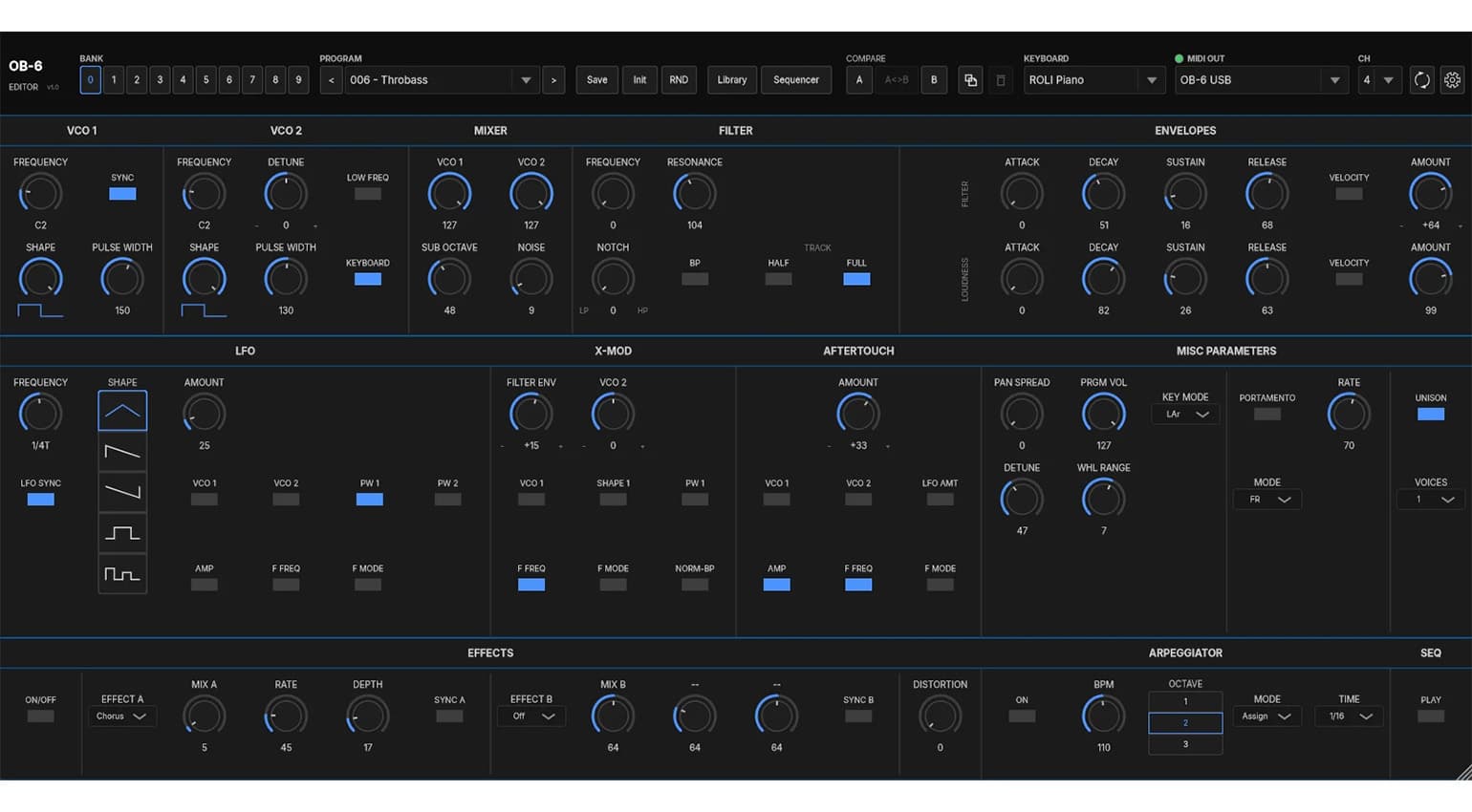
Voidcontrol MIDI’s OB-6 Unofficial Editor landed in Gearnews’s June 25 Synth Journal roundup as a very practical fix for a familiar hardware headache. The Windows VST3 plugin and standalone app gives OB-6 owners full parameter control, real-time auto sync and DAW automation, the sort of workflow glue that keeps a premium analog poly from feeling stranded outside the computer.
The editor is broader than a patch librarian. It adds a patch library, A/B snapshots with morphing, a polyphonic sequencer, plus init and randomize functions, and its product listing includes a manual sync button for first connection or recovery after an interruption. Voidcontrol MIDI lists the editor at $40, after an introductory $30 price ran through June 16, 2026. Dave of Voidcontrol MIDI has positioned the project as the kind of tool boutique hardware needs if it is going to stay comfortable in modern studio work.
The hardware gives the software plenty to justify. Sequential describes the OB-6 as a 6-voice analog poly synth and a once-in-a-lifetime collaboration between Dave Smith and Tom Oberheim, with a sound engine inspired by Tom Oberheim’s original SEM circuit. Retail listings add the day-to-day details owners actually deal with: 49 keys, 500 factory presets, 500 user presets and a 64-step polyphonic sequencer. That is a lot of instrument to manage from the front panel if the session is moving fast.

That is why this release lands as more than a convenience layer. Third-party editor builders are increasingly acting like caretakers for modern synth usability, the same way vintage fans keep older machines alive by sourcing parts, documenting quirks and building the tools the factory never bothered to finish. The OB-6 itself is not a museum piece, but once automation, recall and patch handling become this easy, the instrument stays in the daily workflow instead of drifting into the category of “great sound, awkward to use.” For players who care about Oberheim lineage and hands-on analog tone, that kind of support may matter just as much as clean keys and healthy pots.
This article was produced by Prism’s automated news system from verified source data, official records, and press releases, then run through automated quality and moderation checks before publishing. The system is built and supervised by the people who set the standards it runs under. Read our full AI policy.
Did this article answer your question?