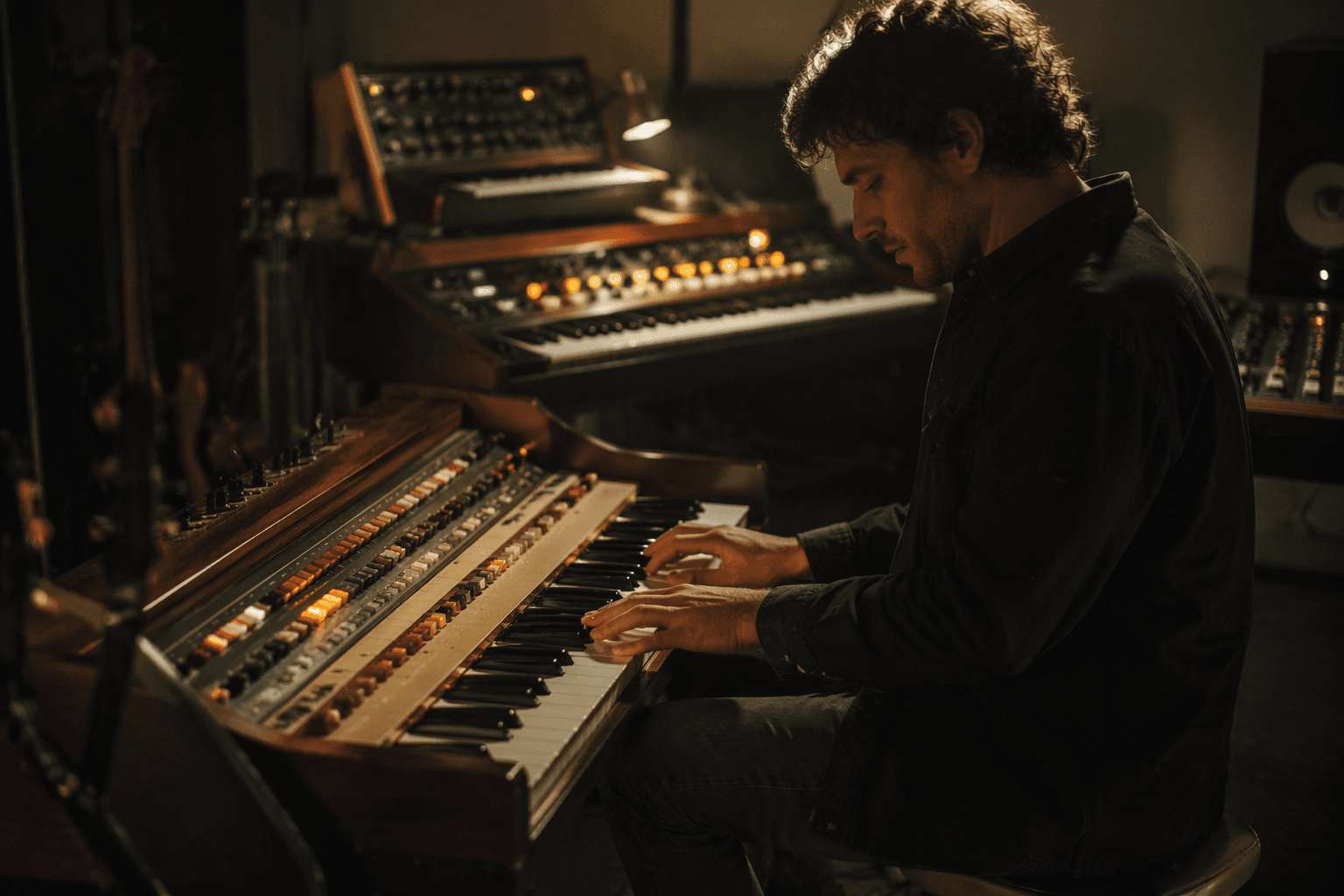
Why Yamaha’s CS-80 remains a landmark in analog synthesis
The CS-80 still sets the bar because touch, pressure, and ribbon control are built into the sound, not bolted on later.
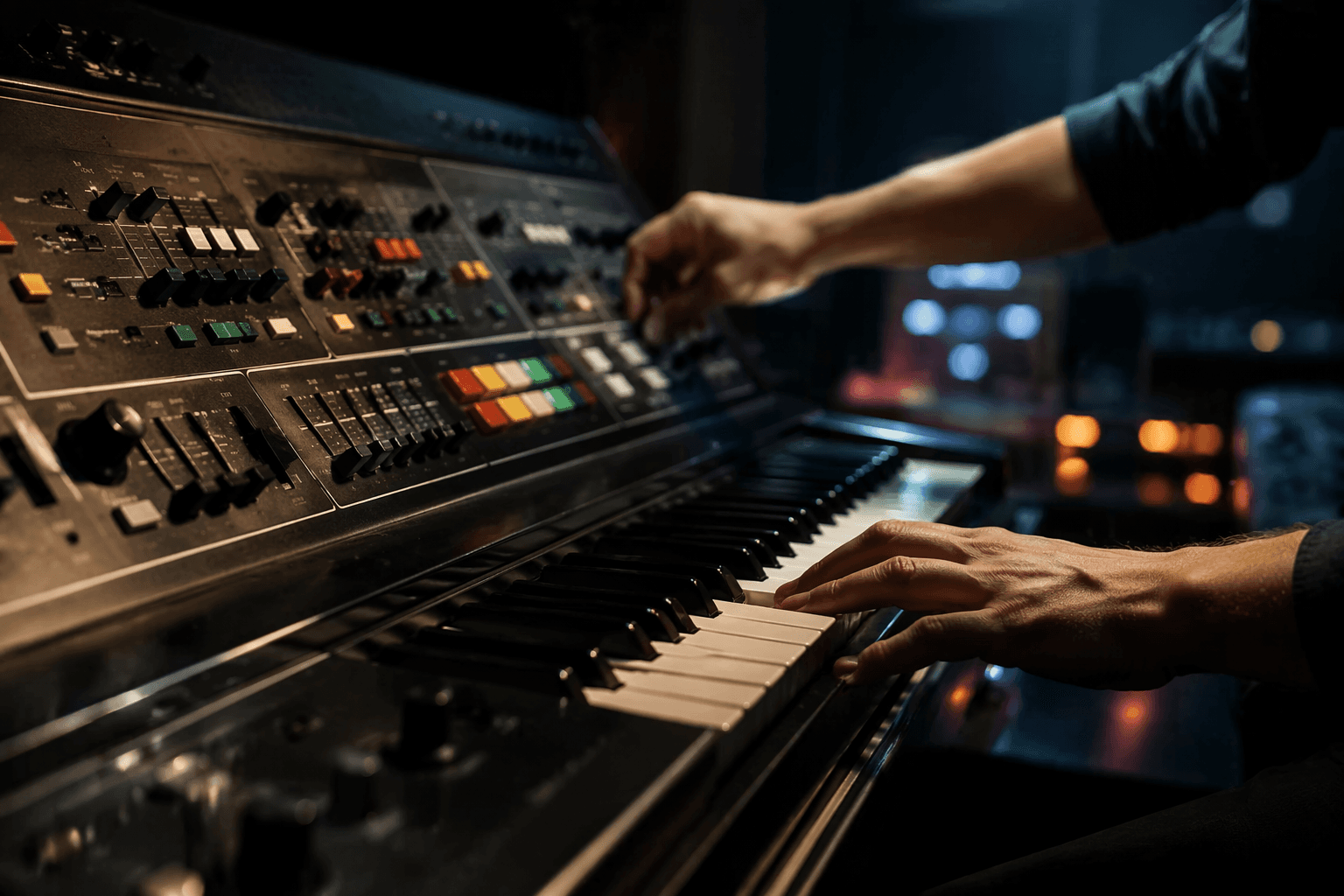
The CS-80 earns its reputation because it behaves like an instrument in your hands, not a preset machine on a stand. Yamaha built it as an 8-voice analog flagship with polyphonic aftertouch, a ribbon controller for smooth pitch bending, and front-panel controls that let you shape sounds while you play. That is why modern synths still get measured against it whenever the conversation turns to expressiveness, not just tone.
From GX1 ambition to a playable flagship
Yamaha did not invent the CS-80 in a vacuum. Its own history traces the CS line back to synthesis modules designed for the GX1 Electone organ, then carried into the SY-1 and SY-2 monophonic synths before becoming the CS family. The company’s chronology places the CS-50, CS-60, and CS-80 in 1977, and the historical material makes the bigger point plainly: this was full polyphony built in custom hardware, not on a general-purpose processor. Yamaha says the CS series used proprietary IG-series circuitry developed from earlier discrete modules, and that no microprocessors were used in the CS models, which makes the CS-80 a showcase for pre-CPU engineering rather than a nostalgia piece.
That lineage also explains why the CS-80 feels like a culmination instead of a one-off. The GX1-to-CS progression was about shrinking ambition without flattening the musical personality, and Yamaha’s own copy treats the CS-80 as the flagship expression of that idea. The earlier GX1 weighed 300 kilograms; the CS-80 still came in at roughly 100 kilograms, which is hardly light, but it is a serious reduction for a polyphonic instrument that retained the feel Yamaha was chasing from the start.
What the panel lets you do
The CS-80 is not special because it hides complexity. It is special because it exposes it. Yamaha’s display material describes two tone generators with 22 preset voices, mixable with the MIX sliders, while the upper-left panel opens to reveal four sets of small sliders used to pre-program voices so they are ready at the press of a button. That is a very different philosophy from later synths that buried everything in memory pages and menus. On the CS-80, the panel itself is part of the performance surface, so sound design happens in real time, in front of your fingers, where it belongs.
That immediacy matters because the instrument was built for players, not for admins. The patch architecture invites you to blend, balance, and revise on the fly, and the layout makes it easy to reach for a change while a phrase is still ringing out. Yamaha’s own framing of the instrument as a live-performance flagship is not marketing fluff here, because the hardware literally encourages interaction instead of recall.
Touch, pressure, and the ribbon controller
The real benchmark is the keyboard itself. Yamaha calls out the CS-80’s balanced velocity-sensitive keyboard and polyphonic aftertouch, which means the instrument responds not just to how hard you strike a note, but to the pressure you keep applying after the attack. That is the difference between a synth that merely plays what you ask and one that lets you lean into a note and make it bloom, wobble, or harden under your hands. The ribbon controller adds another layer, giving you a smooth way to bend pitch instead of relying only on wheels or switches.
This is why the CS-80 still defines expressive control for so many players. Later programmable polysynths solved convenience with patch memory, but the CS-80 solved a more musical problem: how to make a large analog poly breathe like a single responsive instrument. Yamaha’s chronology places it right before the microcomputer era took over polyphony, and that timing matters. The CS-80 stands at the point where hardware design still had to carry every expressive decision in circuits, springs, and key pressure, and that is exactly what gives it its authority.
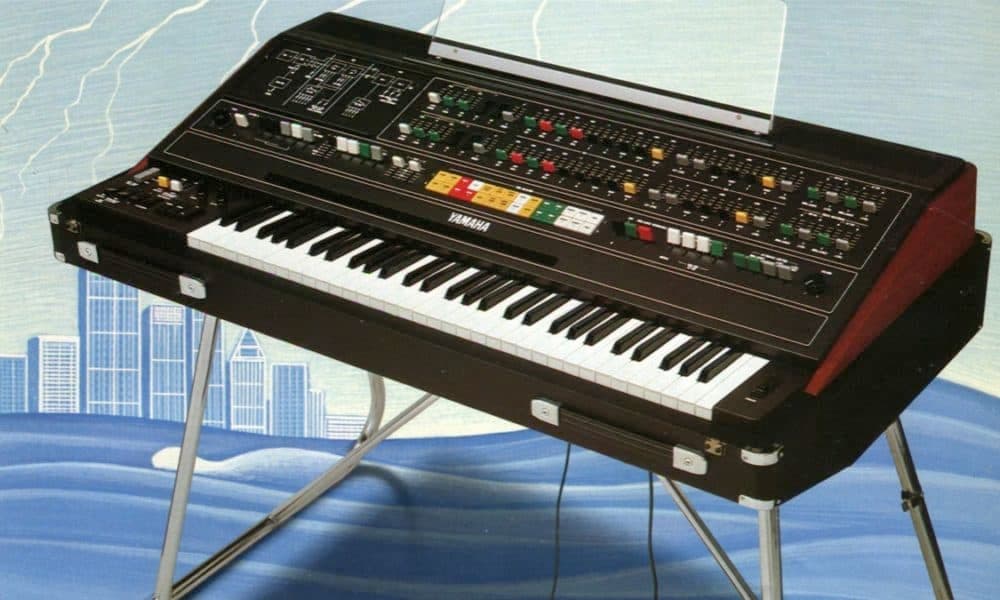
Vangelis made it famous, but the instrument did the heavy lifting
Yamaha identifies Vangelis as the CS-80’s most notable user, and that association is earned by the records that show what the synth can do in practiced hands. The company points to Beaubourg, Spiral, China, and Blade Runner as key milestones in that relationship, which is enough to explain why the instrument became a reference point far beyond the vintage market. The point is not that a famous composer used a famous synth. The point is that the CS-80 gave a serious player a performance interface that could keep up with musical intent.
That is also why the CS-80 keeps its status in collector circles and in modern comparisons. Its voice structure, panel layout, aftertouch response, and ribbon control all push against the same question: can a synth react like an extension of your body instead of a box of sounds? Yamaha’s own historical material answers that by calling it the most impressive achievement in audio engineering in the 1970s, and the instrument still justifies that kind of language because it was built around touch, not just timbre.
The CS-80 remains the standard because it never treated expressiveness as a luxury feature. Every major element, from the GX1-derived circuit lineage to the ribbon controller, from the polyphonic aftertouch to the front-panel MIX sliders, serves the same idea: the player should shape the sound while the sound is happening. That is the reason the CS-80 still sits at the center of the conversation whenever analog synthesis needs a benchmark that feels as good under the fingers as it sounds through the speakers.
This article was produced by Prism’s automated news system from verified source data, official records, and press releases, then run through automated quality and moderation checks before publishing. The system is built and supervised by the people who set the standards it runs under. Read our full AI policy.
Did this article answer your question?