zetaSID adds 303-style bassline engine as midiphy restocks Eurorack module
Midiphy’s zetaSID is back in stock with a 303-style bassline engine, while DVNA and a Fairlight CPU swap show vintage sound worlds staying playable.
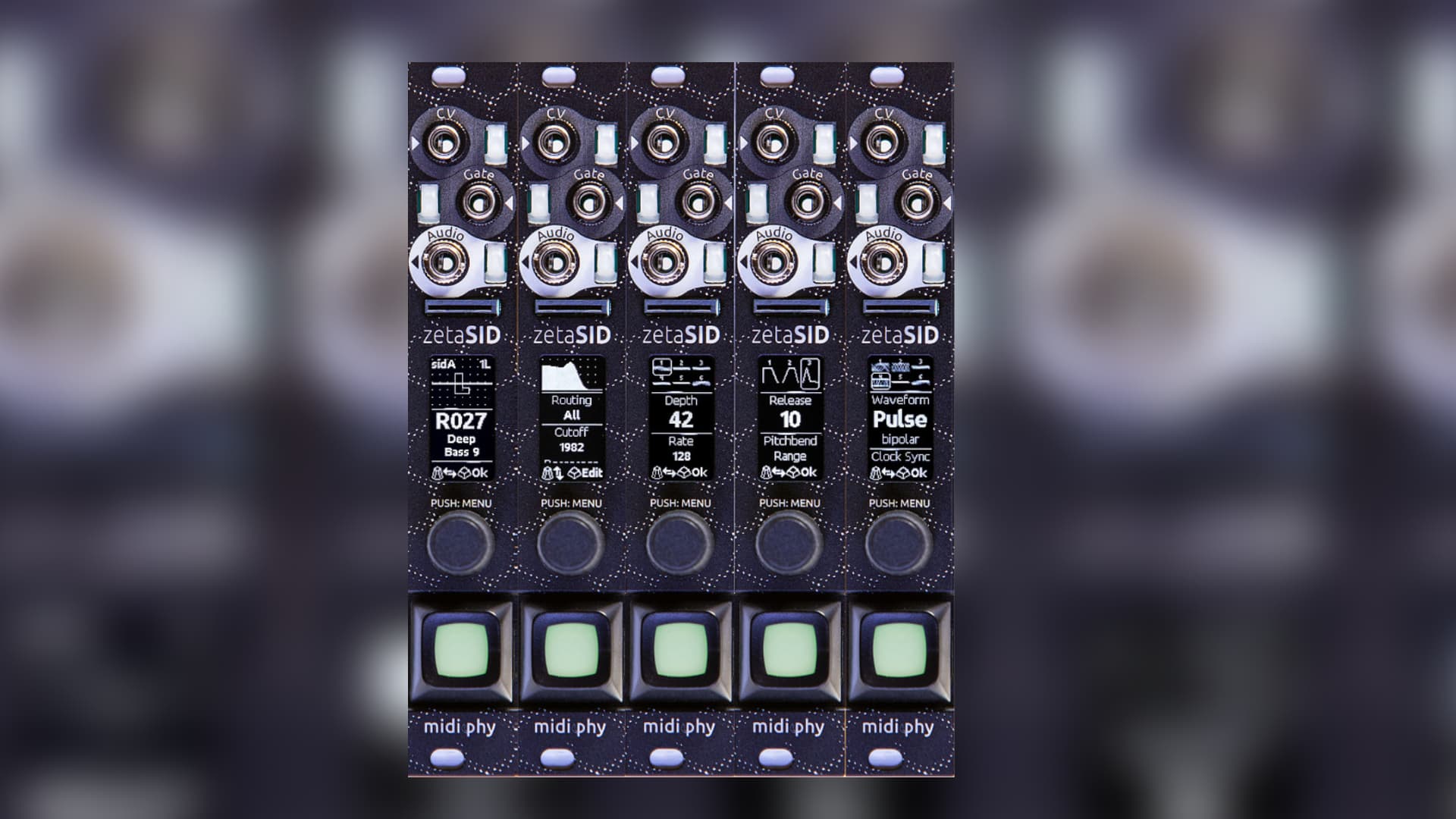
Midiphy’s zetaSID has come back into stock with firmware 1.5, and the update gives the 4HP MIDIbox SID-based Eurorack voice a new bassline engine built for 303-style sequencing. The new mode adds eight 16-step patterns and per-step control over note, octave, gate, slide, accent and an extra parameter, plus three new CV input sockets for hands-on Eurorack control of the integrated sequencer.
That matters because zetaSID was never just a nostalgia box. Midiphy already built it as a dense SID platform with six LFOs, eight modulation paths, two envelopes, four wave sequencers, three independent arpeggiators and a trigger matrix. It also supports ASID-compatible SID-file playback over MIDI and can be edited in a browser through its web editor. Pushed together, those features make zetaSID feel less like a tribute act and more like a proper modern instrument that happens to speak in SID idioms. Midiphy says up to 12 units can be linked over phybus to form six stereo voices of polyphony, which is the kind of spec that turns a chip-sound curiosity into a serious system.
That same split between reverence and usefulness runs through the other gear in the roundup. Doboz’s DVNA keeps the focus on performance rather than museum-piece imitation. It is a compact chord-and-texture synthesizer with four oscillators and a 12-key capacitive keyboard, and Doboz says the touch surface responds to finger contact area while generating a continuous pressure signal that can be routed through the instrument. DVNA also includes a note quantizer for 25 scales, tuning modes that range from fixed chord voicings to microtonal tuning, MIDI over TRS, MIDI clock sync, MIDI CC control and 128 presets. It is the sort of box that invites harmony-first playing instead of another round of monophonic retreads.

Then there is the hard preservation end of the spectrum: Freshwater Instruments’ FI50A CPU card for the Fairlight CMI Series I, II and IIx. Freshwater says the card replaces the original computer section while preserving the instrument’s character, workflow and hardware experience, and it runs enhanced software derived from the original source code. That is not nostalgia for display shelf weight. The Fairlight, introduced in 1979 and driven into prominence in the early 1980s, helped define early digital sampling and is closely tied to the term itself.
Put together, the three products sketch a clear direction for vintage synth culture. The most interesting work now is not just collecting old sounds, but keeping the old workflows alive, whether that means a SID engine with 303-style sequencing, a chord machine built for touch, or a Fairlight that can still boot and behave like a Fairlight.
This article was produced by Prism’s automated news system from verified source data, official records, and press releases, then run through automated quality and moderation checks before publishing. The system is built and supervised by the people who set the standards it runs under. Read our full AI policy.
Did this article answer your question?