Competitive Warhammer 40k Tournaments: What New Players Need to Know
Forget the netlist rabbit hole — your first competitive 40k event is won with the right ruleset, a list you actually know, and a mission-first mindset that most casual players never develop.
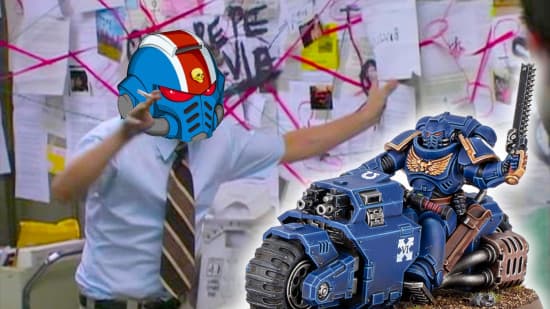
Most players who try a tournament for the first time make the same mistake: they spend weeks obsessing over unit stats and kill efficiency, then lose game one because they never learned how points are actually scored. Many new players focus heavily on unit damage output and overlook missions entirely. In tournament play, missions drive almost every decision. Understanding how and when points are scored will improve your results faster than almost any list change. That's the mindset shift that separates competitive 40k from your Sunday kitchen table game. Everything else flows from it.
Know Your Ruleset Before You Touch a Dice
Competitive Warhammer 40k games are played using Primary and Secondary Missions and Deployment Maps contained in the Chapter Approved Mission Deck. The most current version is the Chapter Approved 2025-26 Mission Deck, available online or through your local game store. This deck is essential for competitive play, as all tournament events use the missions it contains.
Alongside the Mission Deck sits the Tournament Companion, a document every serious player needs to understand. The Tournament Companion is used by every tournament organizer and serves as a guide to standardize mission and terrain requirements across events. You don't need to read it cover to cover, but you should understand its intent: it exists to level the playing field, reduce pre-game friction, and create consistent experiences across events. The Tournament Companion provides a pool of 20 recommended tournament rounds to draw from, with pre-set Primary Missions and deployment modes that put all players on an equal footing and minimize pre-game admin.
The January 2026 update brought a couple of noteworthy changes. Terraform now explicitly states you cannot terraform your home objective. Take No Prisoners can no longer be selected as a Fixed secondary mission, which prevents nasty play patterns when combined with Cull the Horde or Bring it Down that previously incentivized pure kill-focused play and made armies like Knights and Genestealer Cults less competitively viable. If you haven't downloaded the updated companion, do that today.
One rules quirk that catches virtually every new competitive player off guard: in tournament play, objective markers aren't physical objects and models can stand on them. This changes how you position units and contest objectives in ways that casual games never prepare you for.
Your Codex Is the One Book You Must Know Cold
Every faction in Warhammer 40k has a Codex containing all your army's rules, datasheets, Detachments, and more. Your Codex or Index is the one rules document you're expected to know deeply. You are not expected to know every opponent's army. As a newer competitive player, you don't need to memorize every fringe interaction. You need to be comfortable enough that you're never unsure what phase you're in or what your options are. Confidence in the basics removes stress and speeds up play, which matters enormously in timed rounds.
Build a List You Can Actually Play
This is where new players go wrong almost universally. They see a top-eight list from a major GT, copy it wholesale, and then freeze at the table because they've never run those synergies under pressure. Your goal for your first event isn't to build the sweatiest netlist on the internet. It's to build one you can play confidently and consistently.
Your army list should account for synergies with your Detachment and units dedicated to specific roles, such as objective holders, attacking units, and secondary scorers. Every slot in your list needs a job. If a unit doesn't hold objectives, threaten screens, or score secondaries, think hard about whether it earns its points cost.
Pick units and Detachments you know how to use. Avoid complicated interactions you haven't practiced. Reliability wins more games than flashy combos you can't execute under pressure.
Before you submit, double-check your list for legality. Make sure your Detachment, wargear, and rules are all correct before submitting your list to the Tournament Organizer. Going a few points over is fine in a kitchen table game; at a tournament it can get your list thrown out entirely.
Understand the Format You're Walking Into
Most Warhammer 40k tournaments are Swiss format events, meaning players play all rounds with opponents who have similar records as the event progresses. Larger events sometimes break out a top 8 or top 16, with a pool of undefeated players who play single-elimination rounds until a winner is determined.
Tournament types vary significantly in scale and commitment:
- Grand Tournaments (GTs) are longer events ranging from 5-8 rounds or more, usually running over 2-3 days.
- Team events focus on groups of 5 or 8 players paired against opposing teams, typically running 5-6 rounds over multiple days.
- Local Rogue Trader Tournaments (RTTs) are single-day events, often lower-stakes, and the ideal proving ground for a first competitive outing.
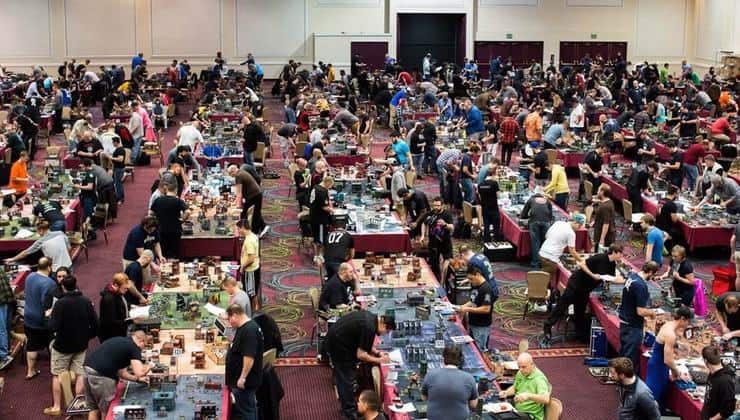
Events can vary in size from single-day tournaments with 10-20 players to multi-day major events with as many as 1,000 players. Starting with a 20-person RTT at your local game store is a dramatically different (and more forgiving) experience than walking into a 200-player GT cold.
How to Find Events
Most competitive Warhammer 40k events are organized and run through Best Coast Pairings. Tournament organizers use the site to manage events, and players use it to find events in their area, register, upload army rosters, and track pairings and standings. Best Coast Pairings is free to use for both organizers and players, though viewing army lists outside of events you're registered for requires a subscription.
On the bigger circuit, the Warhammer Open Series 2026 is a six-stop run through Maastricht, Dallas, Birmingham, Edmonton, Tacoma, and Newport, each built around three-day Grand Tournaments. It differs from independent GTs through official branding, convention-style hobby elements, and a clearer Golden Ticket path to the World Championships of Warhammer in Barcelona. That's the ceiling of the circuit, and knowing it exists helps you understand the ladder you're entering at the ground floor.
Last year there were over 75 qualifying events for the World Championships, and organizers expect that number to keep growing. The point: there are more entry points than ever, at every level of seriousness.
Practice With Purpose, Not Just Volume
Reps matter, but unfocused reps don't build competitive instincts. Not all practice is equal. Don't just play random pick-up games and call it preparation. Practice with purpose and intent. Pick specific areas to build your fundamentals, such as deployment, movement and positioning, and target priorities.
If you're practicing for events, you should be playing Chapter Approved missions exclusively. Playing casual missions the week before a tournament is like training for a marathon on a treadmill set to walking pace. The terrain layouts, objective placement, and scoring rhythms of Chapter Approved missions are what you'll face on the day, so that's the only environment worth training in.
Evaluate your practice games and keep game journals and logs. Review what worked and what didn't, and be as objective as possible.
What to Pack and How to Show Up
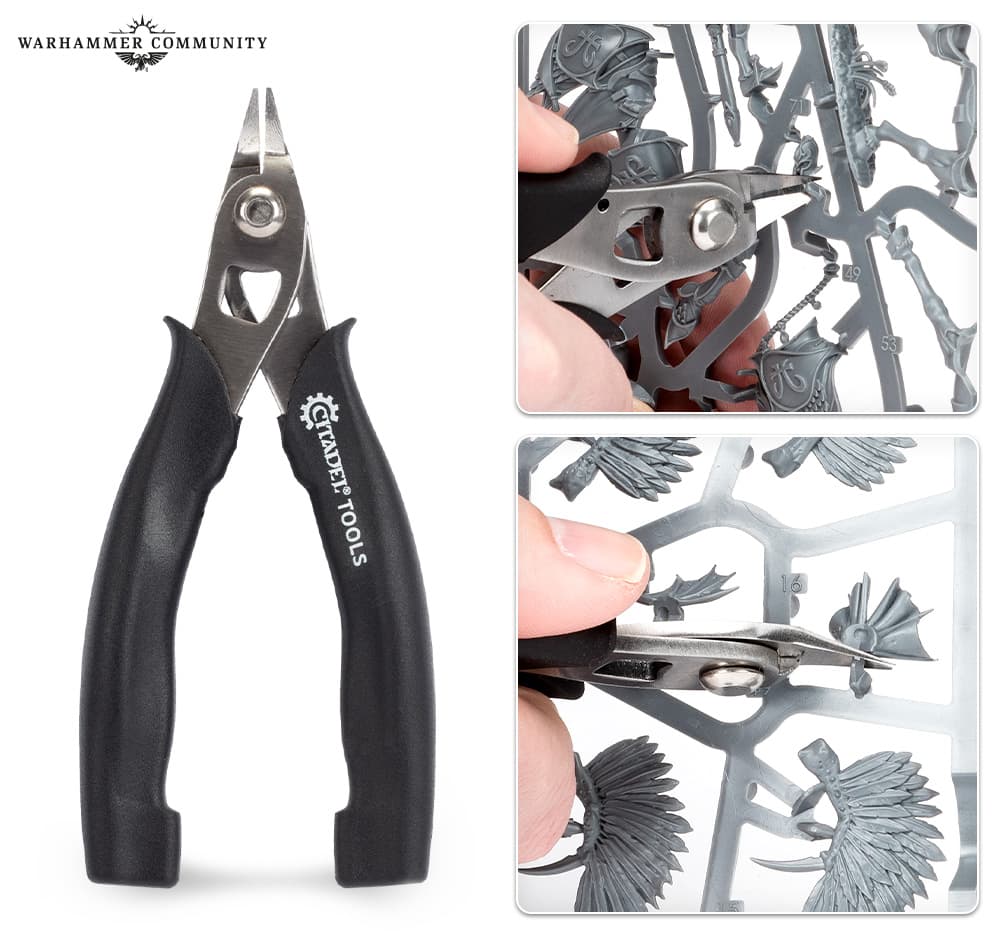
Most tournaments require miniatures to be fully assembled and painted. Don't assume otherwise. Turning up with grey plastic will get your army flagged before a single die is rolled. A clean three-color scheme is standard; nobody expects Golden Daemon quality, but bare resin is a non-starter.
Your kit checklist for the day:
- Your army, fully assembled and WYSIWYG (What You See Is What You Get); your rulebook, codex, and printed list; dice, tape measure, objective markers, and any tokens you use.
- Super glue for emergency repairs and a small tray or case to move your army between tables quickly.
- Plenty of rest and water, because tournaments can be long and demanding.
Arrive early so you can check in with the Tournament Organizer, get your models out and ready to go for round one, and mingle socially.
Table Manner and the Culture of Competitive Play
The reputation of tournament players as unfriendly sharks is largely a myth. There are myriad ways to enjoy the Warhammer hobby, and they all manifest at a tournament: gifted hobbyists with beautiful armies, skilled competitors aiming for Best General, and casual players looking to face new opponents and make new friends, who are by far the most common type of attendee.
Mentioning that this is your first tournament to every opponent is genuinely useful. You'll find many players are in the same boat, and it helps set expectations for both sides. Communicate your intent during the game, celebrate your opponent's successes, and always ask for feedback at the end: what could you have done better, and what would they have done in your position? Most veterans love sharing advice with new competitors.
The Mindset That Actually Wins
Competitive Warhammer 40k is not about perfection. It is about preparation, communication, and continuous improvement. Most players at events will lose at least one game. That is normal. What matters is learning from those games and enjoying the shared experience of the hobby.
Long-term success in competitive Warhammer 40k comes from mastering the fundamentals, practicing with intent and purpose, and learning your faction's rules thoroughly. The more you play and practice, the better you get, and the more the game starts to slow down for you. That moment when the pressure of timed rounds stops feeling like chaos and starts feeling like information is when you know the investment paid off.
This article was produced by Prism’s automated news system from verified source data, official records, and press releases, then run through automated quality and moderation checks before publishing. The system is built and supervised by the people who set the standards it runs under. Read our full AI policy.
Did this article answer your question?