Dallas Open Prep Forces 40K Player to Choose Final 10th Edition Army
Dallas is pushing Robert “TheChirurgeon” Jones to lock in his last 10th edition army, turning tournament prep into a practical late-cycle playbook.
Dallas becomes the cutoff point
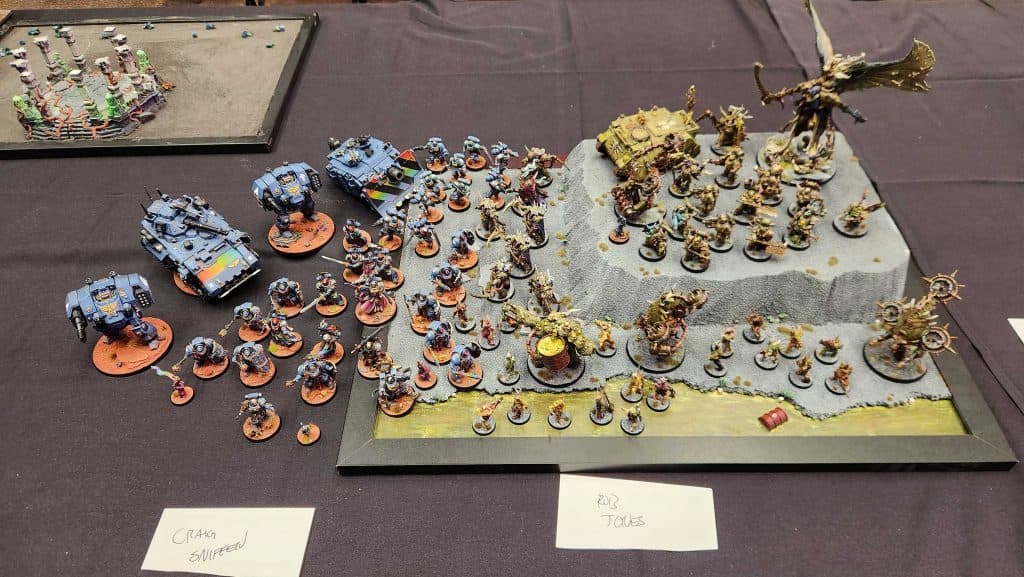
Robert “TheChirurgeon” Jones is staring at the kind of deadline every serious 40k player knows well: one more major event, one more chance to make the current army matter, and a rules cycle that is already beginning to point elsewhere. In his ongoing Road Through 2026 series, Dallas is not just another stop on the calendar. It is more or less his last 10th edition event, with only a possible RTT in June left beyond it, which makes the choice of army feel final in a way most prep weeks do not.
That is why the situation is so useful as a case study. Jones is not simply chasing a win at the GW US Open in Dallas. He is balancing the realities that define late-cycle competitive Warhammer 40,000: what can still be painted, what can still be tested, what can still be traveled with, and what is worth locking in when the format is on the verge of being replaced. The tension between refining a known list and drifting toward the next rules environment is the whole story here.
What the Dallas Open demands from a player
Dallas matters because it sits at the intersection of competitive ambition and logistical reality. Warhammer Community says the 2026 Warhammer Open Series includes Dallas, Tacoma, Edmonton, Birmingham, and Newport, and describes Dallas as a three-day event with Warhammer 40,000, Age of Sigmar, and Kill Team. It is also a hard-cap event, with tickets not being expanded once sold out, which raises the stakes on both planning and commitment.
The event itself is set for 22 to 24 May 2026 at Esports Stadium Arlington in Arlington, Texas. That date window matters because it compresses everything around it: list selection, practice games, hobby finishing, and travel all have to fit before the doors open. In other words, Dallas is not just a tournament. It is a deadline with a venue attached.
That official framing also gives the event a bigger context. In Warhammer Community’s 2025 US Open Series announcement, Dallas ran from 22 to 25 May and the season ultimately culminated at the World Championships of Warhammer in Atlanta from 6 to 9 November. Put together, those details show how Dallas has become a mid-season anchor in Games Workshop’s official circuit, not a casual local stop.
Why the list choice matters more than usual
Jones’ article makes the most sense when read as a guide to late-edition list discipline. He has already done the work on Red Corsairs, and he has even played a practice game of 11th edition with Renegade Raiders, which tells you the process is no longer about discovering an identity from scratch. It is about deciding how much energy should still go into 10th edition when the next environment is already poking through.
That is the central competitive question at the end of an edition: do you keep polishing the list you know, or do you start spending attention on the rules set that will matter next? Jones’ deadline forces the issue. Because Dallas is likely the final major 10th edition outing for him, the army choice is no longer just a preference. It is a statement about where his hobby time, practice reps, and travel budget should go.
The practical value here is obvious for anyone heading to a major event of their own. A late-cycle list is not only about power level. It is about whether the army is stable enough to practice repeatedly, whether the remaining models can realistically be finished, and whether the player can arrive at the event with enough familiarity to make good decisions under pressure.
A simple process for late-cycle event prep
The cleanest way to approach a shrinking edition window is to make the decision in layers, not all at once.
1. Lock the event first.
Dallas has a fixed date, a fixed venue, and a hard cap. That means the plan starts with the event itself, not with abstract list theory.
2. Test only what can be repeated.
Jones’ mix of Red Corsairs work and a Renegade Raiders practice game shows the right instinct: play the version of the army that can realistically be finished and remembered.
3. Protect list stability.
At the end of an edition, every extra change costs time. The more reps a list has, the less the player needs to solve on the fly.
4. Keep one eye on the next cycle.
The move toward 11th edition is already part of the calculation, and that matters when deciding whether another round of 10th edition tuning is still worth it.
This is the part of prep that applies well beyond Dallas. The smartest end-of-edition planning is rarely about chasing the newest toy. It is about narrowing the field until the list, the travel plan, and the available hobby time all point in the same direction.
Texas has become a real tournament destination
The Dallas prep also lands in a region that is clearly building momentum. Frontline Gaming’s Lone Star Open 2026 listing says last year’s event shattered its Warhammer 40K Champs attendance record, and it is promoting the next edition as bigger than ever. That matters because it reinforces the sense that Texas is not just hosting one-off events. It is becoming a serious hub for large-scale tabletop competition.
For players looking at Dallas, that wider competitive culture is part of the appeal. Big events attract strong fields, strong preparation, and strong expectations. When the surrounding scene is growing, the pressure to arrive with a settled army and a clear plan increases as well.
That is what makes Jones’ situation so recognizable. The question is not only which list can win. It is which list can be finished, practiced, traveled with, and trusted at the exact moment a format is about to hand off to the next one. Dallas is where that decision gets made, and for the final stretch of 10th edition, that kind of discipline is the real advantage.
This article was produced by Prism’s automated news system from verified source data, official records, and press releases, then run through automated quality and moderation checks before publishing. The system is built and supervised by the people who set the standards it runs under. Read our full AI policy.
Did this article answer your question?