Dan Abnett's Hive takes Warhammer 40k into an Imperial city
Dan Abnett sends 40k into Sacramentus, a hive-city saga for readers who want Imperium politics, not Astartes fireworks. It's a sharper fit for Black Library regulars than casual Space Marine fans.
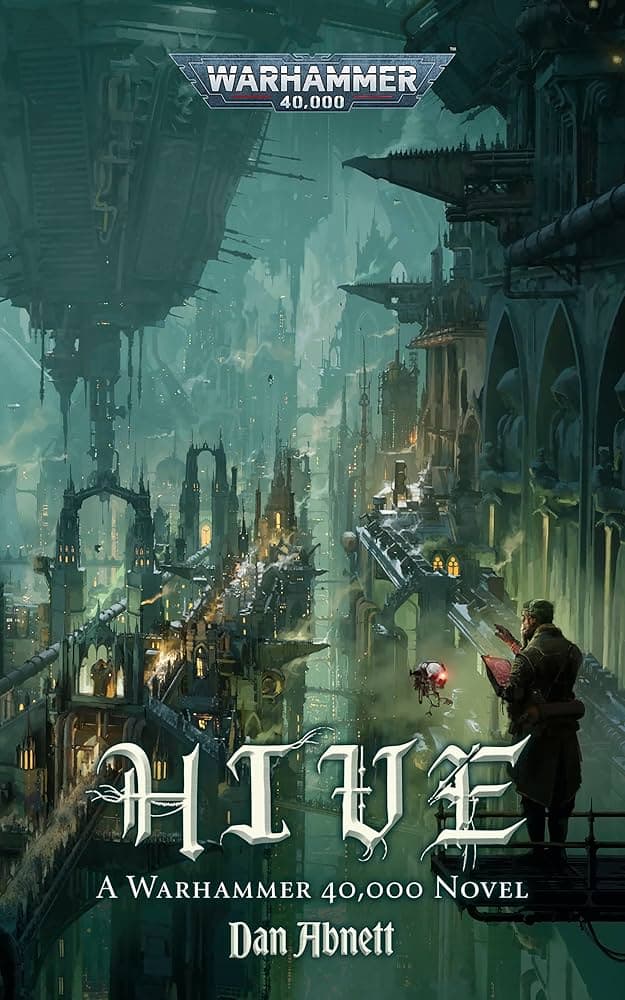
Hive is the kind of Warhammer 40,000 book that tells you what it is by refusing to be what 40k fiction usually is. Instead of opening with a named Chapter, a hero squad, or a familiar war zone like Armageddon, Dan Abnett drops the reader into an Imperial hive city and lets the pressure of that place do the talking. That makes this a very specific buy decision: if you want the setting’s political machinery, civic rot, and human-scale survival drama, Hive looks like a standout. If you only want bolter fire and Space Marine heroics, this is the book most likely to ask you to adjust your expectations.
What Hive actually is
Hive is a new two-part novel set in Sacramentus, an Imperial hive city whose planetary governor has fallen amid scandal and treachery. The city is under the weight of oppressive Imperial austerity, Adeptus Arbites patrols enforce the Lex Imperialis, and whispers of rebellion are climbing through the upper spires. Warhammer Community’s framing is telling: this is a story about the inner turmoil of an Imperial hive city, not just a backdrop for the usual 40k escalation into battlefield spectacle.
That structure matters because it changes the texture of the book. A hive city story lives in density, hierarchy, surveillance, and decay, where every corridor, tenement, and administration block can become part of the conflict. Goonhammer’s review makes the point plainly: Hive stays away from the standard-issue ingredients and instead commits to life inside the city itself, which makes it feel closer to a layered urban saga than a conventional military adventure.
Why Dan Abnett makes this work
This is not a random experimental swing from Black Library. Goonhammer identifies Abnett as a fourteen-time Black Library Readers’ Hall of Fame inductee, and Black Library’s author page lists 102 titles under his name. That kind of track record explains why he is the writer trusted to carry a project this unusual: he is one of the people who helped define what Warhammer fiction can be, and Hive feels like another step in that expansion.
Abnett’s name matters here because it signals both quality and range. Readers know him from major 40k touchstones such as Gaunt’s Ghosts, Eisenhorn, Ravenor, Titanicus, and The Magos, and those books share a willingness to treat the Imperium as more than a parade of battlefield set pieces. Hive extends that instinct into a space the setting does not always linger in, giving the city itself the starring role and letting atmosphere, bureaucracy, and social pressure carry as much weight as combat ever could.
There is also a clear tonal difference here. The review’s comparison to historical fiction is useful because it points to a book built on accumulation rather than instant payoff. This is the sort of 40k novel that probably rewards readers who enjoy the politics of a world as much as the violence of it, and who want the Imperium examined from the inside rather than admired from the outside.
Who should buy it, and who can skip it
For the typical 40k fan, Hive is not the safest possible impulse buy, but it may be the most interesting one. If your shelf already has the big franchise pillars and you like Black Library when it stretches, this is exactly the kind of book that can remind you why the setting still has room to surprise. The combination of Abnett’s name, the two-part format, and the Sacramentus premise makes it feel like a statement release, not just another hardback in the pipeline.
- Imperial politics and internal collapse
- hive city stories with strong atmosphere
- Abnett’s broader, more literary mode of 40k storytelling
- books that treat the setting as a living system rather than a battlefield backdrop
This is especially attractive if you like:
If your priority is Space Marine action, crusade-scale warfare, or a fast-moving military plot, Hive is probably a narrower fit. It does not sound like the book that exists to scratch the “named Chapter smashes enemy force” itch, and that is precisely the point. The reviewer’s argument is that Black Library is trusting a different kind of 40k story here, one that asks readers to invest in city life, pressure, survival, and institutional decay.
The release story says as much as the novel does
The publishing rollout reinforces how unusual this release is. Warhammer Community later said it had received substantial feedback about the premium edition being limited to Warhammer stores, then canceled that in-store plan and switched both the premium edition and the regular hardback to print-on-demand sales from May 30 to June 5, 2026. Production and delivery could take up to 180 days, which tells you this was not being handled like a routine shelf release.
The premium edition itself was packed with collector appeal: two volumes, unique cover art, blood-red page edges, red ribbon bookmarks, and a decorative slipcase. It was also not individually numbered or signed in the revised offer, which makes the change feel less like a rarefied collector’s artifact and more like a compromise between demand and access. Even the pre-order coverage treated Hive as the headline book for the next weekend, a sign that Black Library knew it had something people would chase.
The bottom line
Hive is the sort of Black Library release that tells you where the brand still has room to grow. Abnett takes the reader into Sacramentus, strips away the comfort of Astartes-first storytelling, and builds a 40k novel around the pulse of an Imperial hive city instead. For readers who want the setting to feel bigger, stranger, and more human than a warzone, this is a very easy yes. For everyone else, it is the rare 40k book you skip not because it looks weak, but because it is committed enough to its own lane to know exactly who it is for.
This article was produced by Prism’s automated news system from verified source data, official records, and press releases, then run through automated quality and moderation checks before publishing. The system is built and supervised by the people who set the standards it runs under. Read our full AI policy.
Did this article answer your question?