Dark Angels 11th edition pack leans into three new detachments
Dark Angels players get three new detachments, but the bigger story is which classics were nudged and which old builds still have a seat at the table.
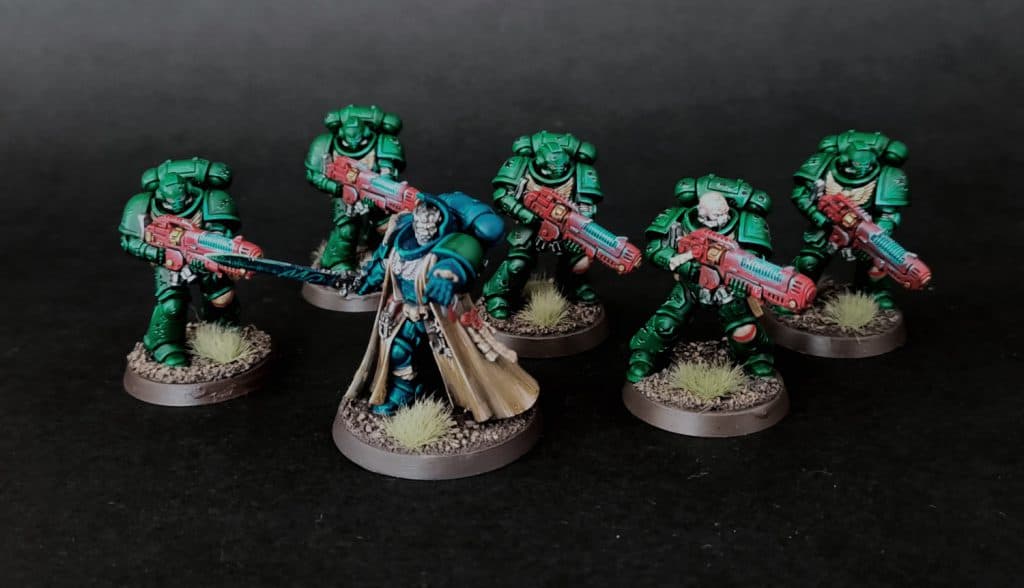
Dark Angels just got one of the most interesting 11th-edition faction packs because it does not try to flatten the chapter into a single “correct” build. Instead, it keeps the Unforgiven’s familiar identity of elite infantry, Ravenwing speed, Deathwing durability, and marquee characters, then opens the door to three new detachments on top of a very deep returning pool. For anyone staring at an existing collection, the immediate question is not whether Dark Angels still feel like Dark Angels, but which shelf staples still pull their weight and which ones have quietly slipped down the priority list.
A bigger menu, not a hard reset
The official pack is labeled FACTION PACK: VERSION 1.0, which matters because it reads like the start of a living rules cycle rather than a one-and-done document. Warhammer Community has framed these downloads as the kind of rules support that can absorb feedback from the community, playtesters, and the studio design team, and Dark Angels already have a history of that kind of iterative tuning, with errata versions like 1.3 and 1.4 in the supplement era.
That context helps explain the shape of this release. The pack adds extra rules and clarifications, plus detachments and datasheet updates, but the headline is the sheer number of army-building paths. The old chapter identity is still there, yet the new packet clearly wants you to decide how you want to express it on the table instead of funnelling every list into a single house style.
What changed on the datasheets
The most revealing changes are not flashy new toys but precise nudges to familiar units. The Nephilim Jetfighter and Ravenwing Dark Talon both lose HOVER, and their movement and objective control are reduced to dashed values. That is a big signal for anyone who used those aircraft as flexible mission pieces, because they are now less about convenient repositioning and more about being what they always were at heart: specialized fire support with tighter limits.
The Dark Talon also keeps its Stasis Bomb, but the rule still effectively does nothing because the aircraft never makes a normal move. That kind of edge-case wording matters in Dark Angels more than in most armies, because the chapter’s lists often live and die on tiny mobility tricks. If you built around the assumption that the aircraft could double as a movement puzzle piece, that assumption is gone.
Other updates are cleaner, but no less important. Deathwing Terminator Squad gets its Teleport Homer adjusted from 9 inches to 8, matching the edition-wide deep strike change. Lion El’Jonson loses his ability to move through walls, which trims back one of the nastier bits of his battlefield independence. Ravenwing Command Squad gets a cheaper Heroic Intervention interaction, and several units pick up the FRAME keyword, which suggests more internal synergy hooks for future detachment play.
The detachments are the real headline
If the datasheet edits are the texture, the detachment count is the story. The pack brings back all codex and digital Dark Angels detachments, nearly all generic Space Marine detachments return, and then three new Dark Angels detachments arrive on top of the three new Space Marine detachments. That leaves 24 total options, and the Warhammer Community previews peg them all at 1DP.
For Dark Angels players, that means the army is being encouraged to branch rather than converge. The earlier Wrath of the Rock style leaned into infantry-heavy lists backed by a small number of shooting platforms, with Lion El’Jonson as the main melee hammer. This new spread says Games Workshop is comfortable letting the chapter breathe across multiple archetypes, instead of locking everyone into the same pressure valve.
That matters if your collection already has a strong identity. A pile of terminators, a wing of speeders and bikes, or a mix of battle companies and named characters should all have somewhere to go. The challenge is no longer “can Dark Angels function?” It is “which of these detachment shells best matches the models already in the case?”
The likely winners and losers on your shelf
A few patterns stand out immediately.
- Ravenwing builds still matter. Warhammer Community has long defined the Ravenwing as the chapter’s rapid-assault 2nd Company, built around bikes, speeders, reconnaissance, and objective control. The cheaper Heroic Intervention for the Ravenwing Command Squad keeps that part of the army from drifting into pure nostalgia.
- Big infantry blocks remain central. Dark Angels still lean into the chapter fantasy of stubborn elite bodies holding ground while the rest of the force maneuvers. Deathwing Terminators staying relevant through the 8-inch Teleport Homer adjustment is a good sign for players who want a durable center.
- Aircraft look more niche. The loss of HOVER on the Nephilim Jetfighter and Ravenwing Dark Talon makes them less generally useful for mission play. They are not dead, but they look much less like automatic includes.
- Lion El’Jonson is still a threat, but less of a rules-dodging scalpel. Losing wall movement reduces some of his most abusive positioning tricks. He remains a centerpiece, just one that now asks for cleaner support.
What this means for Dark Angels identity
This is still the chapter of layered orders, secretive purpose, and elite wargear, the dour and brooding brotherhood that is merciless in attack and stubborn in defence. The Ravenwing still gives you speed and board pressure, the Deathwing still gives you terminator-heavy staying power, and the named-character package still makes the army feel like a story chapter rather than a generic codex color swap.
That is why the pack lands as such a practical guide for buyers as well as players. It does not tell you to abandon the collection you already own. It tells you to look harder at which wing of the chapter you want to emphasize, then choose from a much wider set of detachments than before. For Dark Angels, that is the healthiest kind of 11th-edition change: the army keeps its old soul, but finally gets enough room to express it in more than one way.
This article was produced by Prism’s automated news system from verified source data, official records, and press releases, then run through automated quality and moderation checks before publishing. The system is built and supervised by the people who set the standards it runs under. Read our full AI policy.
Know something we missed? Have a correction or additional information?
Submit a Tip