Warhammer 40k designers explain how Armageddon’s new Orks took shape
Games Workshop’s Armageddon round table shows the new Orks keeping classic hierarchy and hulking armour plates while gaining cleaner silhouettes for painters and converters.
The second round-table in Warhammer Community’s five-part #New40k series puts the spotlight exactly where Ork fans want it: on how the new Armageddon miniatures were built to feel unmistakably Orky, but cleaner, bigger and easier to read on the table. This is not a rules reveal dressed up as a hobby piece. It is a look at the visual decisions that shape the army, from hierarchy and nostalgic vehicle cues to the need for broad armour plates that give painters and converters real room to work.
What this round table is actually about
Warhammer 40,000’s studio team uses the episode to talk through the design of the Ork models inside Warhammer 40,000: Armageddon, with Adam and Eddie bringing Matt and Seb into the discussion. That framing matters because it puts the miniature design process front and centre, rather than treating the Orks as a side note to the launch box. In a faction where visual identity does so much of the heavy lifting, the conversation is really about how to keep the army’s mad-engineered personality intact while presenting it in a fresh launch set.
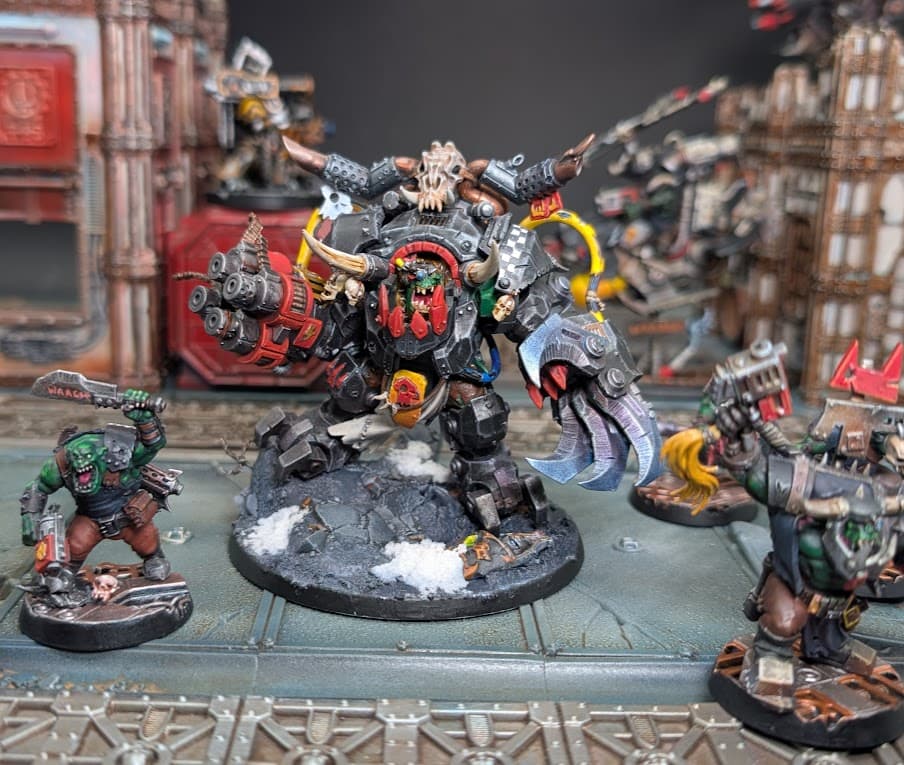
The key ideas called out in the episode are Ork hierarchies, nostalgic vehicles and big flat armour plates. Taken together, those clues point to a design approach that respects the old language of the faction while making the kits more legible in the modern 40k range. Orks have always worked best when their shapes tell you who is important, what is improvised and what is supposed to be smashed through a wall, and this episode suggests the new miniatures are leaning hard into that.
Why the silhouettes matter so much
For Orks, silhouette is not just a visual flourish, it is the faction’s shorthand. The studio’s focus on hierarchy implies that the new kits are designed so leaders, specialists and rank-and-file models can be read at a glance, even inside a noisy mob. That is especially valuable in a launch set, where the army has to look dramatic on its own and still make sense when assembled into a larger force.
The reference to nostalgic vehicles is just as important. It tells you the team is not trying to reinvent Orks as sleek or modernised, but to preserve the boxy, ramshackle, joyfully overbuilt machinery that long-time players recognise immediately. That kind of callback helps the range land with veteran hobbyists, while also giving newer players a clear visual code for what Ork engineering is supposed to look like.
What painters get out of these kits
The mention of big flat armour plates is the most useful hobby clue in the whole discussion. Flat surfaces give painters a proper canvas, which matters a lot on a faction that can easily become visually chaotic if every inch is covered in gubbins. Bigger plates mean cleaner colour blocking, stronger weathering effects and more obvious place to push clan markings, chip damage or spot colours without fighting the sculpt.
That also makes the models easier to personalise. Orks are one of the best armies for custom paint schemes because the faction already supports a rough, hand-built look, and these design choices seem built to encourage that. If the armour plates are broad and the shapes are clear, it becomes much easier to turn each model into a distinct character inside the mob, which is exactly the sort of thing Ork collectors enjoy.
Why converters should pay close attention
The episode’s design language also points toward strong conversion potential. Hierarchy gives you obvious opportunities to distinguish bosses, nobs and character models, while the vehicle callbacks make it easier to mix old bits, battle damage and improvised kitbash ideas into the new range. When a sculpt is built around readable big shapes rather than overcomplicated surfaces, it becomes a better base for swapping weapons, adding trophies or roughing up the profile.
That is part of why this episode lands as more than a preview. It gives you a roadmap for what the models are supposed to do once they leave the sprue. The new Orks are being presented as a faction where the kit personality still matters, and where the broad design language should reward anyone who likes to turn a good plastic kit into something even scrappier.
Armageddon gives the designs real stakes
The Armageddon setting adds another layer to the reveal. Warhammer Community ties the renewed Ork invasion to Ghazghkull Thraka’s return and the mega-tellyshokka, the enormous teleportation device that flung the Ork fleet into the heart of the Armageddon system. That is not just lore decoration. It means these models arrive in a campaign context that already has momentum, scale and a specific place in 40k history.
The same lore coverage identifies Hive Tempestora as the largest Ork stronghold left on the planet, held by Big Mek Glitztoof behind the Morpheon Line. That gives the new models a concrete narrative home rather than dropping them into a generic greenskin warzone. For collectors, that kind of setting support matters because it makes the army feel tied to a live conflict, with named characters and hard-won ground that already belongs in the story.
What is in the launch box
The Ork design chat sits inside a much bigger release package. Warhammer Community says Armageddon is the biggest Warhammer 40,000 launch set yet, with 61 brand new miniatures split between Space Marines and Orks. The box also includes the core rulebook, Armageddon: Operation Imperator, the Chapter Approved 2026-27 Mission Deck, the Dominatus Narrative Campaign Deck, datasheet cards and a transfer sheet.
That scale explains why the episode matters beyond a simple model reveal. When a launch box is this packed, every design choice has to do more work. The Orks need to sell the army’s personality, support the visual identity of the new edition and give hobbyists a clear route into painting, converting and building a force that looks at home in Armageddon.
The round table succeeds because it treats the Orks as more than just the other half of a starter set. It shows a faction still built on brutal silhouettes, crude machinery and unmistakable rank, then hands that language to the people who will actually turn it into an army. That is exactly the sort of reveal that tells you how Armageddon wants its Orks to be seen long before the first boxes hit the table.
This article was produced by Prism’s automated news system from verified source data, official records, and press releases, then run through automated quality and moderation checks before publishing. The system is built and supervised by the people who set the standards it runs under. Read our full AI policy.
Know something we missed? Have a correction or additional information?
Submit a Tip