Guilliman Slashed Space Marine Fleets After the Horus Heresy
Guilliman’s reform left Space Marines with fleets too small to rival the Navy, but just big enough to project brutal force wherever a Chapter sails.
Why Guilliman cut the fleets down
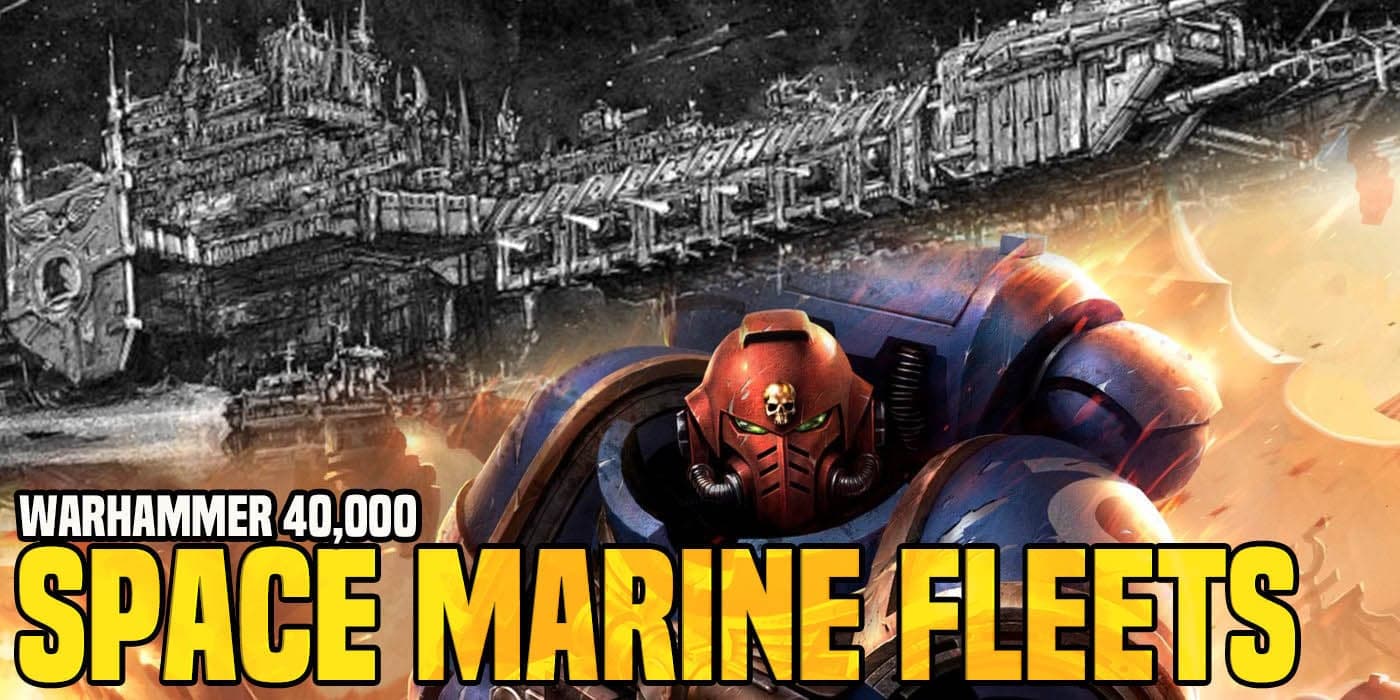
Space Marine fleets are one of the clearest examples of how the Adeptus Astartes are both overwhelming and tightly controlled. A Chapter can still bring devastating void power to bear, but Roboute Guilliman made sure it would never again look like the old Legions, with full-scale naval power of their own. After the Horus Heresy, he formalized the Codex Astartes and paired the split of the Legions into Chapters with a hard reduction in fleet strength, because the Imperium could not afford another independent military empire roaming the stars.
That decision was about more than administration. It was a safety mechanism born from trauma, suspicion, and the lessons of civil war. The logic was simple: divide power, break concentration, and make it harder for any single Primarch’s heirs to become a galaxy-spanning threat again. Space Marine fleets were not removed, only constrained, which is why they remain such a useful lens for understanding how the Imperium balances fear of rebellion against the need for rapid shock warfare.
What a Chapter fleet is actually built to do
In practical terms, a Chapter fleet exists to move, strike, and support the wargear of roughly 1,000 battle-brothers. That is the basic shape of a modern Chapter, and the fleet has to match that scale. It is not meant to contest the Imperial Navy ship for ship, but to deliver Marines where they are most dangerous: at the decisive point, with minimal warning and maximal violence.
That is why the fleet is so often described in terms of assault and sustainment rather than conquest by itself. Chapters use their ships to transport companies, protect supply chains, reinforce war zones, and stay mobile when a campaign shifts from one system to another. Some Chapters even live entirely aboard their vessels, with no homeworld at all. Others, such as the Mantis Warriors and Executioners, became fleet-based after forfeiting their homeworlds, which shows how flexible and unforgiving this part of the setting can be.
Battle barges, the old giants that still matter
The biggest symbols of Chapter void power are the battle barges. These ships trace back to the Great Crusade, when the term was used for battleships under Legiones Astartes control. In the current era, most Chapters are said to control only two or three battle barges, which is a tiny number when measured against the scale of Imperial naval warfare, but still plenty to make a planet’s defenders panic.
A battle barge is more than a transport with guns. It can deploy about three Space Marine companies, along with supplies and support, making it the core platform for a Chapter’s largest strikes. That is the contradiction that defines Astartes fleets as a whole: they are small enough to be tightly rationed, yet powerful enough that the arrival of one ship can reshape an entire campaign. If Guilliman’s goal was to curb independence without stripping away usefulness, the battle barge is the perfect compromise.
Strike cruisers, the workhorses of Marine war
If battle barges are the statement pieces, strike cruisers are the real workhorses. They are more common, faster to deploy, and built for the kind of war Space Marines fight most often, planetary assault, rapid insertion, and hard-hitting support. The lore goes so far as to say that a single strike cruiser is often enough to suppress a rebellious planet, which tells you everything about the brutality of even a modest Chapter deployment.
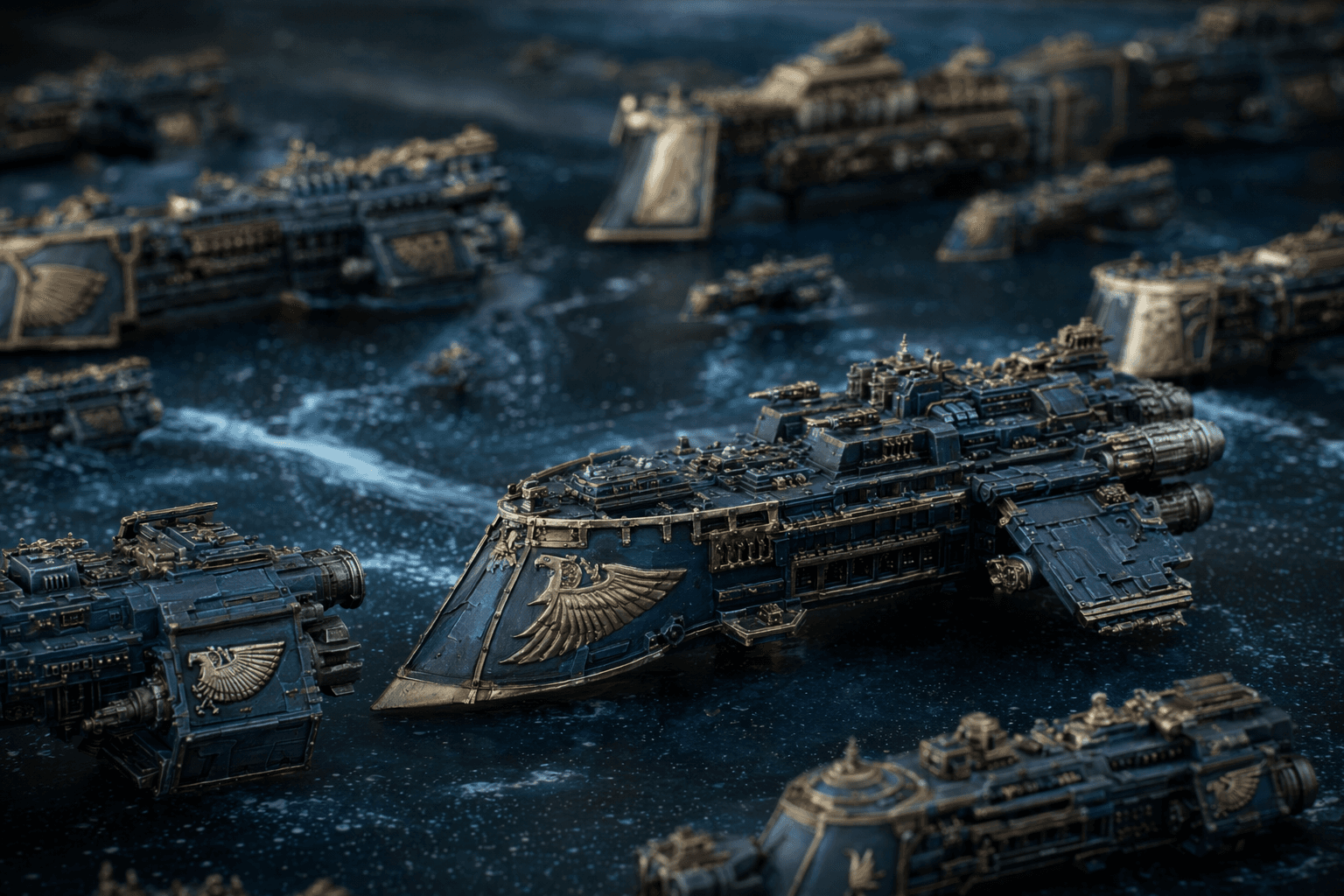
This is where readers can see how Marines project power between battles. They do not need a Navy-sized armada to matter. They need a ship that can get them to the killing ground, keep them supplied, and hit hard enough to break a rebellion before it spreads. Strike cruisers make that possible, and their relative abundance compared with battle barges explains why they are the backbone of most Chapter fleets.
The Nova-class frigate and the quiet side of war
Not every Chapter vessel exists to hurl Marines directly into a fortress wall. The Nova-class frigate fills the quieter, more persistent side of the fleet’s job. It is described as a Rapid Strike Vessel, used for patrols, escort duty, convoy protection, scouting, and surveillance. In other words, it is the kind of ship that keeps a Chapter’s war machine functioning when there is no glorious boarding action happening.
The Nova-class also shows how limited Chapter naval firepower really is. It is likely the only lance-armed warship many Chapters possess, which means a lot of Astartes void warfare depends on a relatively narrow set of specialized hulls. That makes every ship matter. A Chapter does not waste vessels on a bloated battle line, because the fleet has to do several jobs at once: protect assets, watch the approaches, move the force, and still provide enough teeth to matter in combat.
Corvus Corax and the argument Guilliman did not win universally
The Codex settlement was not universally loved, and Corvus Corax is one of the clearest voices against it. He argued that stronger Space Marine fleets might have prevented the catastrophic trapping of the Raven Guard at Istvaan V. That objection gives real texture to the post-Heresy order, because it shows the fleet restrictions were not obviously wise to everyone who had fought in the war.
Corax’s complaint also highlights the price of Guilliman’s compromise. The same rules that prevented another Legion-scale power bloc also left individual Chapters less able to survive mass betrayal or overwhelming local disaster. The Imperium chose control over maximum flexibility, and that trade-off still shapes how Marines wage war. They are formidable, but they are not allowed to become self-sufficient empires in all but name.
Why the Imperium wants them constrained
The Imperial Navy and the Inquisition both have reasons to keep Astartes fleets rare and limited. A strong Chapter fleet is useful when it is cutting down traitors, rescuing a collapsing front, or spearheading an assault. The danger comes when that fleet becomes too large, too independent, or too capable of acting without Imperial oversight. The balance of power inside the Imperium depends on preventing that slide.
That is why Guilliman’s reforms still matter so much. The Legiones Astartes were broken into self-contained Chapters of about 1,000 battle-brothers, each with its own transport and support staff, but not enough naval mass to become a galaxy-spanning military state again. Some Chapters sail permanently, some keep a homeworld, and some lose that world and become fleet-based by necessity. Through all of it, the same rule holds: Space Marines are meant to arrive like a hammer blow, not rule the stars like an empire.
This article was produced by Prism’s automated news system from verified source data, official records, and press releases, then run through automated quality and moderation checks before publishing. The system is built and supervised by the people who set the standards it runs under. Read our full AI policy.
Did this article answer your question?