Five greatest assassination attempts in Warhammer 40,000 history revealed
The deadliest 40K assassinations are never just about one victim. They expose how the Imperium survives by hiding violence, then spending lives to buy one more day of stability.
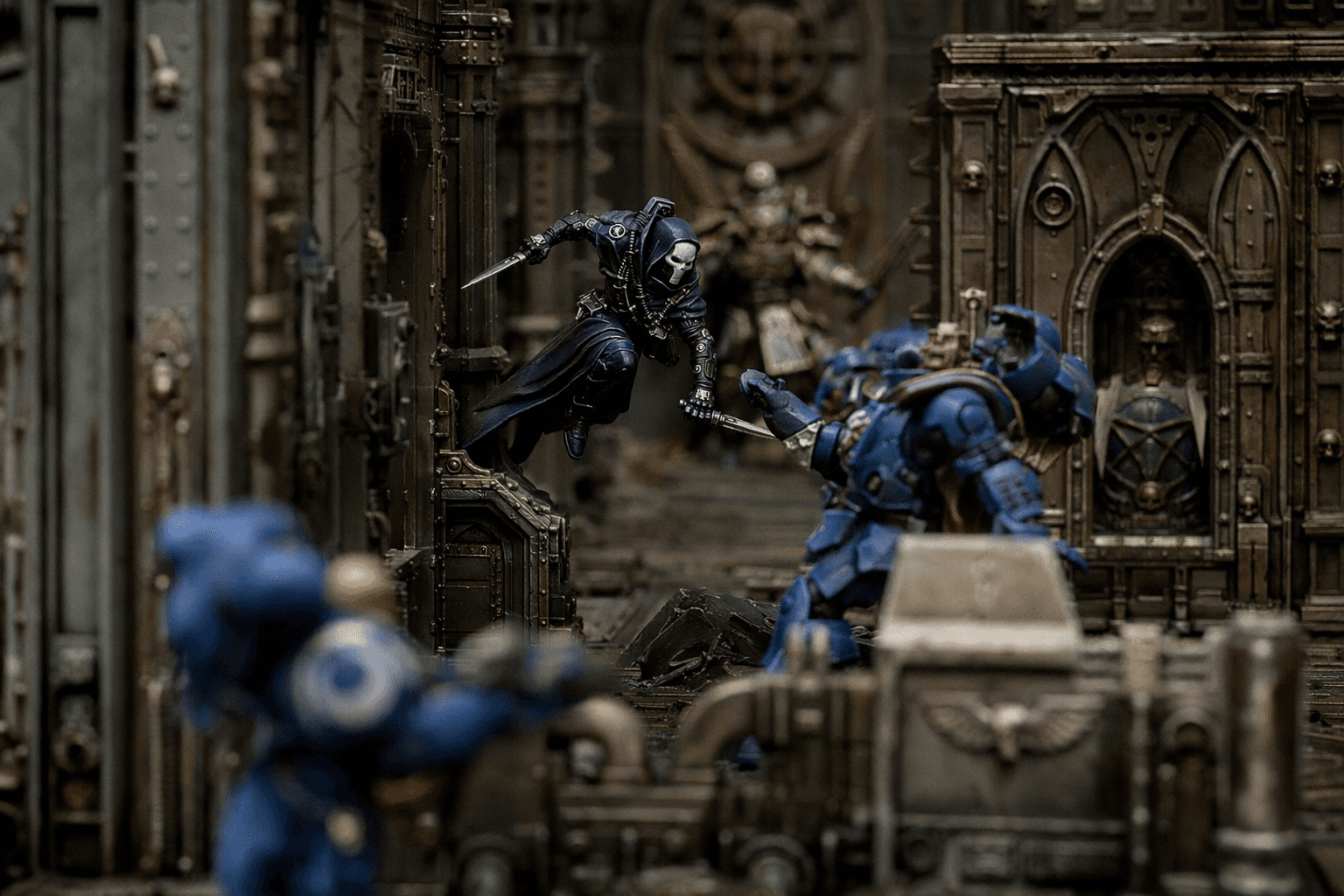
The Officio Assassinorum sits in the seam between statecraft and murder, and that is exactly why its stories hit so hard. Headquartered on Terra and folded into the Adeptus Administratum, it sends out Vindicare, Callidus, Eversor, and Culexus operatives when a problem is too dangerous, too political, or too explosive to meet in the open. In Warhammer 40,000, a successful kill is rarely just a kill. It is the removal of a crisis before the rest of the Imperium even admits the crisis exists.
Horus on Dagonet: the assassination that should have ended the Heresy
If you want the cleanest example of how much hangs on one blade, start with Horus Lupercal. The first known Execution Force was assembled on Malcador the Sigillite’s order during the opening days of the Horus Heresy, and its mission was as audacious as it was doomed: assassinate the traitor Warmaster on Dagonet. That alone tells you how seriously the Imperium treated the threat, because this was not a battlefield decapitation strike. It was a covert attempt to erase the war’s central figure before the civil war could fully metastasize.
The attempt matters even more because it sits right inside the foundation myth of the setting. The Horus Heresy is roughly 10,000 years before the current 40K timeline, and this mission shows the Imperium trying to solve a galaxy-shaping catastrophe with deniable killers instead of armies. The mission failed, but it still achieved one grim piece of business: the force eliminated a counter-assassin sent by Erebus. That is pure 40K in miniature, a murder mission collapsing into a side war of hidden blades, rival masters, and dead operatives.
Nemesis and the birth of the Assassinorum way of war
The Horus mission is also where you can see the precursor logic of the Assassinorum temples taking shape. Nemesis places its action after the horrors of Isstvan V and frames the novel around the moment when Space Marine brother turns on Space Marine brother, which is exactly the kind of pressure cooker that produces specialist killers. The important thing is not just that assassins were used, but that they were treated as the answer to a strategic problem no conventional army could neatly solve.
That is the core Imperial habit the setting keeps returning to. When a commander, psyker, or demagogue becomes too dangerous to confront openly, the High Lords of Terra authorize their most secret weapons. The knife is not there because the Imperium likes precision. It is there because public violence risks politics, and politics in 40K can collapse a sector faster than a fleet action. The Assassinorum exists because the Imperium prefers one hidden death over a visible crisis, even if the hidden death only buys time.
Dominion and the art of regime management
The modern face of this logic is Assassinorum: Kingmaker, and it works because the target is not a warlord on a battlefield but a ruler whose instability could infect an entire world. On the Knight world of Dominion, a Vindicare and a Callidus Assassin are assigned to eliminate a seditious leader while safely steering a pro-Imperial candidate to the throne. That is not just assassination, it is political engineering with a sniper rifle and a false identity.
Warhammer 40,000 is often at its best when it shows that the real fight happens inside institutions, not just across trenches. Dominion’s unstable king is dangerous because his removal could prevent secession and rebellion, which is exactly why the mission feels so quintessentially Imperial. The target is one person, but the problem is a whole social order held together by oath, pride, blood feuds, and the threat of collapse. In that kind of system, an assassin is less a murderer than a pressure valve.
Why the Imperium keeps building problems it can only solve with knives
The Assassinorum is terrifying because it reveals how little margin the Imperium actually has. These agents are among the rarest and most secretive warriors in the Imperium, yet the setting keeps showing that rarity is part of the point: you only deploy them when normal military power is already too blunt. That is why assassination in 40K always lands as a sign of institutional fear. The state is strong enough to kill anyone, but often too fragile to do it in daylight.
The newer lore keeps pushing that idea forward. Recent Imperial assassins coverage has reinforced that the temples still matter in the current game, and Grotmas detachment text even describes bespoke elimination forces built by combining assassins from several temples for especially protected targets. That detail says a lot about where the setting has landed. The lone killer is still iconic, but the real lesson is that the Imperium now has to assemble specialized murder teams to keep up with the scale of its own enemies.
The shadow war is the real war
These assassination attempts work because they show what 40K keeps hiding in plain sight: the galaxy is held together by emergency violence. Horus on Dagonet, the counter-assassin tied to Erebus, Dominion’s throne room, and the broader use of Vindicare, Callidus, Eversor, and Culexus operatives all point to the same ugly truth. Power in the Imperium is never secure enough to be ordinary, so it becomes secret, ritualized, and disposable. The greatest assassination attempts in Warhammer 40,000 are memorable not because they kill cleanly, but because they show how often the galaxy survives by missing the bullet, missing the blade, and living with the fallout anyway.
This article was produced by Prism’s automated news system from verified source data, official records, and press releases, then run through automated quality and moderation checks before publishing. The system is built and supervised by the people who set the standards it runs under. Read our full AI policy.
Did this article answer your question?