How to build a 40k army that survives every new edition
The safest 40k collection is the one you still want after the next dataslate. Build around flexible kits, broad themes, and models you will keep painting.
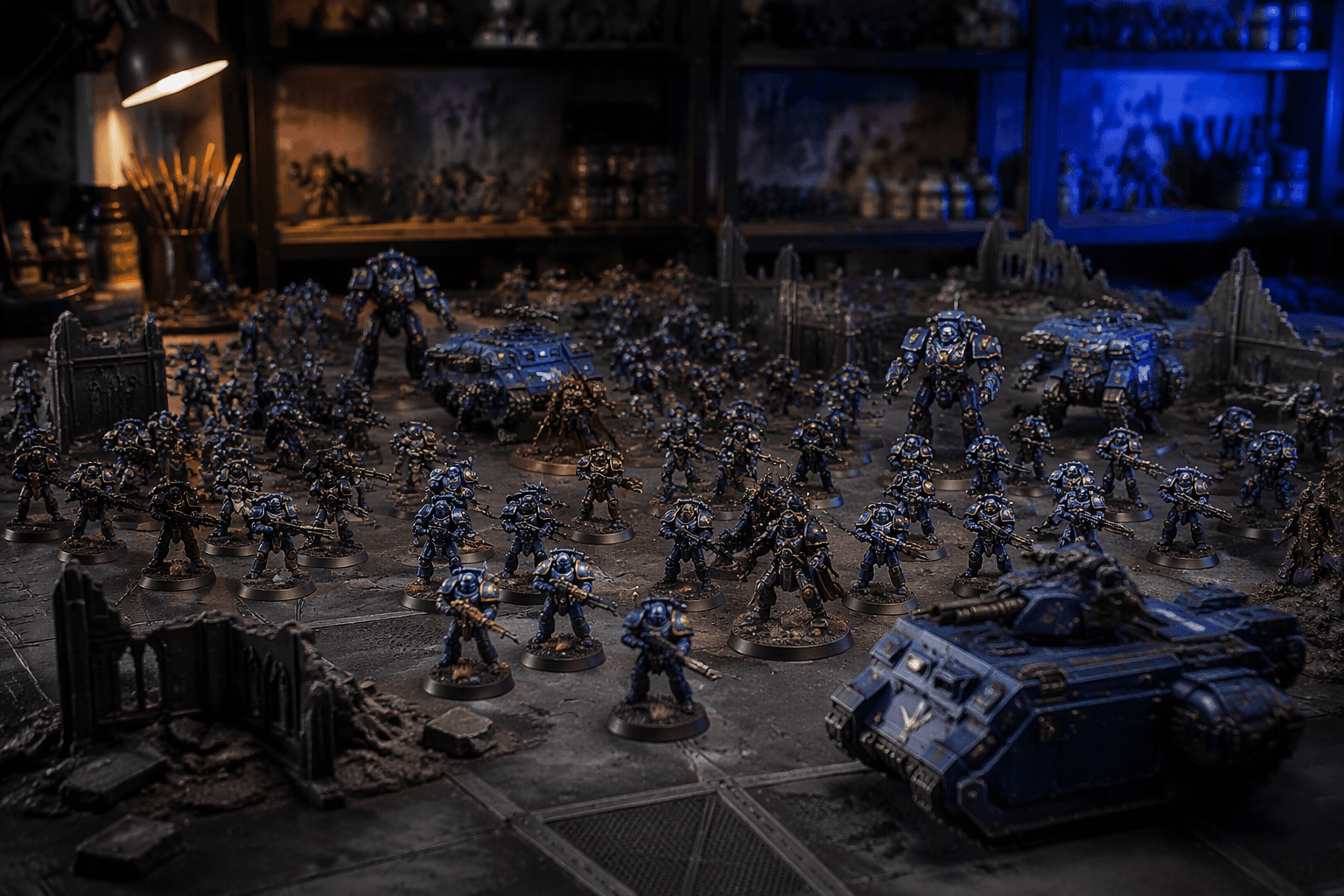
Warhammer Community launched 10th edition in June 2023 with free core rules, a free app, downloadable datasheets, and free points. The core rules define Warhammer 40,000 as a tabletop war game where you command armies of Citadel miniatures.
Build for the shelf first
If you want an army that survives every new edition, start with the part that never gets deleted from your collection, the miniatures themselves. The modern game feels less like a fixed book and more like a living rules layer over a permanent model collection. Buy units because you want them on your shelf and on your table for years, not because they are the hottest list tech this quarter.
That shift in thinking matters because a dominant unit can fall off a cliff fast. A codex, balance dataslate, or points update can turn an all-star into a bench warmer without changing a single sculpt, which is why the safest collections are built around ownership rather than short-term efficiency. The edition changed, the models stayed, and the army that was assembled for a trick had to live with the new reality.
Choose flexibility over a single trick
A future-proof army does not depend on one combo doing all the work. The more your list leans on a single datasheet, a single stratagem interaction, or one undercosted unit, the more vulnerable it becomes when the Munitorum Field Manual changes the points values for every faction. That PDF exists specifically to keep the game current, and its existence is the clearest sign that points are meant to move.
Warhammer Community’s June 2025 Balance Dataslate and March 2026 Quarterly Balance Update show how often that movement happens. Lists that rely on one narrow angle get punished when the angle disappears. If you build around flexible units, mixed battlefield roles, and a coherent theme rather than a single gimmick, you give yourself more room to adapt when the rules shift.
A good test is simple: ask whether a unit still earns its keep if its best interaction gets toned down. If the answer is no, that model is a speculative buy, not a durable one. The strongest collections are usually the ones that can become more defensive, more mission-focused, or more aggressive without needing a whole new shopping cart.
Buy kits that can change jobs
Magnetising options is one of the easiest ways to make your collection edition-resistant, because it keeps a single kit relevant across multiple points cuts and datasheet rewrites. The same logic applies to kits with broad weapon options, multiple build paths, or a role that can change from one edition to the next without the model looking out of place. You are not just buying a stat line, you are buying range.
This is where lore and visual identity matter more than people sometimes admit. If you genuinely like the faction, its silhouette, and the story it tells, you can weather rules changes without resenting the shelf time between games. Picking an army for models, lore, and visual identity is practical protection against the moment a favorite datasheet gets reworked and your collection still needs to feel like yours.
- Favor units that can fill multiple roles across editions, not just one output profile.
- Pick kits that can be magnetised or built with interchangeable options.
- Keep the army theme broad enough that a rules tweak does not erase its identity.
- Buy models you are happy to paint even if they spend a month off the top table.
Plan for rules churn, not against it
The 10th edition cycle made the pattern plain. Balance dataslates and quarterly updates tell you that Warhammer 40,000 is now managed as a live system. That is useful for the game, but it also means your buying decisions need to assume motion instead of stability.
This article was produced by Prism’s automated news system from verified source data, official records, and press releases, then run through automated quality and moderation checks before publishing. The system is built and supervised by the people who set the standards it runs under. Read our full AI policy.
Did this article answer your question?