Warhammer 40,000 gets new terrain templates for balanced battlefields
New terrain templates are pushing 40k tables toward faster setup and cleaner line-of-sight calls. Games Workshop is treating battlefield layout as matched-play tech, not decor.
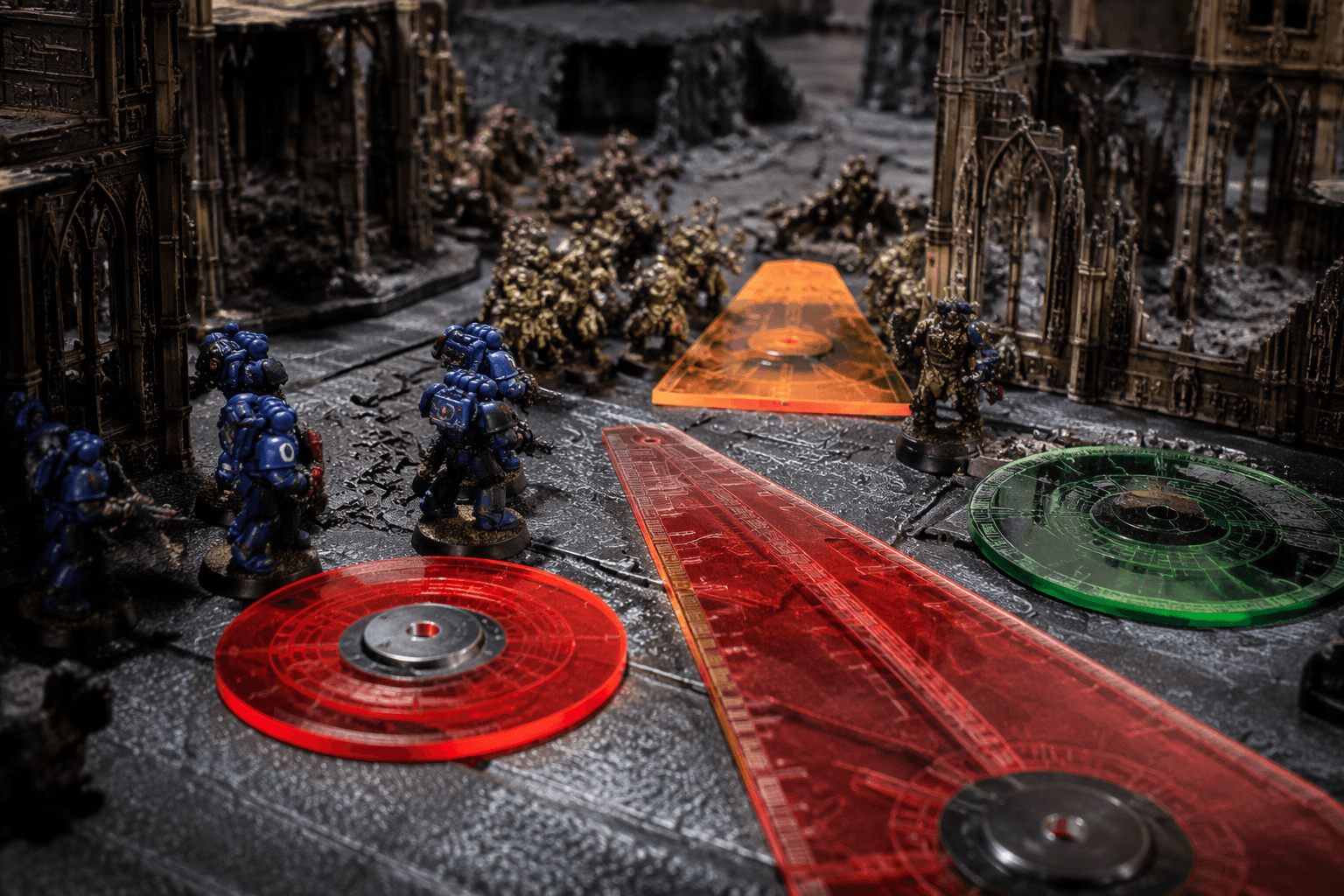
Warhammer Community’s new terrain templates are aimed at the part of 40k that decides more games than paint schemes ever will: how the table is actually built. The article, published on August 4, 2026, frames the templates as a way to shape battlefields so they fit the army on the slate, which is a much more useful promise than simple scenery polish if you care about matched play.
What the new templates are trying to solve
In 40k, terrain is not background dressing. It changes firing lanes, objective access, and whether an army can hide from a turn-one alpha strike, so a set of templates can do real work before the first dice are rolled. The practical win is consistency: clubs, stores, and event organisers get a repeatable layout instead of arguing over what counts as enough line-of-sight blocking or how much open space is fair to gunline lists.
For newer players, that matters even more. A footprint-based system lowers the intimidation factor of setting up a table from scratch, because the battlefield stops being a subjective art project and becomes something closer to a shared play aid. That is the difference between a table that looks good and a table that helps the game start quickly and fairly.
The official event structure already points this way
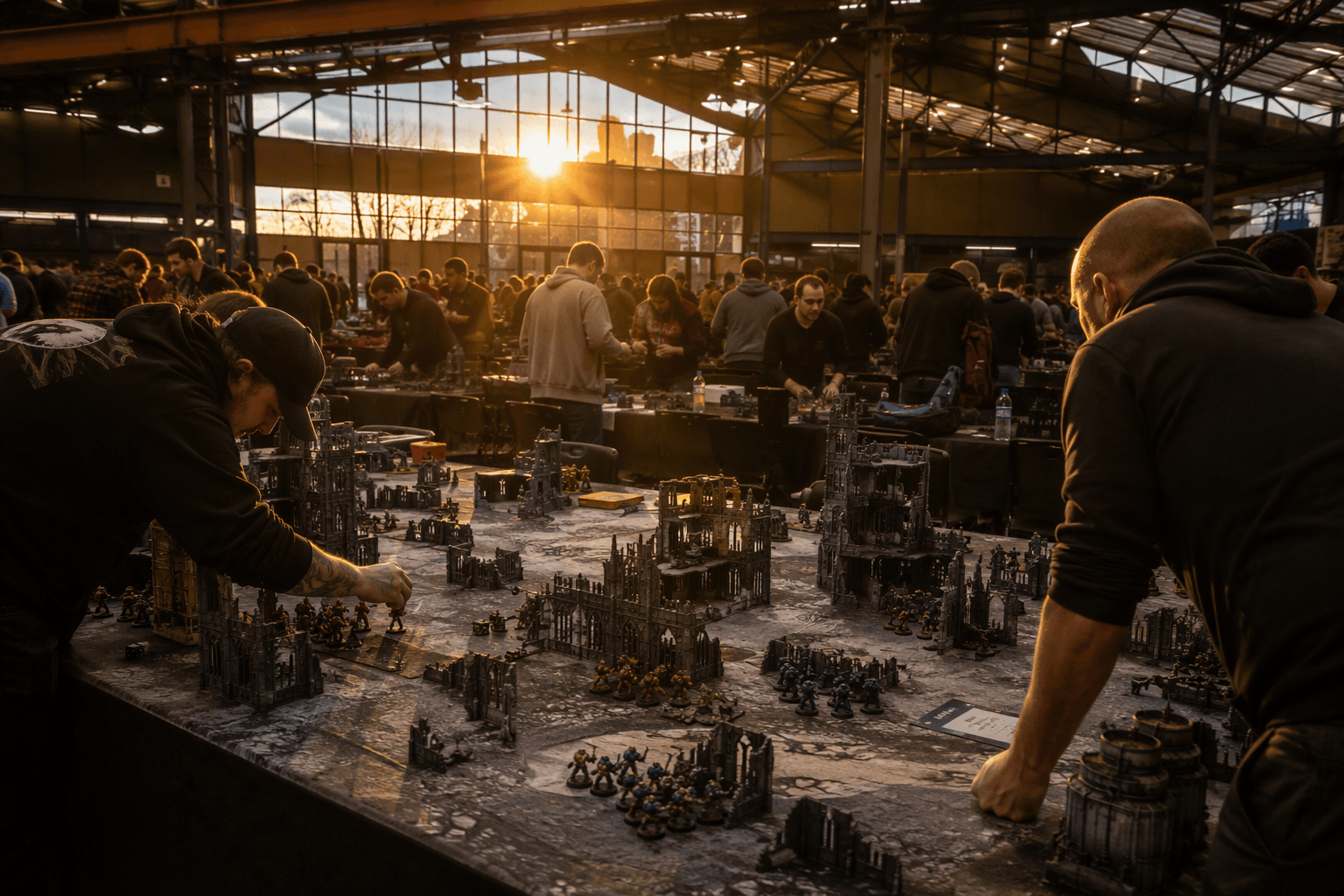
Games Workshop has been building toward this kind of standardisation for a while. The Warhammer Event Companion says, “This document is designed to help you run and play in organised events, from local leagues to the world championships... Within this companion, you’ll find a ready-made framework for levelling the playing field and getting games underway quickly.” That is the same philosophy behind the new templates: reduce setup friction, make the battlefield readable, and keep the game moving.
Games Workshop says those Event Companion recommendations are followed in full at most Games Workshop Warhammer Events and are considered the official way to play Warhammer 40,000 in an event setting, although organisers can adapt them to fit their own events. In other words, terrain templates are not a side hobby extra. They fit into the existing infrastructure that already tells players how a tournament table is meant to function.
Pariah Nexus shows how terrain support and mission design overlap
The latest terrain push also sits next to the Pariah Nexus Tournament Companion, which says, “The following guidelines are designed to support organisers of Warhammer 40,000 events in delivering a fine-tuned tournament experience using the Pariah Nexus Mission Deck... thousands, in fact!” That is a very 40k sentence in spirit: the mission deck opens up a huge number of possible games, but the table still needs a clear physical framework if those missions are going to feel balanced.
That pairing matters because mission design and terrain density are inseparable in matched play. A finely tuned mission pack can only do so much if the battlefield gives one army too many firing lanes or leaves objectives stranded in awkward, open ground. Templates give organisers a way to reduce that mismatch before the round timer starts.
The downloadable footprint idea turns terrain into a repeatable tool
Warhammer Community also hosts a PDF called Terrain Area Footprints, which points to a practical play aid rather than a decorative extra. The name alone tells you what kind of problem it is trying to solve: where the terrain sits, how much space it takes up, and how to recreate that footprint across different tables without improvising every time.
That is especially useful when terrain debates start around the usual pain points. Is there enough line-of-sight blocking? Does the table feel dense enough for melee armies to cross the board without being erased? Is there enough open space for armies that rely on long fire lanes to still function? A footprint guide does not answer every one of those questions on its own, but it gives players and organisers a shared starting point.
This is part of a longer terrain conversation in 40k
The new templates are also not arriving in a vacuum. Warhammer Community has already published terrain-focused #New40k pieces such as “Take cover with updated terrain rules” and “Terrain objectives make the battlefield your mission,” which shows that terrain has been a recurring part of the edition’s rules conversation, not an afterthought. That matters because 40k players know terrain is where a match often becomes tactical or lopsided long before the first unit charges.
Seen in that light, the templates are less about dressing tables up and more about teaching tables to behave. They support the same organised-play logic as the Event Companion, the Pariah Nexus materials, and the downloadable footprint assets: build the battlefield first, then let the army choices do the talking.
What makes this release useful is not that it gives every table the same look. It is that it tries to make every table easier to set up, easier to judge, and harder to break before deployment, which is exactly the kind of table-level tool that keeps matched play honest.
This article was produced by Prism’s automated news system from verified source data, official records, and press releases, then run through automated quality and moderation checks before publishing. The system is built and supervised by the people who set the standards it runs under. Read our full AI policy.
Did this article answer your question?