How to Store and Transport Your Warhammer 40k Miniatures Safely
One snapped antenna or chipped edge can ruin hours of work. Here's how to protect your painted miniatures through weekly game nights, tournament flights, and long-term storage.
Picture this: you lift your Storm Speeder out of the bag at game night and one antenna is dangling by a thread. The paint job took six hours. The drive took twenty minutes. Protecting painted miniatures is not complicated, but it does require a deliberate system, and the right one depends on whether you are crossing the street to a club night or crossing three time zones to a Grands Tournament.
The Two Systems: Foam Versus Magnets (and Why You Probably Need Both)
Every storage and transport solution for painted models comes down to one job: stop movement and stop abrasion. The hobby community has settled on two dominant approaches, each with a clear use case.
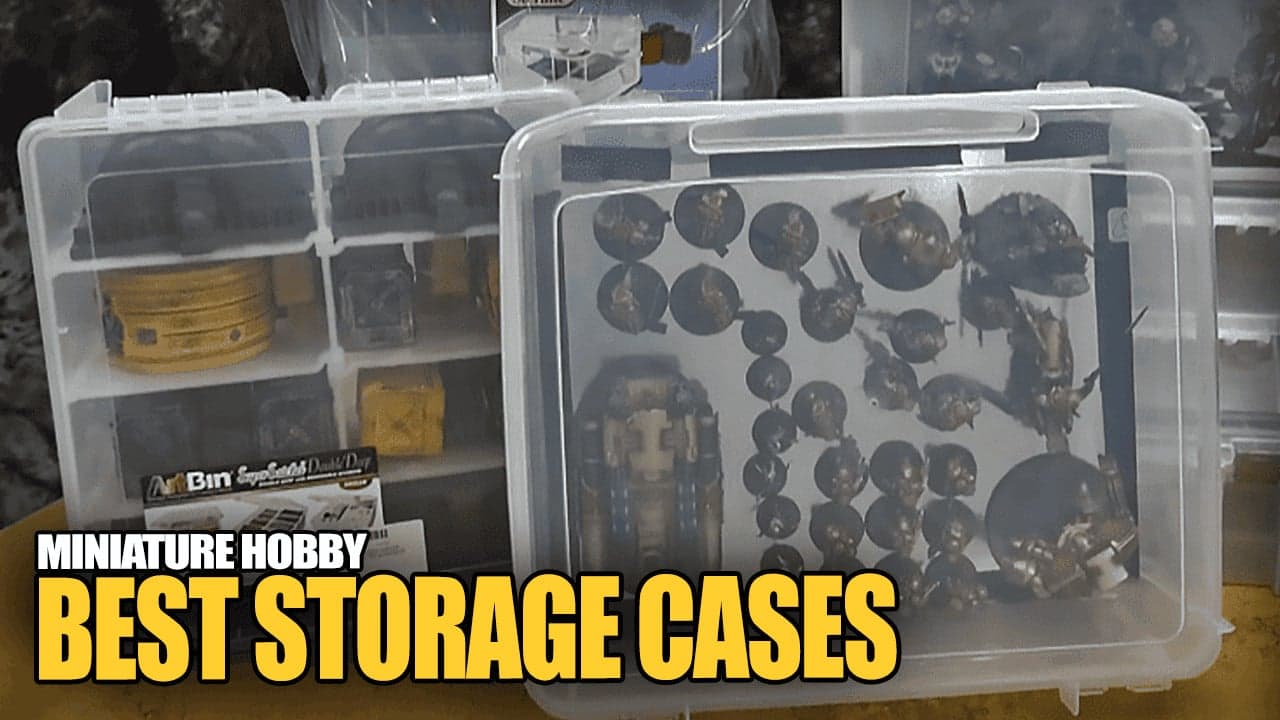
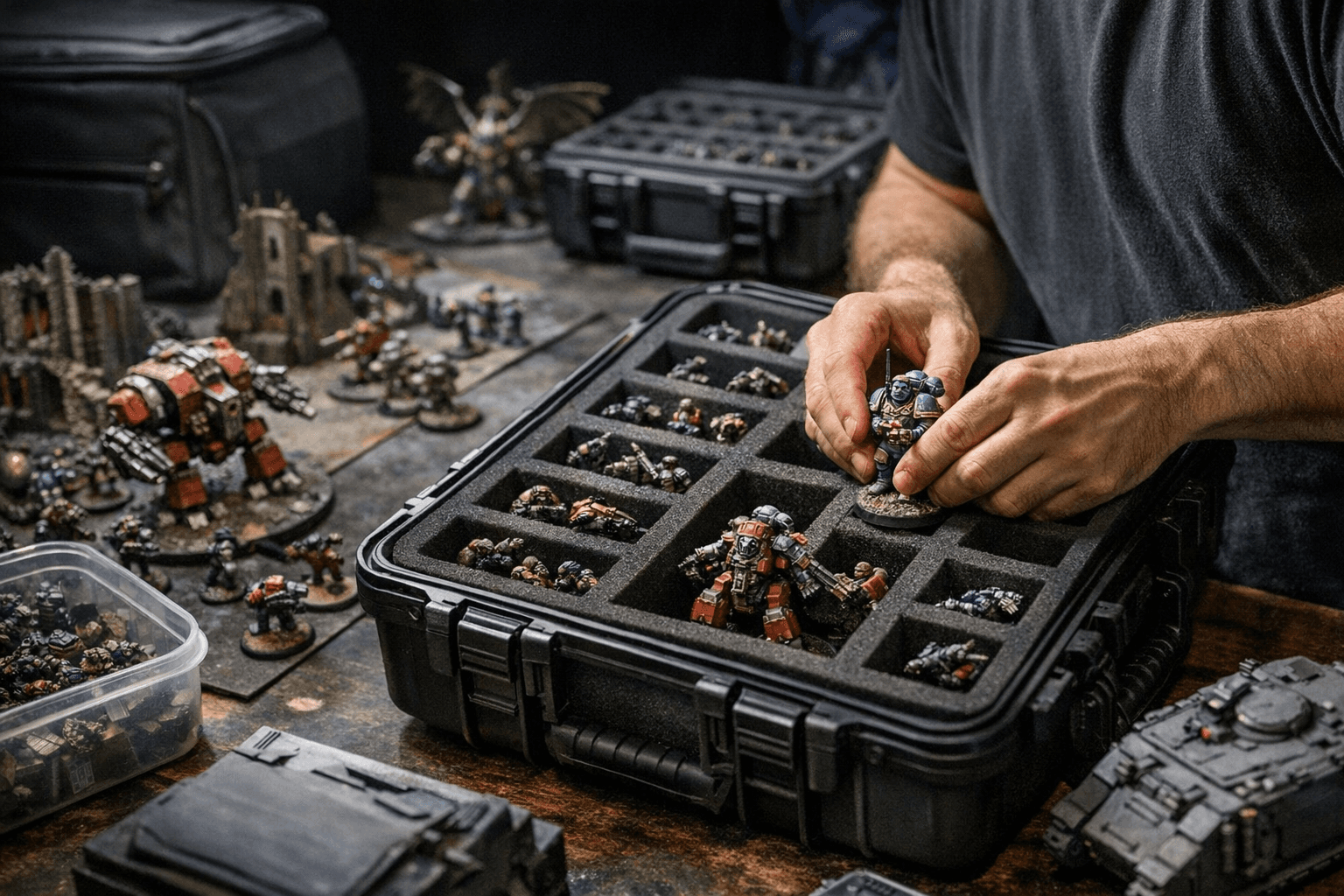
Foam-based storage, whether pluck foam or custom-cut trays, cradles irregular shapes and absorbs shock. It is the go-to for large, delicate centrepieces because no glue or preparation is required. Magnetic systems, by contrast, use a thin steel plate in the case base and small magnets glued or recessed into model bases. They are fast, they keep infantry locked in place during transit, and they let you swap units between games in seconds. The smartest move most experienced tournament players make is combining both: foam for the centrepiece models and fragile characters, magnetic trays for the battleline squads that travel every single weekend.
Use Case 1: Weekly Travel to Game Night or Club
For regular short-haul travel, the magnetic tray system earns its place immediately. Glue small magnets into your infantry bases, confirm consistent polarity across your trays, and seat the magnets fully flush so they do not rock on the tray surface. The shake test is your best friend here: load a tray, seal the case, and give it a firm shake. If nothing shifts, you are good. If models slide, your magnets are either too weak or the tray surface needs replacing.
For base sizes, 4.5x2.2mm flush-fit medium magnets work well on standard 25mm and 28mm GW bases. Vehicles on larger bases benefit from stronger holds, and models on 50mm or larger bases should use correspondingly bigger magnets to prevent any lateral movement on bumpy roads.
The practical checklist for game night packing:
- Load infantry on magnetic trays and seat the tray flat, not at an angle
- Wrap any character models or delicate centrepieces in individual foam slots rather than loose pockets
- Keep a small tube of super glue in your bag because game night repairs are essentially guaranteed over a full season
- Varnish your models before they ever go into a case; even a single coat of matte varnish dramatically reduces paint transfer between models and slows chipping at contact points
Use Case 2: Flying to a Tournament
Flying with miniatures is where preparation genuinely pays for itself. Goonhammer writer Corrode lost an entire army to an airline after checking a bag, and that one anecdote has circulated in the tournament community long enough to function as a cautionary law: wherever possible, carry your miniatures in your hand luggage and check only display boards, clothing, and accessories.
When carry-on space is unavailable or your army is too large, a heavy-duty hard-shell case with locking latches is non-negotiable for checked luggage. Layer foam trays inside, and place the most fragile models, resin characters, printed terrain pieces, and large vehicles, at the centre of the stack rather than at the top or bottom where impact pressure concentrates. Add small sealed bags of silica gel to manage humidity changes across climate zones, and wrap individual trays in a layer of bubble sheet as secondary protection against frame-flex inside the case.
Splitting your army across two pieces of checked luggage is a legitimate risk-management strategy. If one bag is lost or delayed, you can still field a legal list from the other. Before you close anything, photograph every model and make an inventory list. This documentation serves double duty: tournament registration often requires an army list, and your insurance or carrier claim is significantly stronger with timestamped photos.
For very tall models, aerials, antennae, and protruding weapon barrels should be removed and packed separately if they are designed to be removable. If they are glued permanently, orient the model so that the fragile protrusion faces the centre of the foam, not the case wall.
Use Case 3: Long-Term Shelf Storage
Models that live on a shelf face a completely different set of threats: dust accumulation, UV fading, ambient humidity, and the slow creep of resin warp. For long-term storage, a varnished surface is the single most impactful protection you can apply. Matte varnish suits most infantry and vehicles. Gloss varnish works well for specific effects like lenses and gems. Satin falls in between and is a solid all-rounder for high-traffic models that still come off the shelf regularly for games.
Humidity control matters more than most hobbyists expect. Silica gel packs placed inside storage boxes absorb moisture and prevent the kind of slow corrosion that attacks bare metal components and causes varnish finishes to cloud over time. Keep models in a temperature-controlled room: the conditions comfortable for humans are fine for miniatures.
Display cases with dust-proof panels, like IKEA Detolf glass cabinets, are community staples for long-term storage that also doubles as display. A single Detolf shelf can hold one Imperial Knight or a similarly large model. Titans and other truly massive models need a dedicated shelf with clearance on all sides.
The Three Pain Points the Community Keeps Bringing Up
Any honest guide to miniature transport has to address the models that cause the most heartbreak, because the community keeps naming the same three problems.
Broken spears and thin weapons are the most common casualty of foam transport. Foam grips a model's body well but often leaves weapon tips unsupported, and repeated insertion and removal bends them until they snap. The fix is to cut custom foam slots that support the full weapon length, or to magnetize the weapons so they can be removed entirely before packing.
Resin and 3D-printed models are fundamentally more brittle than plastic injection-moulded kits. Resin shatters rather than bending; printed layers can delaminate under pressure. Bubble wrap pressure can actually cause more damage than foam for very fine resin pieces, so individual custom-cut foam pockets are strongly preferred here. Handle these models with gloves if possible, as skin oils accelerate resin degradation over time.
Tall models like Imperial Knights and Chaos Titans present a vertical clearance problem that catches out even experienced players. The case lid must have enough clearance for the model's full height including any raised weapons, banners, or carapace antennae. For Knights on 170mm oval bases, 6x2mm large thin magnets (3 to 4 per base) provide a strong magnetic hold to a steel-lined case bottom, but the case must also be deep enough that nothing touches the lid in transit.
What You Can Do Tonight
If you have a game this week and your storage situation is currently "a shoebox and hope," here is a realistic starting point that costs very little:
1. Run a matte varnish coat on any model you plan to transport, even a rattle-can pass is significantly better than bare paint
2. Separate infantry from vehicles; do not let them share loose space in the same bag
3. Wrap any character models or resin pieces individually in bubble sheet
4. Add a small tube of super glue to your bag right now, before you pack anything else
The Pre-Event Packing List
Print this, laminate it, and stick it inside your case lid. Your local group will thank you when someone borrows it the night before a tournament.
- Hard-shell case with locking latches (for flights) or firm-sided bag (for driving)
- Foam trays sized to your largest model's base footprint, including vertical clearance
- Magnetic trays loaded and shake-tested for infantry
- Silica gel sachets inside the case
- Bubble sheet for individual fragile wrapping
- Army documented in photos and written inventory list
- Small tube of super glue (thin viscosity)
- Hobby knife with a fresh blade
- Spare magnets (matching your base sizes)
- Small screwdriver for any case hardware
- Spare bases matching your army's base sizes
- A paint pen or touch-up pot matching your most common armour colour
- Matte varnish spray for post-repair sealing
A broken model at a tournament is a logistical problem. A broken model after a ten-hour flight is a disaster. The difference between the two outcomes is almost always decided the evening before travel, not at the table.
This article was produced by Prism’s automated news system from verified source data, official records, and press releases, then run through automated quality and moderation checks before publishing. The system is built and supervised by the people who set the standards it runs under. Read our full AI policy.
Did this article answer your question?