How Warhammer 40,000's official rules ecosystem actually works
Warhammer 40,000 runs on a layered rules stack, and knowing which document wins can cut table arguments, speed up rulings, and keep event prep clean.
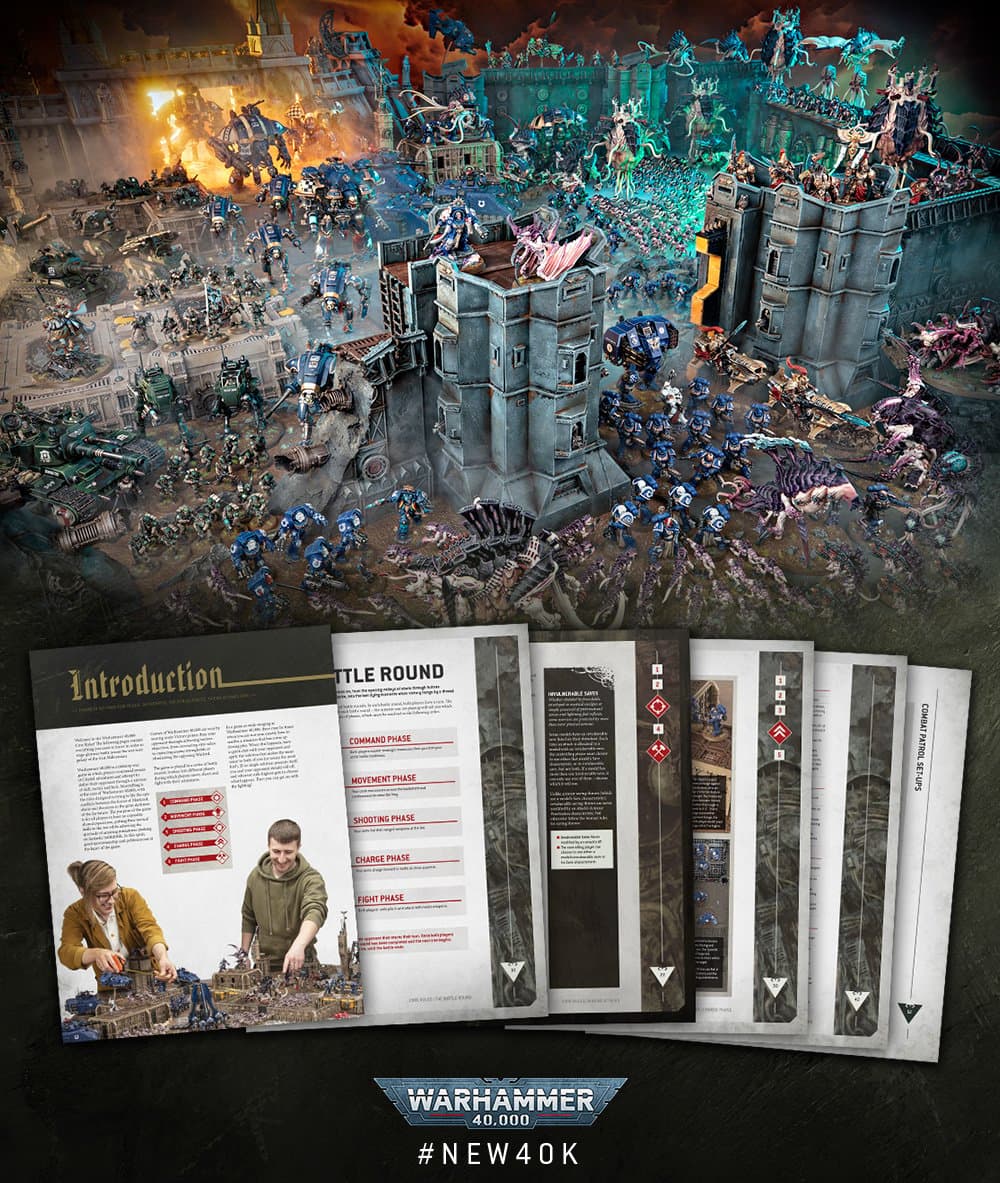
The Warhammer 40,000 Core Rules PDF sits on Warhammer Community beside the Quick Start Guide, faction documents, Balance Dataslates, and event packs. Each answers a different kind of question.
The Core Rules are the foundation
The Core Rules are the base layer, and everything else hangs off them. The PDF begins with the line, “Welcome to the Warhammer 40,000 Core Rules!”, and it lays out the essentials that actually make a game function: the battle round structure, command points, movement, shooting, charge, fight, and morale or battle-shock style mechanics. Warhammer Community’s downloads hub is the official place where those rules live, built to keep players on the current version instead of some old forum summary.
That same PDF is indexed with a 24.09 file stamp on Warhammer Community, a clear sign that the rules are maintained as a living digital file rather than a static printed relic.
The Quick Start Guide is for teaching, not settling disputes
The Quick Start Guide sits alongside the Core Rules, but it is not the final word. Its page references point back to the page numbers in the full Core Rules, which tells you exactly how it is meant to be used: as a teaching tool that helps new players get moving faster without replacing the main reference document. If you are running a first game, demo, or casual intro night, the Quick Start Guide is the smoother on-ramp.
Games Workshop publicly put the free Core Rules out in June 2023 for the new edition, and paired that release with Crusade and Competitive Missions downloads.
Faction rules sit above the base game, but only inside their lane
Once you know how the Core Rules work, you move up to faction-specific material. That layer can include codex rules, faction packs, errata, and points updates, and this is where a lot of table confusion starts if players stop at a datasheet and call it done. A unit card tells you what the model can do, but it does not replace the latest faction rules or the newest points and errata documents.
This is the part of the stack that catches returning players the most often. If you have an older memory of detachments, list construction, or edition sequencing, the current edition’s army-building rules may have moved on.
Balance Dataslates and points updates can change the answer
The next layer is the one that resolves a lot of “but my codex says” arguments. The Balance Dataslate states that its recommendations are designed to create the most balanced and enjoyable experience for all players, taking into account the latest data and feedback from a wide variety of sources. It also states that its rules changes are applied in full at official Games Workshop matched play and Crusade events, and reviewed periodically.
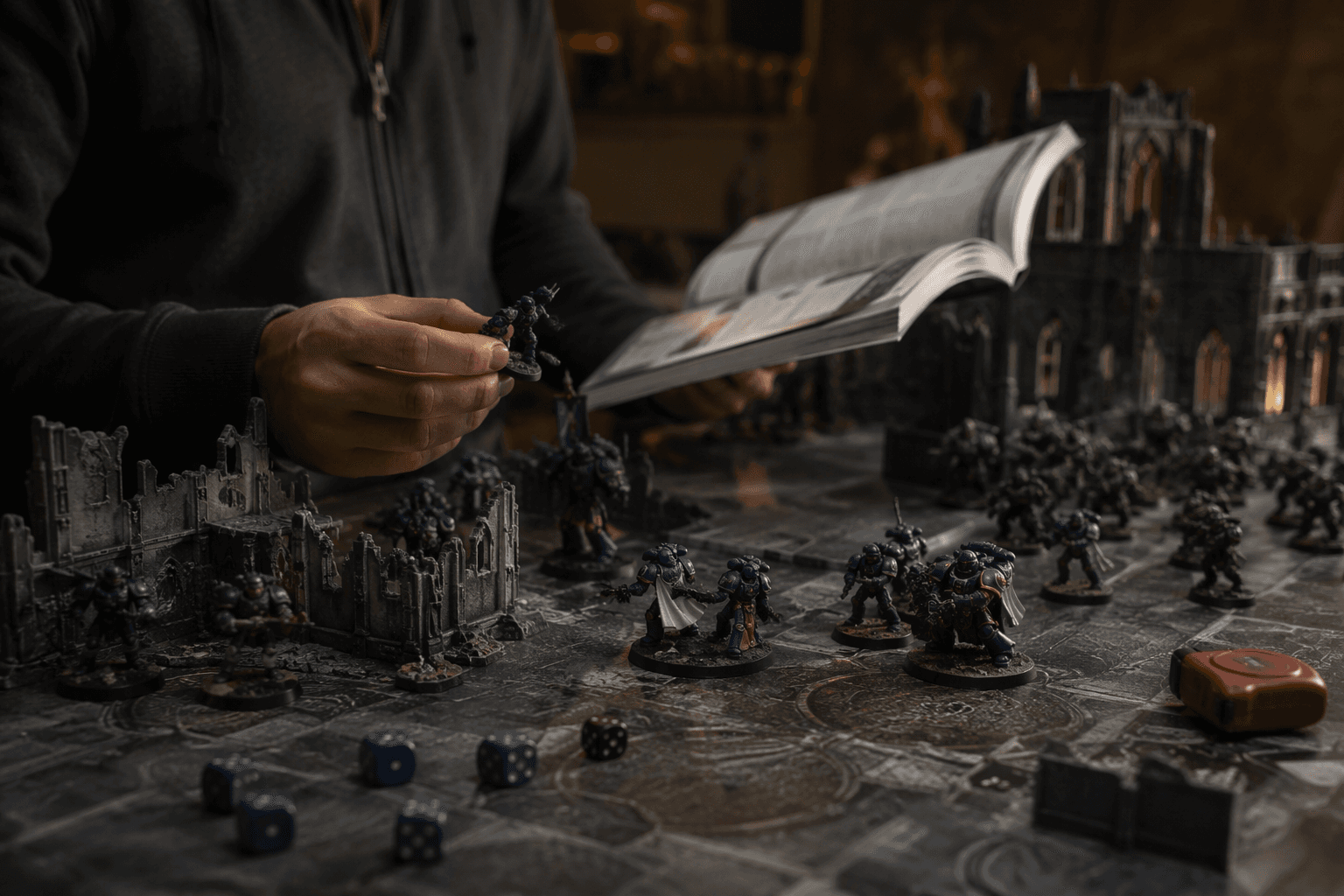
The Balance Dataslate is a rules instrument, not commentary. The June 2025 Balance Dataslate and the June 2025 Munitorum Field Manual update were pushed together with updated points changes, which shows how often rules text and points values move in tandem.
Event packs narrow the rules even further
Organized play adds another layer on top. The Pariah Nexus Tournament Companion is there to support organisers in delivering a fine-tuned tournament experience using the Pariah Nexus Mission Deck, and it provides suggestions for the best event configurations. Mission choice, table setup, and sequence expectations can all be standardized for competitive play.
The broader Warhammer Event Companion is designed to help run and play in organised events, from local leagues to the world championships, and its recommendations are followed in full at most Games Workshop Warhammer events. It considers those recommendations the official way to play Warhammer 40,000 in an event setting.
How to resolve a rules conflict at the table
When two rules seem to clash, the fix is usually to work down the stack in order.
1. Start with the event pack if you are in organized play, because that setting may override the default approach.
2. Check the latest Balance Dataslate and points updates next, since those are built to adjust matched play.
3. Then check the faction pack, codex, errata, or other army-specific document.
4. Fall back to the Core Rules for the base answer.
5. Use the Quick Start Guide only as a teaching aid, not as a replacement for the full rule set.
The same digital model runs across Games Workshop’s other systems
Warhammer 40,000 is not an isolated case. Warhammer Community’s downloads section also carries official pages for Age of Sigmar, Kill Team, and The Horus Heresy, which shows that Games Workshop has built the same digital rules model across its tabletop systems. The company clearly expects players to use online documents, not just a single printed rulebook, and that expectation is now part of how its games are supported.
A 2025-06-04 Auspex Tactics breakdown reacting to a 40k rules update shows how quickly the player base analyzes changes once official documents go live.
This article was produced by Prism’s automated news system from verified source data, official records, and press releases, then run through automated quality and moderation checks before publishing. The system is built and supervised by the people who set the standards it runs under. Read our full AI policy.
Did this article answer your question?