Why painting slower can finish your Warhammer 40k army faster
The quickest way to finish a 40k army is to slow down on the few steps that cause rework. Clean edges, proper thinning, and controlled brushwork keep squads moving.
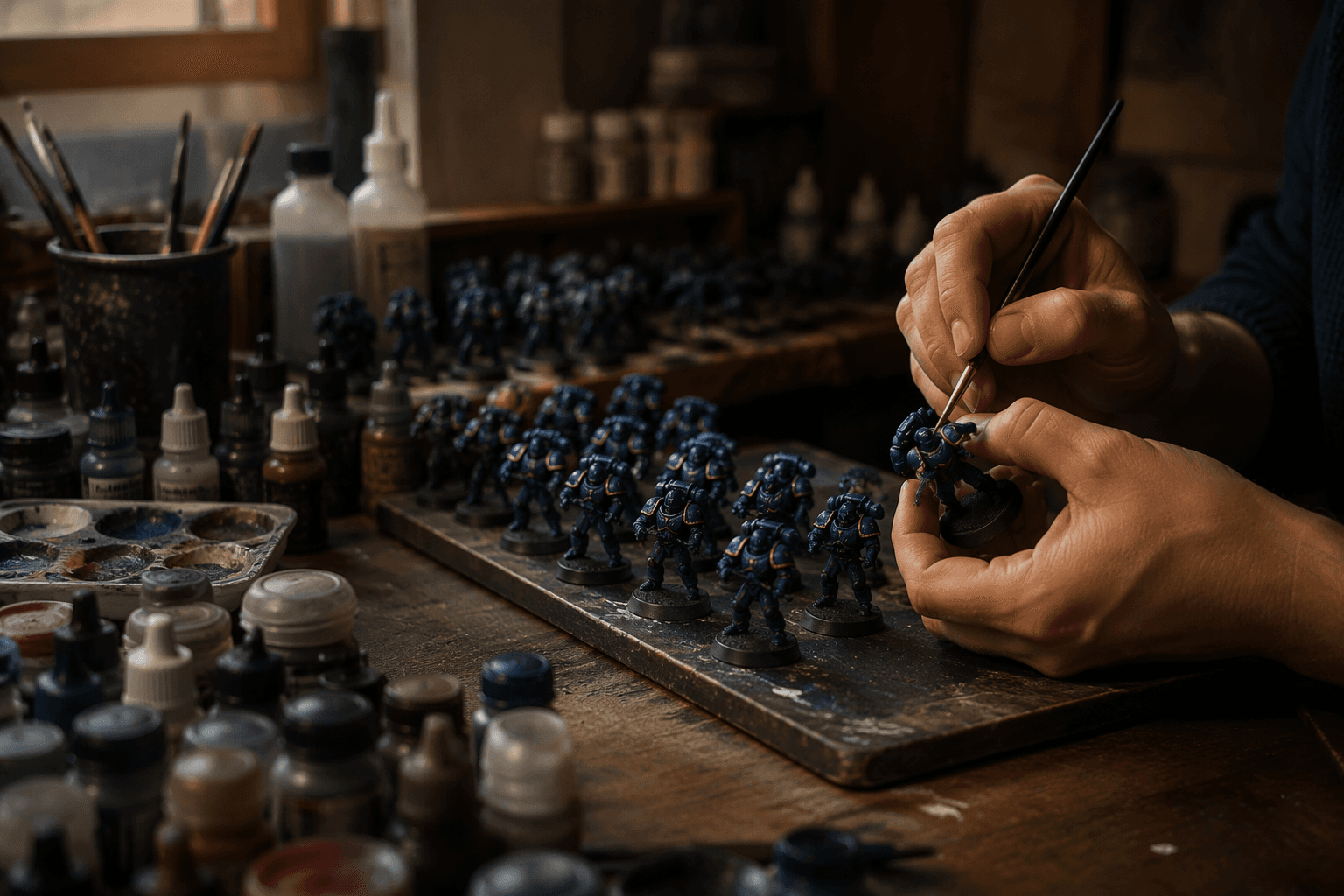
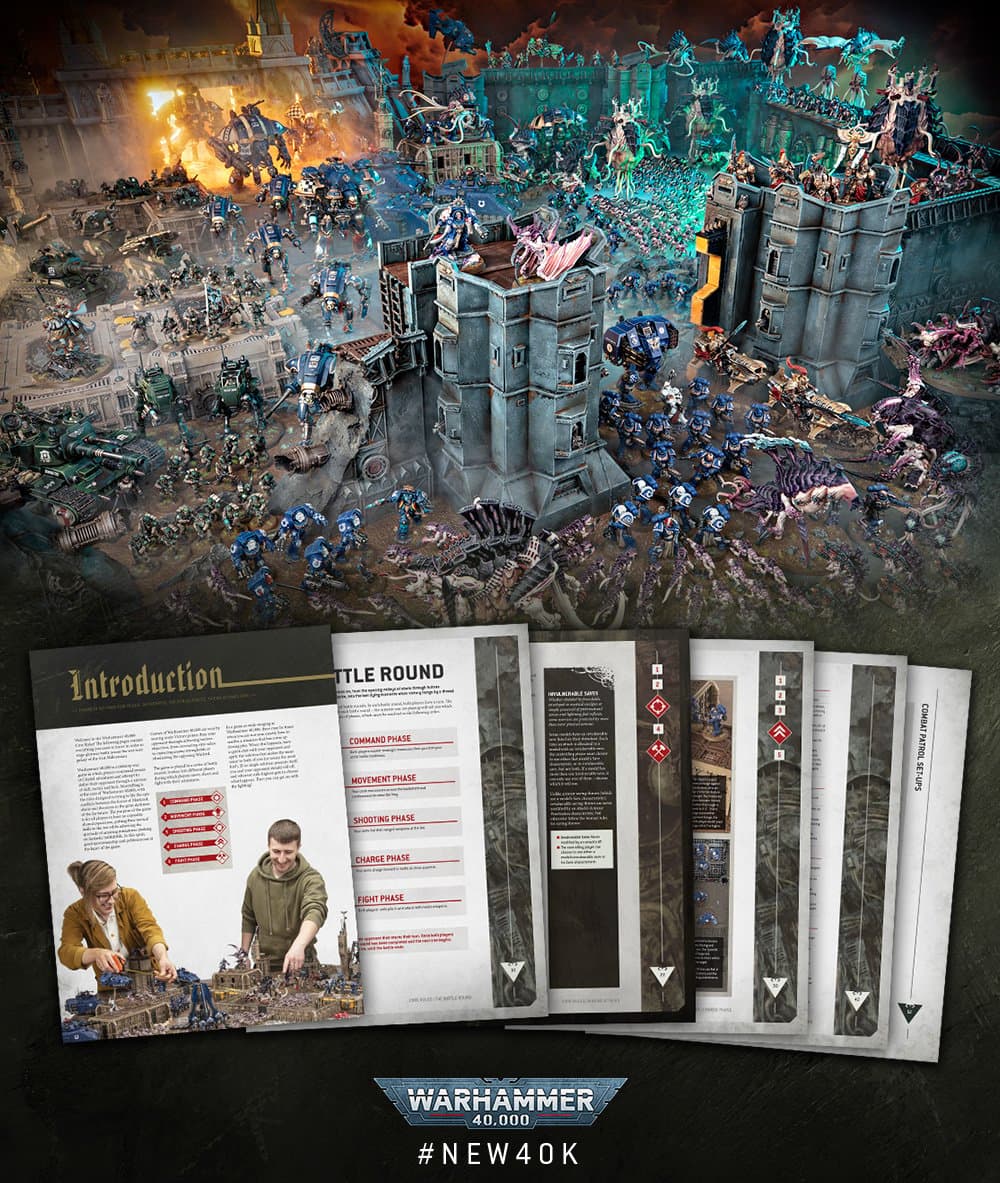
Warhammer 40,000: Leviathan has 72 miniatures, and painting that many models punishes every avoidable mistake. You do not speed up a 40k army by rushing every model. You speed it up by slowing down where mistakes multiply, especially on brush control, paint thinning, and clean edge placement. The extra minute you spend now usually saves ten later, because you stop repainting smudges, fixing chalky layers, and rescuing sloppy trim.
The real time sink is cleanup, not the brushstroke
A squad of Intercessors, Fire Warriors, Ork Boyz, or Necron Warriors becomes a grind when each model is treated like a race. The better approach is a repeatable workflow: clean the mold lines properly, decide the paint order before the first coat goes on, and finish broad areas before you touch the fine details. That turns the job from a series of emergency fixes into a controlled process.
If your basecoat is neat, your shade stays where it belongs. If your metallic trim is placed carefully, you do not spend the next session scraping it off a shoulder pad edge. If your highlights land only on the places that catch light, you avoid the all-over repaint that eats an evening.
Brush control matters most at the edge, not everywhere
The fastest-looking armies usually come from painters who know exactly when to slow their hand. Brush control is not about hovering over every surface with microscopic patience, it is about being deliberate at the decision points that define the model’s read on the table. The edge of a power armor plate, the rim of a helmet lens, the line where cloth meets armor, those are the places that reward steadiness.
That is why clean edge placement does so much heavy lifting. A crisp highlight on a shoulder pad or a tidy line on a weapon casing makes the model look finished even if the rest of the process was straightforward. On a 10-model squad, those small choices are what separate “painted” from “army-ready” without demanding display-level hours on every infantryman.
Thin the paint, then stop chasing mistakes
Paint thinning is another place where impatience costs time. Too thick and you bury detail, force a second heavy coat, and then spend longer correcting texture. Too thin and you chase streaks across the model, piling on extra passes that defeat the whole point of moving quickly.
The practical middle ground is simple: mix the paint to flow smoothly, then apply it in controlled layers and leave it alone long enough to set. That rhythm matters more than trying to finish a model in one sitting. When you stop treating every layer as a test of speed, you get fewer visible brush marks, better coverage, and far less repair work when the next color goes on.
Batch painting is where slower really becomes faster
Batch painting is the obvious answer to large 40k projects. Warhammer Community even published a dedicated guide for painting Warhammer 40,000: Leviathan. That is the right scale to think at for a lot of armies: not one perfect model, but a repeatable unit process that carries through a whole force. Once you lock in a recipe for armor, cloth, metallics, skin, and basing, you stop re-deciding the same problems on every figure.
Batch painting also keeps morale intact. Painting five or ten nearly identical bodies at once is less punishing than trying to finish each model as a one-off masterpiece. You get into a rhythm of basecoat, shade, highlight, detail, and final cleanup, and the slow, careful moments become checkpoints instead of roadblocks.
Golden Demon proves speed and finish are linked, not opposed
Golden Demon is Warhammer's painting competition. Warhammer says it draws thousands of entries each year from all over the world, and the top prize goes home with the Slayer Sword.
Warhammer Community published “Golden Demon Winners Share Their Top Tips to Up Your Painting Game” on 2022-09-23 and “Top Golden Demon Tips for AdeptiCon and Future Competitions” on 2023-02-27.
The tabletop does not need microscopic perfection
Most 40k armies never need every model pushed to competition standard. On the tabletop, the silhouette of a sword, the trim on a shoulder pad, the glow of a lens, or the weathering on armor plates matters more than whether every blend would survive a judge’s close inspection.
Official hobby guidance covers both display painters and newcomers who just want an army on the table. Warhammer Community’s Painting Videos section sits alongside its batch-painting articles and beginner-friendly tips.
This article was produced by Prism’s automated news system from verified source data, official records, and press releases, then run through automated quality and moderation checks before publishing. The system is built and supervised by the people who set the standards it runs under. Read our full AI policy.
Did this article answer your question?