Inside Warhammer 40,000's Navis Nobilite, the noble houses that steer the Imperium
The Navis Nobilite is the Imperium’s hidden logistics spine, a hereditary power bloc whose Navigators keep war, trade, and survival moving through the Warp.
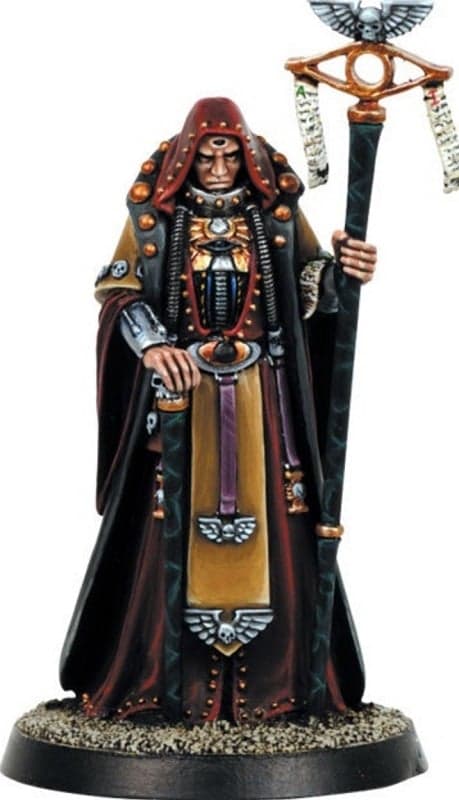
The Imperium does not conquer worlds, feed its armies, or connect its billion fragments without the Navis Nobilite. These are the noble houses behind the Navigator gene, a bloodline of haughty aristocrats whose value to Humanity is enormous because they can steer ships through the Warp, and do it while everyone else is blind.
The elite nobody can replace
The easiest mistake to make about Navigators is to reduce them to “just mutants.” In practice, that misses the entire political point of the Navis Nobilite. Within their own order they are treated as fully human, fully noble, and fully necessary, even if the wider Imperium often looks at them with suspicion because of the third eye that marks their line.
That eye is not decorative. It is the key to Imperial mobility, letting Navigators perceive the shifting tides of the Warp and guide vessels through the inchoate maelstrom that separates star systems. Official Warhammer text calls them rare human mutants from a small handful of ancient noble houses bred for one purpose, and that purpose is the difference between a galaxy-spanning empire and a pile of isolated worlds.
How a bloodline became a ruling class
The Navis Nobilite is older than the Imperium by thousands of years. Tradition places the Navigator gene in the long Dark Age of Technology, with some accounts dating its appearance anywhere from M10 to M22, and that long stretch matters because it explains how the Navigators outlived the collapse of human interstellar civilization. When the Age of Strife shattered old networks, the Navigators did what durable elites always do: they organized survival into inheritance.
They eventually coalesced into Great Families, and those families formed the broad union known as the Navis Nobilite. That structure is why the order feels less like a guild and more like a feudal power bloc. Bloodline, marriage, patronage, holdings, and obligation all reinforce one another, and the result is a hereditary aristocracy wrapped around a rare biological gift.
Great Houses, not a loose fraternity
The houses are not interchangeable, and they do not behave like a simple professional association. Some are closer to the original Navigator families than others, and the Magisterial Houses sit nearest that ancestral core, with major holdings on Terra and the kind of influence that comes from being both old and indispensable.
Their power is visible in the way they live. The Navigator’s Quarter on Terra is described as a vast district of palaces and gardened estates, a reminder that these are not impoverished specialists tucked away in a shipyard somewhere. They are fortress-estates, household politics, and dynastic rivalries in stone, a noble ecosystem built around the one thing the Imperium cannot manufacture freely: safe passage through the Warp.
Terra is where their leverage becomes real
The Palace of the Navigators on Terra anchors the whole structure. That alone tells you how deeply embedded they are in Imperial governance, because the Navis Nobilite is not a fringe organization tolerated at the edge of power. It sits inside the Adeptus Terra’s orbit, and its voice can reach the highest levels of the state.
The Paternova, the senior figure among the Navigators, is represented by the Paternoval Envoy, who often becomes one of the High Lords of Terra. That detail is the clearest signal that this is not just ceremonial nobility. The families that steer voidships also stand close to the center of Imperial decision-making, where wars are funded, routes are protected, and the flow of ships is turned into policy.
The invisible infrastructure of every crusade
This is why the Navis Nobilite matters so much to the setting. Every Imperial war depends on someone getting fleets to the right place at the right time, and without Navigators, fast voyages beyond the closest systems would be impossible. The Imperium’s grandest campaigns are not simply fought by heroes, tanks, and Space Marines; they are enabled by routes, timing, and the ability to cross the darkness between stars before an enemy can collapse the front.
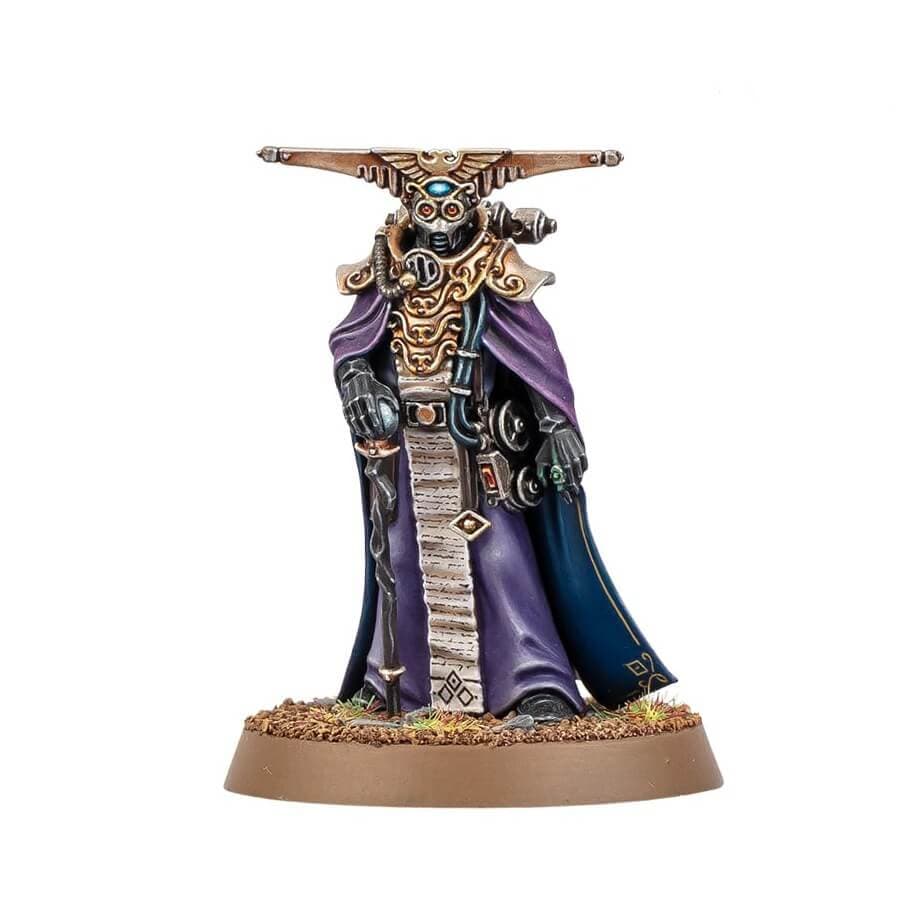
That makes the Navigators one of the structural pillars of interstellar civilization. They rarely take to the battlefield except on vital missions, but their influence extends into every supply convoy, every crusade armada, every merchant run, and every desperate evacuation. The Imperium can survive a lot of things. It cannot survive the loss of the people who make distance manageable.
Power with strings attached
The houses are not directly answerable to Imperial authority, but they are not free of obligation either. Ancient bargains bind them to service for the Adeptus Mechanicus, the Imperial Navy, and merchant fleets, which is exactly the sort of deal that keeps a feudal empire running: autonomy in exchange for indispensability. They are protected because everyone needs them, and they remain powerful because everyone keeps needing them.
There is one authority that can cut through that privilege. If Chaos contamination is suspected, the Ordo Malleus has jurisdiction over Navigators to prevent taint from spreading through the bloodlines that keep the Imperium moving. That tension, between special status and absolute danger, is part of what makes the Navis Nobilite so compelling in the lore. They are trusted enough to guide humanity’s ships through hell, and feared enough that the Imperium keeps a watcher at the gate.
Why this obscure noble order is one of the setting’s biggest deals
The best way to understand the Navis Nobilite is to see them as hidden infrastructure with a heraldic crest. Their houses control not just a rare gene, but the social and economic machinery wrapped around it: estates, alliances, Terra-based influence, and the routines that keep the Imperial Fleet moving. That is why the lore lands so hard when you step back from the details.
The Imperium is not held together only by faith and firepower. It survives because a handful of ancient noble houses can see through the Warp, endure the corruption that comes with that gift, and keep steering the machines of war toward their targets. In a setting built on monumental power, the Navis Nobilite is one of the clearest examples of how the smallest elite can decide whether an empire actually reaches the stars or simply stares at them from home.
This article was produced by Prism’s automated news system from verified source data, official records, and press releases, then run through automated quality and moderation checks before publishing. The system is built and supervised by the people who set the standards it runs under. Read our full AI policy.
Did this article answer your question?