Land Raider turns 25, the iconic Space Marine assault tank
A 25-year-old plastic kit and a 1987 origin story explain why the Land Raider still defines how Space Marine forces look, paint, and deploy.
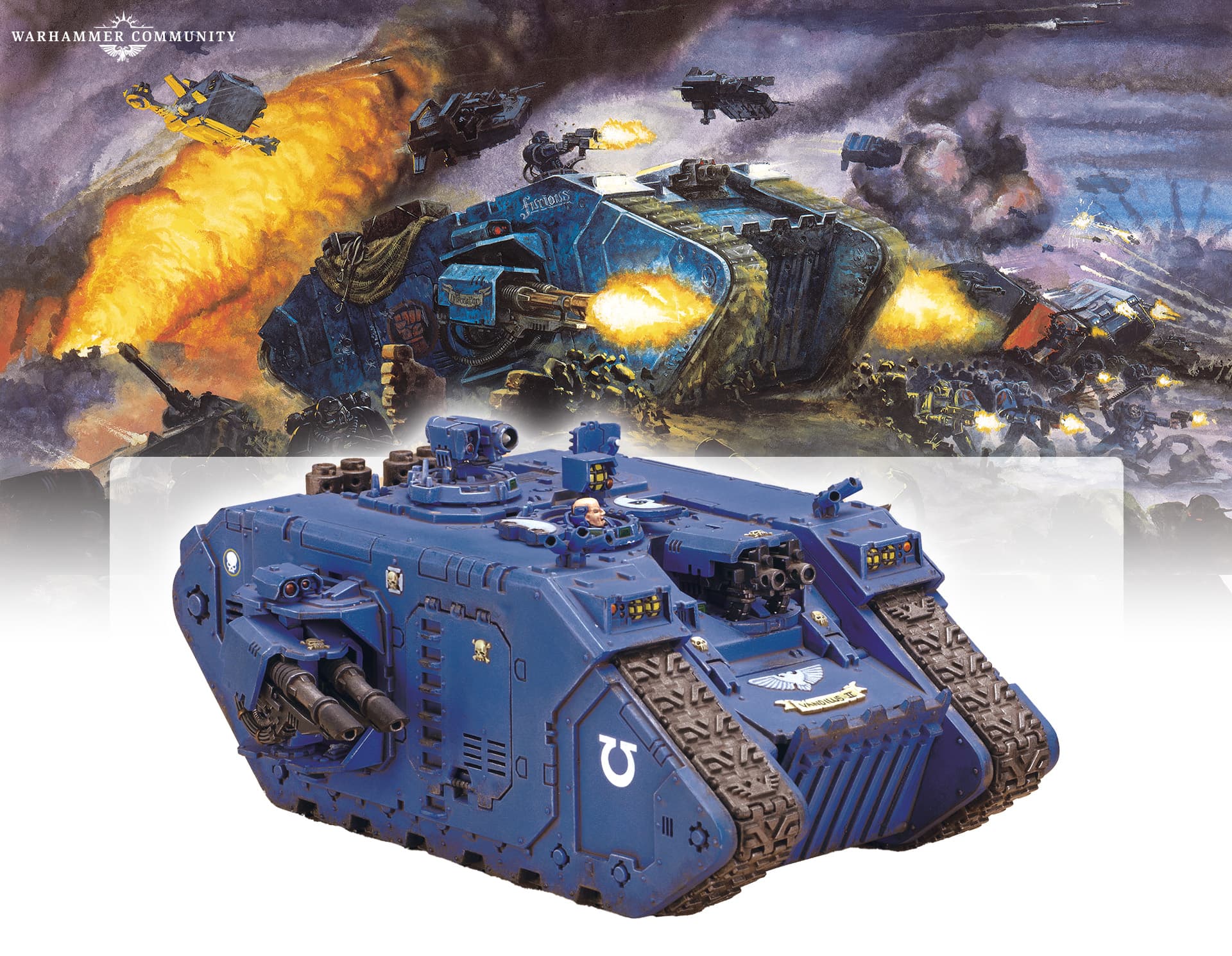
Few Space Marine vehicles read on sight like the Land Raider. Its armored slab sides, assault ramp, and sponson batteries make it feel less like a transport and more like a rolling declaration that the Astartes are here to break the line in person.
A silhouette that still defines Space Marine warfare
Warhammer marked the Land Raider’s anniversary in April 2025, calling it a “cornerstone of the Space Marines range,” and a 2025 hobby video description from The Paladin Journal repeated that Games Workshop had announced the current standard kit was 25 years old. That milestone lands because the vehicle’s shape is still the image many players have in mind when they picture a Chapter assaulting the enemy front line.
The Land Raider is not just a gun platform. In lore, it is an assault transport built to deliver elite infantry into combat, and its reputation rests on ancient Standard Template Construct technology, which gives it the feel of a relic from the Imperium’s lost peak rather than a simple armored box. Warhammer’s store listing leans into that aura by calling it “the single most destructive weapon in the Adeptus Astartes’ arsenal,” a line that tells you exactly how the setting wants you to see it: ancient, brutal, and built to punch through the heart of a battle.
From Rogue Trader to the modern plastic kit
The Land Raider’s history stretches back to the 1987 Rogue Trader rulebook, where the pictured version was a scratch-built studio model by Dave Andrews. Early material also used the name “Land’s Raider,” a reminder that this icon settled into its current identity over time rather than arriving fully formed.
Games Workshop followed with a plastic Land Raider kit in 1988, then later replaced it with the modern standard kit now being celebrated at 25 years old. That long production line matters because it explains why the tank feels familiar across eras: the same broad outline has carried through changes in tooling, edition, and army style while keeping its core role intact. One model family connects the earliest days of 40,000 to the current plastic range without losing the visual weight that made it memorable in the first place.
Why painters keep reaching for it
The Land Raider is one of those kits that rewards any level of ambition. Warhammer’s store listing describes the standard version as a multi-part plastic kit with 101 pieces, and that size gives painters a huge canvas for chapter iconography, hazard stripes, battle damage, and oil staining. Even a restrained scheme can look imposing on those flat armor plates, while a more elaborate build can carry freehand scripture, hanging trophies, and Crusade-specific markings that make the tank feel like part relic, part shrine.
That is a big part of its appeal for collectors, too. A Land Raider sits at the center of an army visually, linking infantry and vehicle elements in a way few other transports can match. Put it beside Terminators, Bladeguard, or a veteran squad and the whole force suddenly reads as a single spearpoint, armored at the front and ceremonial in the back half, which is exactly the kind of visual story Warhammer 40,000 armies are built to tell.
A transport that creates a story the moment it rolls out
On the table, the Land Raider’s job is simple to understand and hard to ignore: move elite infantry into the danger zone and make the enemy react. That is why it keeps coming back in narrative games and in army projects built around a dramatic first strike, because the tank does not just carry models, it creates a scene. The moment Terminators or other veterans ride behind that assault ramp, the battle changes from a firefight into a breach.
Different variants sharpen that identity in different directions. The Crusader and Redeemer keep the same core chassis but signal different battlefield roles and different moods, one leaning into aggressive infantry delivery and the other into fiery close-range brutality. Heresy-era and classic 40k versions remind you that the platform has evolved without ever abandoning the idea that made it matter in the first place: a heavily protected assault vehicle that turns Space Marines into a blunt instrument.
Why the Land Raider still matters after 25 years
The anniversary is useful because it shows how little the Land Raider needs to stay relevant. It remains a centerpiece for painters, a storytelling machine for narrative players, and a cornerstone of Space Marine imagery because its silhouette, role, and lore all still line up cleanly. That is rare in a range where new tanks and transports come and go with each edition cycle.
The Land Raider still works because it does one thing better than almost anything else in the setting: it makes Space Marine warfare look inevitable. From the 1987 Rogue Trader sketch to the 101-piece modern plastic kit, it has kept the same promise, a wall of ceramite, an assault ramp, and elite infantry about to drive straight into the enemy line.
This article was produced by Prism’s automated news system from verified source data, official records, and press releases, then run through automated quality and moderation checks before publishing. The system is built and supervised by the people who set the standards it runs under. Read our full AI policy.
Did this article answer your question?