Orks Rise Against Defiler Menace as 40k Meta Converges
Defiler-heavy lists are squeezing the field, and Orks are becoming the sharpest counter as 40k’s competitive shapes harden around a few efficient builds.
The meta is starting to look like itself
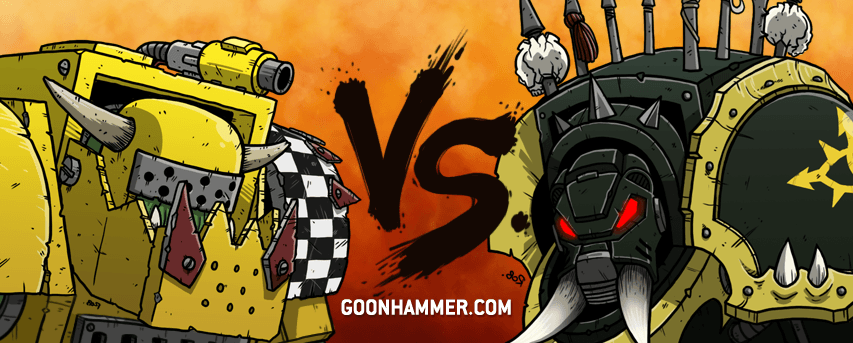
Goonhammer’s third Underground Euro Beats roundup reads like a snapshot from the moment a format begins to calcify. The week’s story is the growing pressure of the Defiler menace, and Orks are the faction stepping up to push back. That matters because this is not just a report on winners, it is a study in how one dominant archetype warps list construction until the rest of the field is forced to respond.

The article’s own language about metagame carcinization captures the mood perfectly: armies are converging on familiar shapes, with list construction tightening around efficient statlines, durable threats, and packages that can both fight for the midboard and survive a real brawl. When that happens, the best lists stop being exotic and start being answers.
Why the Defiler is the pressure point
The Defiler has already become a named problem in Goonhammer’s coverage, with a separate Competitive Impact: The Defiler piece appearing on April 27, 2026. That was followed by an updated Chaos Space Marines faction focus on April 28, which tells you this is not a one-event blip but an active list-building conversation. When a single chassis or package starts showing up everywhere, the rest of the field stops asking what it likes and starts asking what it can reliably kill.
That is the key competitive lesson here. A strong archetype does not just win games; it compresses the available space for everyone else. Lists begin to converge on the same kinds of solutions, whether that means more bodies to deny board control, more melee pressure to punish overextension, or more high-end anti-vehicle tools to stop the toughest targets from taking over the table.
Orks are the loudest answer
Orks are the army trying to break that lock. In this week’s roundup, they are not presented as a nostalgia pick or a side note, but as a practical counter to the current pressure cooker. That fits their traditional strengths: aggressive melee, board control, and the ability to make the table uncomfortable for an opponent who wants to sit on durable efficiency and dictate the flow of the game.
There is also a broader cultural signal here. Warhammer Community began its Armageddon unboxing coverage on May 1, 2026, and tied the new edition’s launch spotlight to Orks and Space Marines. Its Armageddon lore coverage also puts Ghazghkull Thraka and a renewed Ork invasion at the center of the narrative. So while tournament players are trying to crack the Defiler problem, the official story of the edition is also putting Orks back in the frame. Competitive and narrative attention are pointing in the same direction, and that kind of overlap often amplifies faction visibility across tables.
What Ork players are really threatening
The important part is not just that Orks are present, but that they are asking the meta a different question. If a Defiler-heavy environment rewards lists that can absorb punishment and still project threat, then Orks punish armies that deploy too cautiously or spread too thin. They turn the board into a series of close-range decisions, and they force opponents to prove they can handle pressure from multiple angles at once.
That is why the counter-tech conversation matters. In a converging meta, the best answer is often not the flashiest one, but the one that can force bad trades, take space early, and punish a list that has tuned itself too hard for mirror-style durability.
A busy weekend across a wide map
Part 3 of Underground Euro Beats landed on May 2, 2026, following part 2 on May 1 and part 1 earlier in the week. The events covered in the final batch form a useful cross-section of where the format stood: not just one local pocket, but a multinational picture spanning the Netherlands, Sweden, Spain, the United Kingdom, Ireland, and the United States. That spread matters, because a pattern that repeats across regions is more likely to be a real meta trend than a lucky spike.
Warhammer Open Maastricht gave the week its biggest anchor. The event was a 279-player, 8-round Supermajor in Maastricht, Limburg, Netherlands on April 24, 2026. A field that large is where the strongest ideas get stress-tested, because a list has to survive a long run of pilots and pairings without leaning on variance. When a trend shows up there, it carries extra weight.
The smaller GTs still matter
The weekend also included Squig City: Casino Royale 2026, an 86-player, 5-round Grand Tournament held on April 25, 2026 in Pendleton, Oregon. Best Coast Pairings listed 90 registered players, and the event took place at Rivers Event Center inside Wildhorse Resort & Casino. Pendleton Wargaming framed it as Eastern Oregon’s first 40k GT, which makes it more than just another event on the calendar. It is part of the hobby’s geographic spread, and it shows how competitive 40k keeps pushing into new scenes.
Prestige Wargaming Grand Tournament 3 in Barnsley, United Kingdom was smaller at 27 players, but it carried real stakes as a World Qualifier with a golden ticket for first place. That kind of prize changes how people build and play, because every round becomes an exercise in risk management as much as raw power. Smaller fields can still expose the same meta pressures as majors, especially when players know exactly what the top end of the format looks like.
The final batch also included Dearg Doom VI and Olympic Miniatures: Springtime Slaughter GT at Red October Games, adding to the sense that this was a dense, multi-event weekend rather than a single headline tournament. That density is what makes the roundup useful: it shows the same competitive conversation happening in different rooms, under different stakes, with different field sizes.
What to take from the trend
The real takeaway from this round of coverage is that the format is not frozen, but it is narrowing. Orks are pressing hardest against the Defiler problem, while Tyranids, Thousand Sons, and vehicle-heavy builds remain part of the broader arms race. The armies that keep performing are the ones that can contest the board, present a real threat into tough targets, and adapt quickly when the field starts leaning into a known answer.
If you are reading the meta as a set of pressures rather than a list of results, the lesson is straightforward: once a dominant archetype starts setting the terms, the serious work shifts to counter-tech, deployment discipline, and faction pivots. That is where the game is right now, and that is why this week’s Ork rise feels less like a novelty and more like the first hard push against a format that has started to close in on itself.
This article was produced by Prism’s automated news system from verified source data, official records, and press releases, then run through automated quality and moderation checks before publishing. The system is built and supervised by the people who set the standards it runs under. Read our full AI policy.
Did this article answer your question?