Starting a Drukhari Army, from Lore to Painting and Growth
Drukhari reward speed, aggression, and a painter’s eye for contrast. If you want a faction with a sharp identity and a clear collecting path, this is the dark kin to start.
Why Drukhari make sense as a first serious army
Drukhari are one of those factions that tells you exactly what it wants to be from the first glance. They are the surviving Aeldari who escaped the catastrophe tied to the birth of Slaanesh, but in practice they are not written as mournful survivors so much as predatory raiders from Commorragh, living by stealing pain, fear, and every other intense emotion they can harvest. That lore is not just flavor text. It is the blueprint for the army’s look, its mood on the table, and the kind of player who tends to fall in love with it.
If you are deciding whether Drukhari should be your next army, the smartest question is not simply whether you like the models. It is whether you want a force that feels fast, cruel, and precise in both hobby and gameplay terms. Drukhari are a faction with a sharply defined identity, and that clarity is one of their biggest strengths. You do not have to guess what the army is trying to do. It hits quickly, looks razor-edged, and leans hard into style.
What the faction feels like on the table
The defining Drukhari experience is speed. Their battlefield identity is built around high mobility, aggressive pressure, and the idea that you strike first, strike hard, and stay out of trouble by never standing still long enough to be punished. That makes the faction appealing if you like armies that reward movement, positioning, and commitment. Drukhari are not about slowly grinding forward; they are about making the opponent react to you.
That aggressive feel matches their lore perfectly. The sleek grav-ships, cruel weaponry, toxins, blades, and predatory city culture all point to a force that wins through terror, surgical violence, and overwhelming momentum. If your ideal game is one where every movement matters and every unit feels like a knife drawn from the dark, Drukhari deliver that fantasy cleanly.
Why the lore matters when you choose the army
For Drukhari, the background is not optional decoration. Their origin as survivors of the Aeldari catastrophe, and their life in Commorragh feeding on suffering, explains why the faction looks the way it does and why it plays the way it plays. Their obsession with extracting pain and fear shows up in their visual language, from the cruel lines of their wargear to the ornate menace of their city-born aesthetic.
That is a big part of the appeal if you want an army with narrative weight. Drukhari are not just “the fast army” or “the evil elves.” They come with a strong, specific identity that gives every model context. A Kabalite warrior, a raider, a blade, or a toxin-laced weapon all feel connected to the same sinister ecosystem. If you care about your army feeling like a complete story on the table, Drukhari give you that from the start.
Painting Drukhari without getting overwhelmed
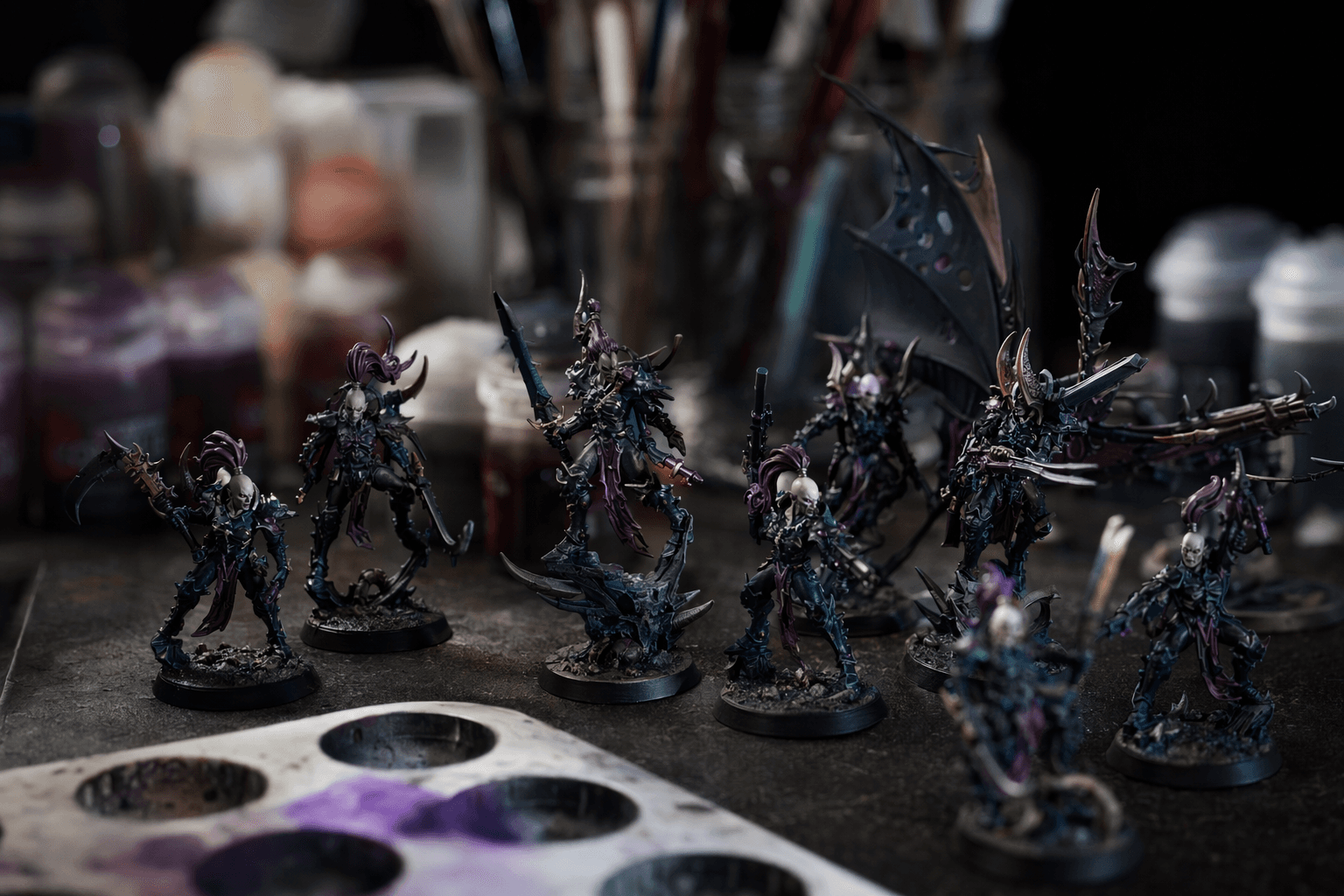
Drukhari can look intimidating at first glance, but they are more approachable than their detail level suggests if you break them down properly. The guide’s biggest hobby advice is to lean into texture and contrast, because that is where the faction comes alive. Ornate armor, exposed flesh, and baroque detailing naturally reward sharp edge highlights, dark panels, and vivid accents.
That makes the army especially satisfying if you enjoy a visually dramatic force. The models give you plenty to work with: smooth armor surfaces, cruel weapon shapes, and little pockets of texture that make contrast pop. You do not need to treat every miniature like a display piece to get the right effect. Even a practical paint scheme can look striking because the faction’s design already does so much of the work.
- Use dark, hard-edged armor to frame the model.
- Push contrast on flesh, trophies, and smaller details.
- Let the ornate shapes do the storytelling.
- Aim for a clean, sharp finish rather than weathered bulk.
A useful way to think about Drukhari painting is this:
If you enjoy armies that look elegant rather than brute-force, Drukhari are a strong match. They reward care with a very high visual payoff.
The best way to start collecting
The most useful part of the Drukhari on-ramp is that it does not treat collecting as an abstract hobby question. It breaks the army into a practical path: what the faction is, what a starter collection looks like, how to paint it, what to buy next, and where to go for fiction if you want more context. That structure matters, because Drukhari are the sort of army that becomes much easier to manage once you stop seeing them as a single wall of sharp details and start seeing them as a collection of manageable steps.
The Combat Patrol is presented as the natural place to begin, which makes sense for a faction defined by mobility and aggression. From there, the real collecting question is how you want your army to develop around that core identity. Drukhari are at their best when the army feels lean, dangerous, and built around units that can keep up with the faction’s speed-first plan. That means your next purchases should support the style you already want to play, not just fill space on a shelf.
What makes the hobby payoff so strong
Drukhari have one of the clearest hobby identities in Warhammer 40,000. The faction’s visual mix of sleek machines, wicked blades, ornate armor, and exposed organic detail creates a model range that feels distinct even at a glance. That is a real advantage if you want an army that looks unlike everything else in your collection.
The payoff is not just visual, either. Drukhari feel coherent from lore to tabletop to paint scheme. Their Commorragh-rooted identity, their focus on fear and pain, and their predatory style all reinforce one another. That kind of unity makes an army feel worth the effort, because every painted model contributes to the same dark, elegant idea.
There is also a practical upside for anyone who likes armies with a strong narrative hook. Drukhari give you a reason to care about the force beyond raw stats or a passing rules trend. They are the kind of faction that stays appealing because the concept is so clean: fast raiders, cruel tools, and a civilization that survives by taking from others.
Where Drukhari fit best
If you want a faction that is visually sharp, steeped in setting, and built for aggressive movement, Drukhari are an excellent next army. They are especially appealing if you enjoy painting contrast-heavy models and if you want an army that feels like it has a complete identity from the moment you start collecting. The combination of strong lore, fast battlefield behavior, and high hobby payoff makes them one of the most compelling choices for players who want style and substance in the same force.
That is the real case for Drukhari: they are not just a cool faction, they are a faction with a clear plan for how they should look, move, and feel. If that plan sounds like the army you want to build next, the dark kin are ready to reward the commitment.
This article was produced by Prism’s automated news system from verified source data, official records, and press releases, then run through automated quality and moderation checks before publishing. The system is built and supervised by the people who set the standards it runs under. Read our full AI policy.
Did this article answer your question?