Warhammer Community showcases four updated Citadel tools for cleaner builds
Four updated Citadel tools target the ugliest hobby problems, from brittle sprue cuts to resin pinning, and the real upgrade is choosing the right fix for the right build.
Warhammer Community’s 13 October 2022 look at four updated Citadel tools, timed with the preview for Kill Team: Shadowvaults, reads less like a merch drop and more like a bench-side checklist. The point is practical: each tool tackles a different place where a Warhammer 40,000 build can go wrong, from cracked parts and visible seams to loose joints and sloppy weapon barrels.
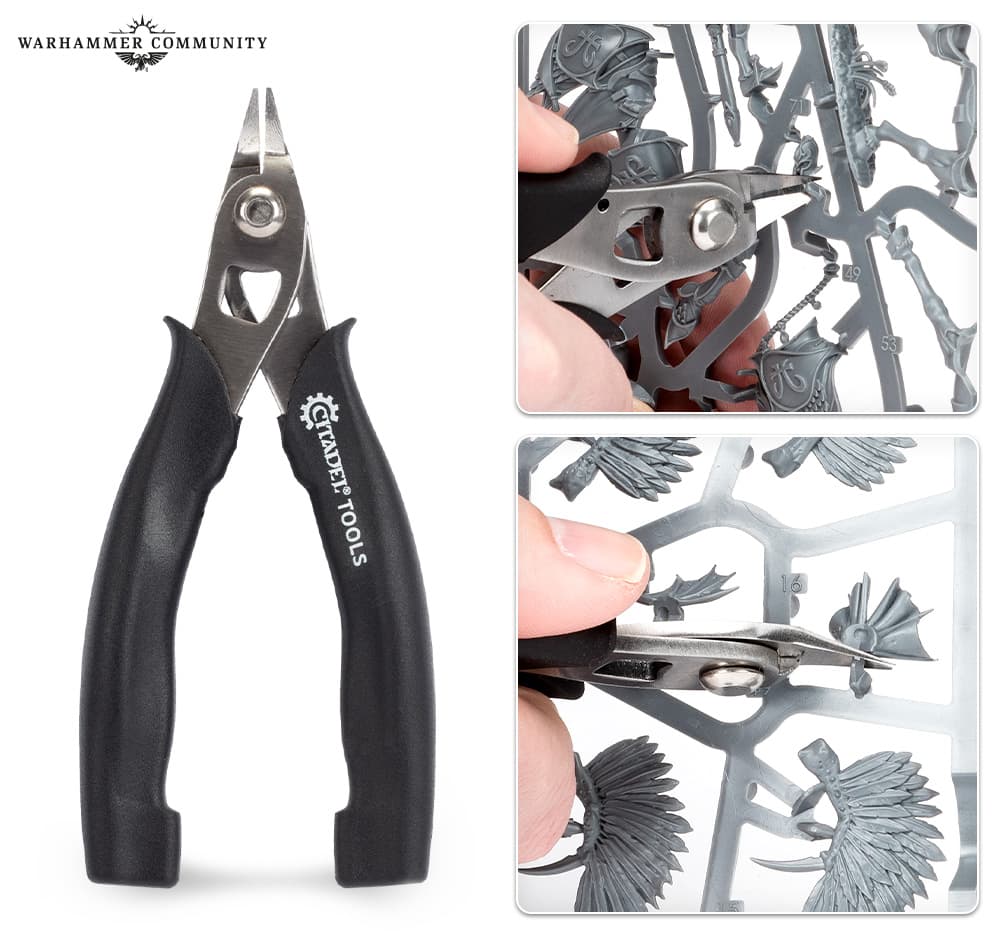
Super Fine Detail Cutters
The Super Fine Detail Cutters are built for the moment every 40k builder knows too well: a tiny, fragile part is still attached to the sprue, and one wrong squeeze can snap a banner pole, bend a weapon, or scuff a bundle of cabling. Warhammer says the blades are about three times smaller than the previous model, with a thinner profile, a narrower nose for tighter gaps, and a stopper system that helps protect the blades. The flush back reduces the amount of cleanup left behind, while the long handles and rubberised ergonomic grip are meant to cut with less force and less fatigue.
That combination makes the upgrade feel genuinely earned on modern kits, especially the ones packed with little tabs, pouches, mechanical details, and delicate wargear. If you build infantry every so often, a generic pair of clippers will still get the job done, but if you are regularly working through newer kits with thin contact points, the cleaner cut matters before paint ever touches plastic. This is the tool to buy now if your biggest frustration is not speed, but saving parts that should never have to survive a heavy-handed snip in the first place.
Mouldline Remover
The Mouldline Remover is the most universal tool in the set because mould lines are the one problem almost every plastic kit shares. Those seams love to sit on the places you notice most, like helmet domes, shoulder pads, armour plates, capes, and vehicle panels, where even a small ridge can stand out once the miniature is painted. Warhammer’s redesign gives the tool a longer, thinner nose, a tapered handle for pencil-like control, and a notched back that can smooth base rims as well as awkward edges.
That matters because mould-line cleanup is one of the few steps that separates an acceptable build from a polished one, and it is also one of the easiest stages to skip when you are eager to glue and prime. The tapered grip and chunkier base are meant to reduce hand fatigue, so the tool makes the most sense for anyone who wants a neater finish without reaching for a knife on every surface. If you are building a first army, this is the piece that prevents the classic beginner mistake of painting straight over a seam and discovering it only after the model is finished.
Citadel modelling knife
The Citadel modelling knife is the precision tool for everything cutters cannot do cleanly. It handles exact trimming, careful part separation, and the tiny kitbash adjustments that turn a standard kit into something more personal, and Warhammer says the updated design comes with six blades and a weighted back end for better control. The new single-slot screw barrel with a securing thread is a small but important improvement, because a blade that does not wobble or work loose is easier to trust when you are shaving away a stubborn nub or cleaning a join.
This is the one tool in the group that feels optional until the day you need it, then suddenly indispensable. If you mostly assemble straightforward kits, a generic craft knife can still cover basic cleanup, but the Citadel version is aimed at people who want predictable handling and quick blade changes without much fuss. It belongs on the desk once you start kitbashing, converting, or fixing the little misalignments that show up after dry-fitting, because that is where precision matters more than brute force.
Citadel Drill
The Citadel Drill is the most specialised tool here, and probably the most 40k-specific. Warhammer says it comes with two 1mm bits and two 1.5mm bits, sizes suited to gun barrels and heavier weapons, and the drill is also meant for pinning small parts so they hold together more securely. The lightweight hard-plastic body is designed to reduce hand fatigue, and the storage container keeps the four bits from disappearing into the hobby desk abyss.
That makes the drill worth the premium for a very specific kind of builder: the person working on resin, metal, large characters, or conversions where gravity and leverage can stress a joint. Warhammer Community has said drills are vital for pinning parts together on larger models, especially heavier resin kits, and that is where the tool stops being a luxury and starts acting like insurance. The debate around drilling barrels is still alive, too, with Warhammer Community revisiting the question in February 2024 and one studio voice saying they drill about 90 percent of theirs, which tells you this is still a live hobby argument rather than a solved one. Games Workshop also keeps a separate resin-building guide, and that pairing makes the drill feel less like a niche accessory and more like part of the standard workflow for tougher materials.
Taken together, the four tools map the whole build in order: cut the part cleanly, remove the seam, trim the stubborn edge, then drill only when the model truly needs extra support. That is why the updated Citadel range lands as more than a cosmetic refresh, because each piece solves a specific frustration that shows up on real hobby desks, not just in product photos.
This article was produced by Prism’s automated news system from verified source data, official records, and press releases, then run through automated quality and moderation checks before publishing. The system is built and supervised by the people who set the standards it runs under. Read our full AI policy.
Did this article answer your question?