What is the difference between Shades and Contrast paints?
The easiest rookie mistake is treating Shade and Contrast as the same pot. One deepens recesses after basecoating, while the other can do base, shade, and highlights in a single pass.
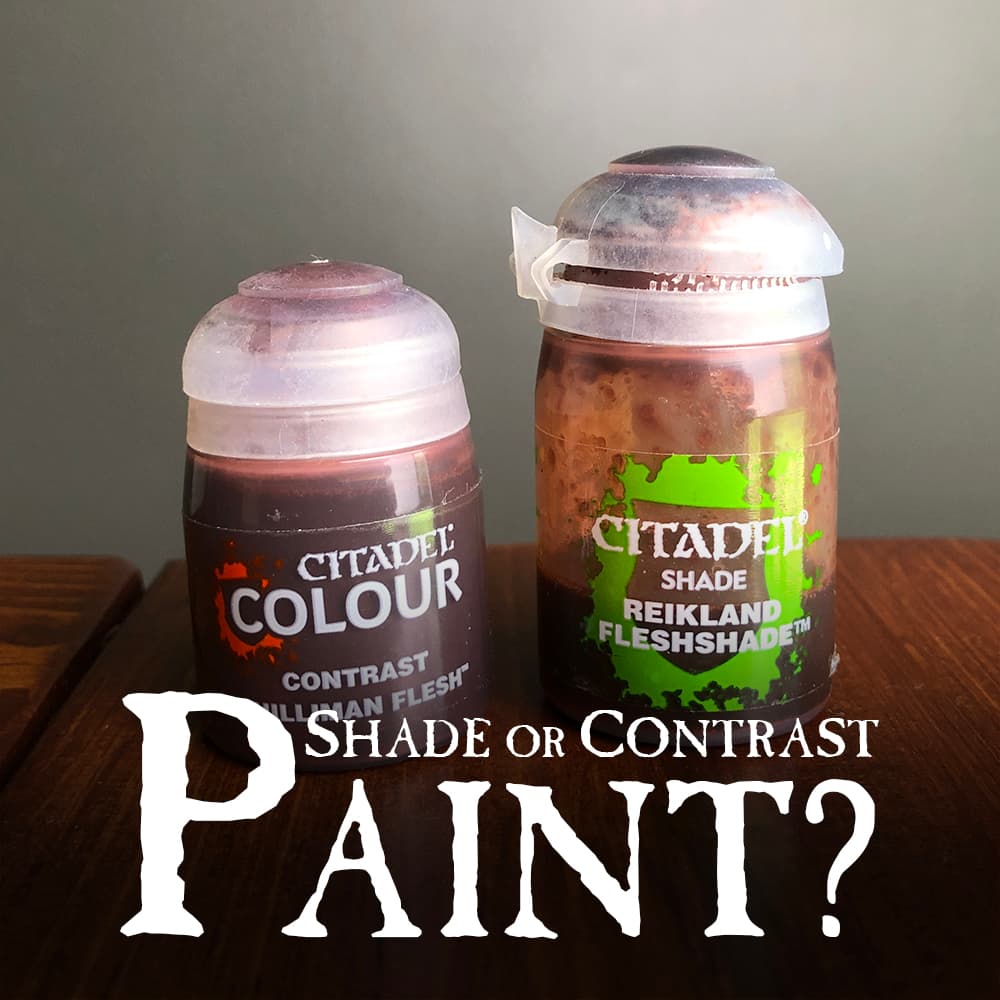
Shade and Contrast Citadel Colour pots look close on the rack, but they do different jobs at the hobby desk. That choice changes everything from speedpainting a Guardsman platoon to finishing a single character with a cleaner tabletop finish.
The mistake most beginners make
The trap is simple: you want one dark, useful paint and assume Shade and Contrast are interchangeable. They are not. Shades are built to run into recesses and deepen shadows after you have already laid down a basecoat, while Contrast paints are designed to do more work in one pass, building base colour, shading, and some natural highlighting at the same time.
If you use a Shade when you need a fast all-over colour, you will still need more steps. If you use Contrast where you want controlled recess shading, you can end up fighting pooling on broad armour panels or wasting time cleaning up edges you did not mean to darken.
What Shades are for
Shade paints belong in the classic workflow. You put down a solid basecoat first, then use the Shade to settle into panel lines, folds, rivets, bone ridges, cloth texture, and other details that need definition. On a Space Marine shoulder pad, a Shade can sharpen the panel without taking over the colour; on metallic trim or layered fabric, it helps the sculpt read clearly without forcing you to repaint the whole area.
They are ideal when the model already has the right base colour and you just want more depth in the recesses. They are also the safer choice when you are working on a part of the miniature that already looks right and only needs shadow, not a full repaint.
What Contrast is for
Contrast is the faster tool. Games Workshop calls it a “shade, layer, and basecoat in one,” and that is the best shorthand for how it behaves when you use it properly. Instead of treating it as a thin wash, use it as a paint system that can establish colour and definition in a single pass, especially on textured surfaces and lighter undercoats.
That makes Contrast a strong choice when you are batch-painting infantry, moving through a Tyranid swarm, or trying to get an army to a solid tabletop standard quickly. It can be excellent on cloth, skin, furs, bone, and other surfaces where texture helps the pigment settle naturally. It is less forgiving on large, flat panels if you overload the brush, because the paint can pool and leave tide marks where you wanted smooth colour.
The undercoat changes everything
Contrast lives or dies by the surface under it. It works best over lighter basecoats, which is why Grey Seer, Wraithbone, and White Scar show up so often in practical painting advice. Some hobbyists also use Zandri Dust when they want a warmer, earthier starting point.
If your primer is right, Contrast can save a huge amount of time; if the undercoat is wrong, you spend that time correcting problems. A dark primer will usually mute the effect, while a light primer gives Contrast the brightness it needs to create that built-in shading and highlighting.
Where Shade still wins
Shade is still the better buy when you already know your colour scheme and want to tighten it up. If you have layered up armour, done your highlights, and just need recesses to read more clearly, Shade is the cleaner tool. It gives you control over where the darkness goes, which matters when you are working near edge highlights, insignia, lenses, or carefully picked-out details.
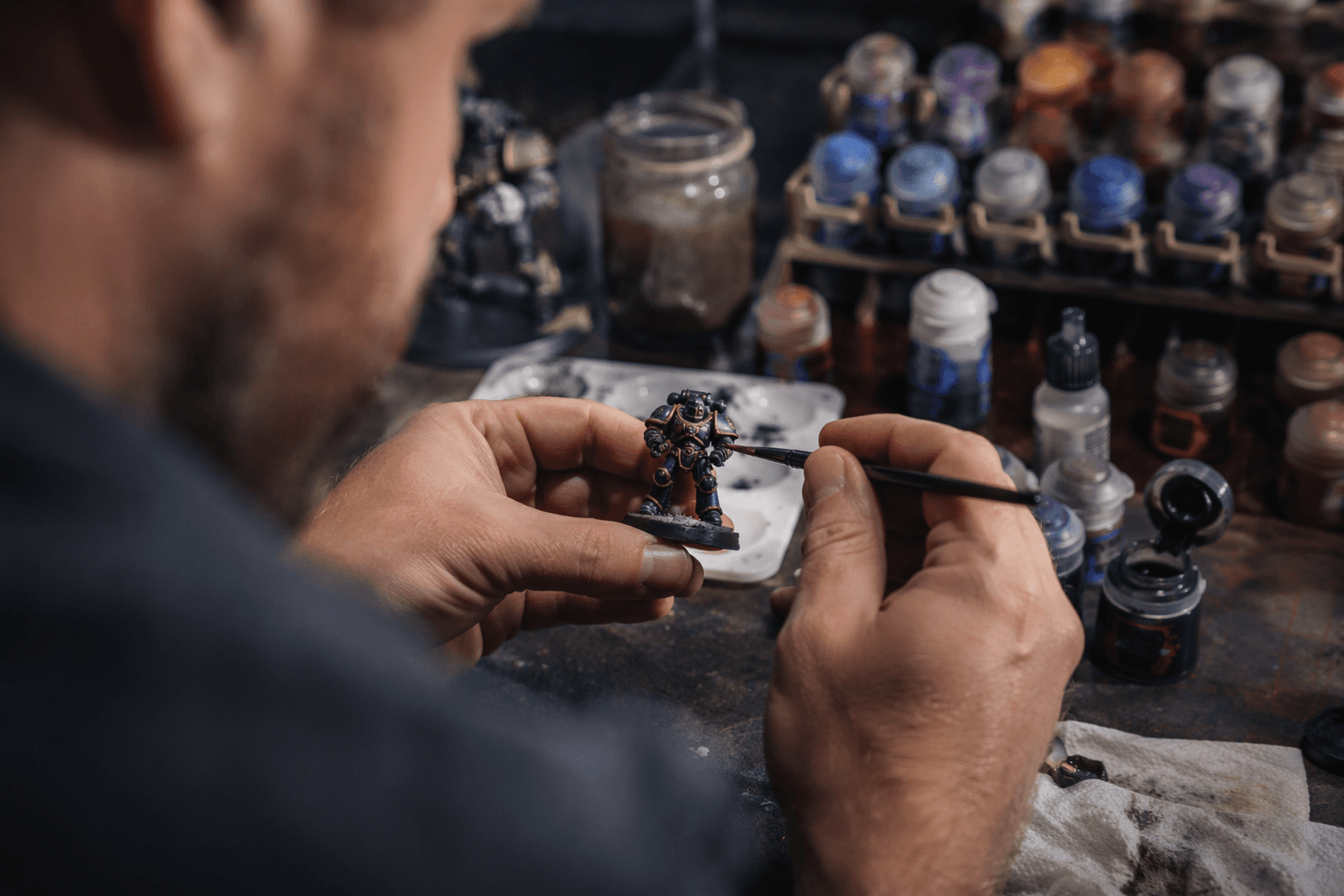
That makes Shade the better final-pass product for display-leaning work. It also makes it the more predictable choice when you are finishing mixed materials on the same model, because you can target the shadow without changing the overall colour as dramatically as Contrast might. For crisp weapon casings, armour trim, or detailed character models, that precision often matters more than speed.
What the 2022 refresh changed
In July 2022, Games Workshop announced “A New Era of Paints - New Contrast Colours, Reformulated Shades and our Best White Spray Ever.” The refresh added 25 new Contrast paints and 7 new Shade paints. The same update also included reformulated existing Shades, which underlines that the company was refining both systems rather than replacing one with the other.
The range also added new gloss Shades such as Nuln Oil Gloss, Agrax Earthshade Gloss, Reikland Fleshshade Gloss, and Cryptek Armourshade Gloss. The Shade side of the range was broadened for painters who want a different sheen or a more specific shadow effect, while Contrast kept growing as a fast-paint tool.
How to use Contrast without fighting it
Contrast rewards discipline more than speed alone. The paint separates badly in the bottle and needs thorough shaking, because an uneven mix can throw off the finish before it ever reaches the model. The other mistake is thinking a single thick coat is automatically a better Contrast application, when the opposite is often true.
Keep the coat controlled, let the paint work on the surface texture, and do not flood flat areas. If you want a clean result, think in terms of one careful pass rather than a heavy one.
Which pot should you reach for
If you are choosing between them at the shelf or desk, the decision is straightforward:
- Pick a Shade when the model is already basecoated and you want recess shading, cleaner definition, and less risk of changing the overall colour.
- Pick Contrast when you want a quicker start, especially over a light primer, and you need base colour plus shading in one pass.
- Pick Shade again when you are refining a nearly finished model and want control around edges, trim, and details.
- Pick Contrast when you are building an army fast and the surface texture will help the paint do the work for you.
This article was produced by Prism’s automated news system from verified source data, official records, and press releases, then run through automated quality and moderation checks before publishing. The system is built and supervised by the people who set the standards it runs under. Read our full AI policy.
Did this article answer your question?