Alum blocks reveal shaving mistakes and soothe minor nicks
Alum blocks do more than seal tiny nicks: the sting map can expose too much pressure, a bad angle, or weak lather while you fine-tune each shave.

An alum block earns its place at the sink when a shave feels off. It can help quiet minor weepers, but its sharper value is diagnostic: the sting tells you where pressure, angle, passes, or lather went wrong.
What an alum block really does
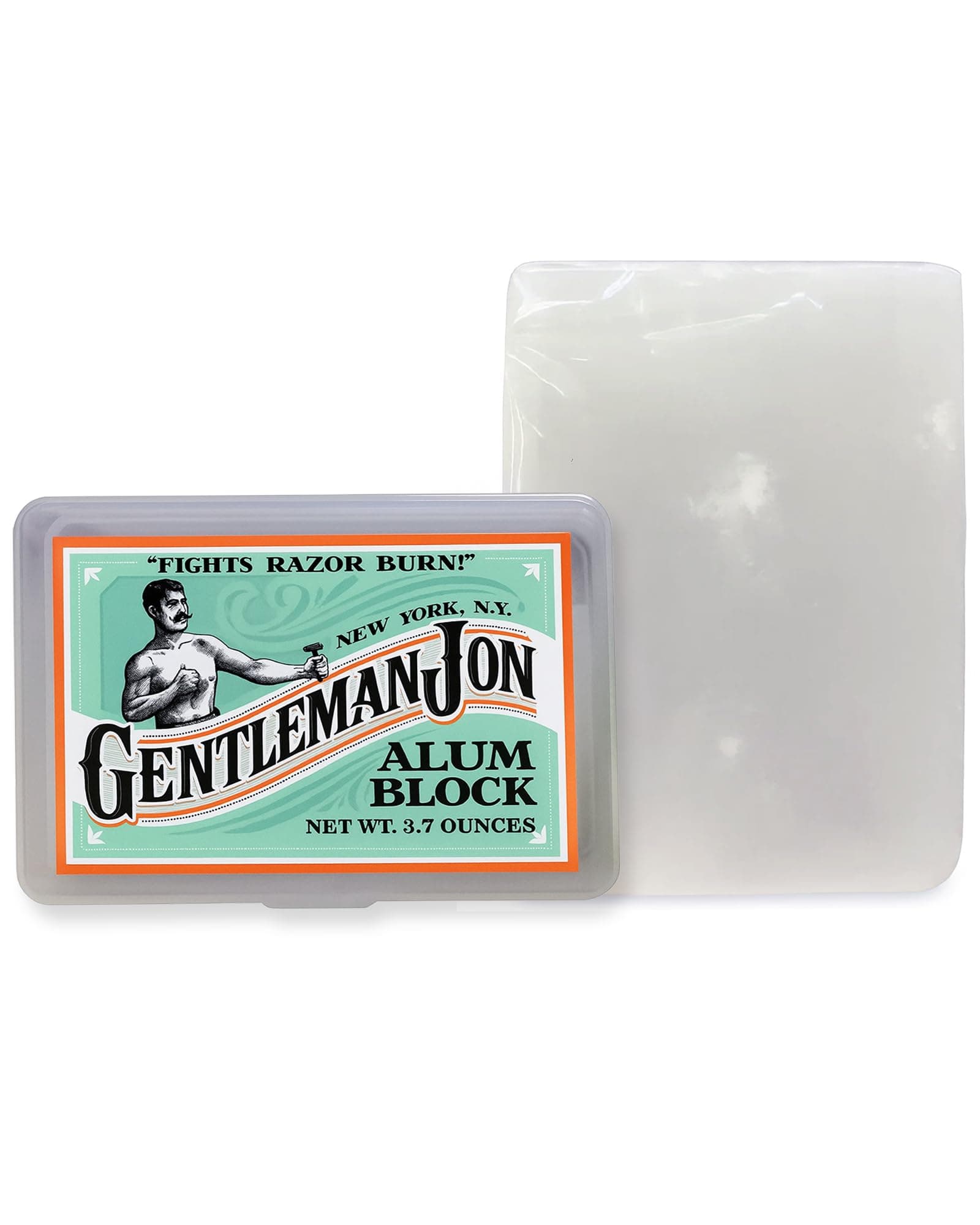
An alum block is a solid mineral block made from potassium alum, and alum itself is a family of hydrated double salts. In grooming, that matters because the material brings astringent and antiseptic qualities to a post-shave routine, which is why it has long been used after shaving to help deal with tiny cuts and exposed skin. It manages what the razor already did; it does not erase irritation or excuse sloppy technique.
Traditional aftershave products exist for the same basic reason. Shaving leaves the face with microscopic cuts and irritated skin, so the post-shave step has always been about calming and protecting the area, not just adding scent.
Read the sting, don't worship the block
The real lesson of alum is that the burn is information. If it bites hard in one area, the likely culprits are too much pressure, a poor blade angle, too many passes, or lather that did not cushion the skin well enough. That is why alum is so useful to anyone learning a safety razor, straight razor, or shavette: it gives you a map of where the shave broke down.
When the same spot stings every time, the first suspects are technique, not the razor itself. Look at how much pressure you are using, where the blade meets the skin, and whether your pass direction is helping or hurting the grain pattern. A recurring sting in the jawline or neck is often a sign that you need to adjust the stroke, not swap hardware and hope the problem disappears.

That is also why alum has a split reputation in wet shaving circles. Some shavers use it as a quick gauge of shave quality, some reach for it only when they nick themselves, and others skip it entirely in favor of aftershave balm or lighter skin-care products such as witch hazel or aloe.
How to use it without overdoing it
The block works best when you treat it gently. It should glide, not scrub, because rubbing it in hard can turn a useful check into another source of irritation. The goal is a light pass over the shaved skin, just enough to show where the shave was efficient and where it was rough.
A simple routine keeps that clear:
1. Rinse your face with cool water after the shave.
2. Wet the alum block under cold water.
3. Glide it lightly over the shaved area.
4. Leave it on briefly while you clean the razor and brush.
5. Rinse it off if the skin feels tight, then pat dry.
It gives you a short window to see where the face protested, then gets out of the way before dryness or overuse becomes the next problem.
Where alum fits among blades, lather, and skin
Shaving performance is a combination of lather, protection, and blade choice. The Art of Shaving, founded in 1996, emphasizes that mix, and it lines up with what alum reveals in practice. If the lather is thin, the blade is off, or the prep was rushed, the block will usually tell on you fast.
That diagnostic role also makes alum useful for more than one tool set. Safety razors, straight razors, and shavettes all benefit from the same kind of feedback, because each one can punish heavy hands and bad angles in different ways. The block does not care what you shaved with. It only reacts to how well the blade, the skin, and the lather worked together.
Skin chemistry still matters, though. Mayo Clinic says ingrown hairs are often tied to hair-removal habits and may require stopping shaving until the skin clears, sometimes for 1 to 6 months. It also says some skin products can trigger irritation or allergic contact dermatitis, which can show up as redness, burning, itching, or soreness. If alum stings in a way that feels more like ongoing skin trouble than normal post-shave feedback, the issue may be sensitivity rather than shave mechanics.
A very old tool in a very modern routine
Prehistoric cave drawings show clam shells, shark's teeth, and sharpened flints used for shaving, and razors were found in Egyptian tombs from the 4th millennium BCE.
This article was produced by Prism’s automated news system from verified source data, official records, and press releases, then run through automated quality and moderation checks before publishing. The system is built and supervised by the people who set the standards it runs under. Read our full AI policy.
Did this article answer your question?