Goodfellas Smile Lybra review tests a dual-plate razor over 30 shaves
The Lybra’s two plates are distinct enough to matter, but the 30-shave test shows they buy versatility more than true adjustable freedom.
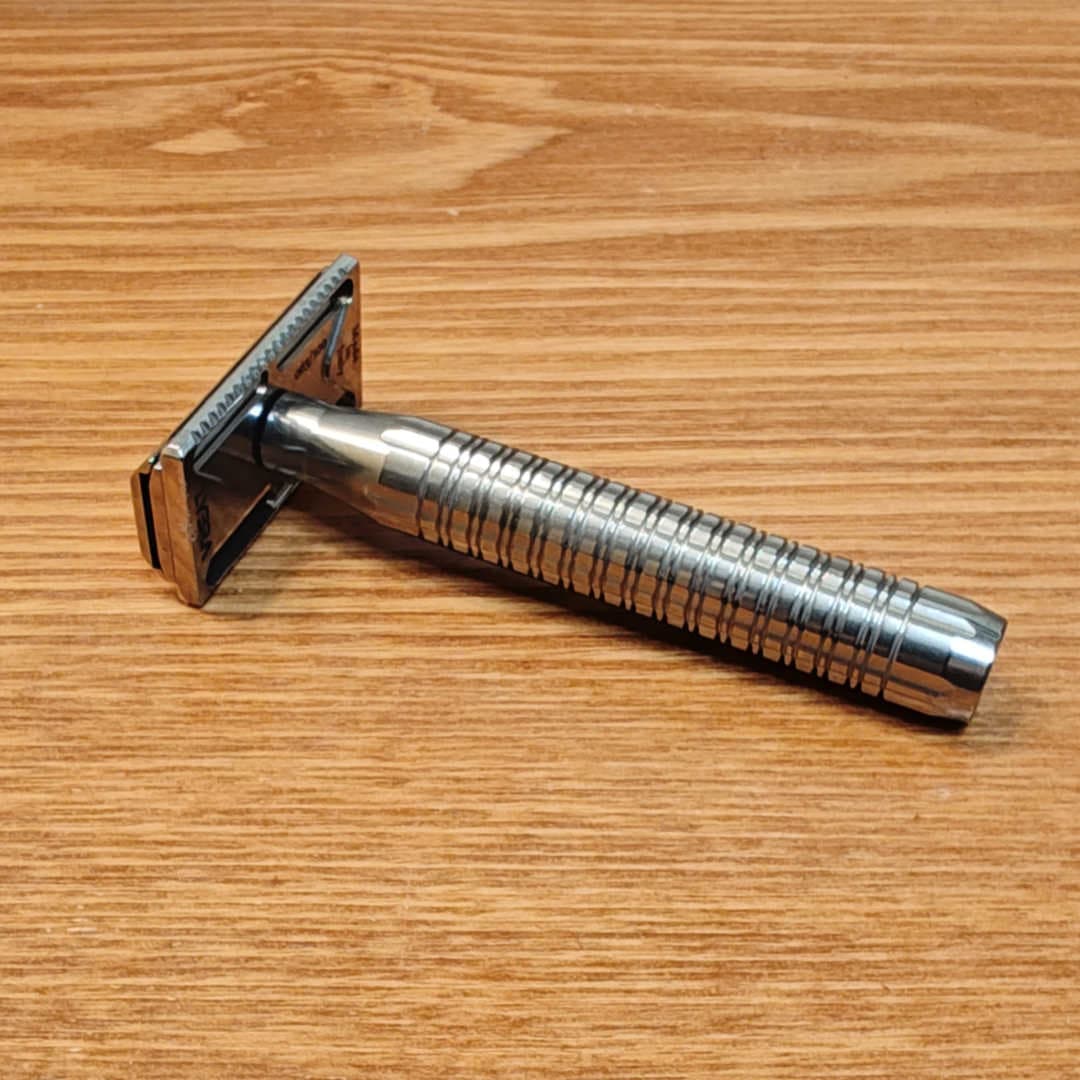
The Goodfellas’ Smile Lybra is trying to solve a familiar wet-shaving problem: how do you get one razor that can handle both a gentle daily pass and a more efficient, heavier-growth shave without owning two separate tools? Its reversible dual-gap base plate makes that promise concrete, with a mild side set at a 0.70 mm gap and +0.1 mm exposure, and an aggressive side at 1.20 mm and +0.3 mm exposure. That is the kind of specification sheet that makes seasoned shavers sit up, because it suggests real engineering differences rather than a cosmetic gimmick.
What the Lybra is built to be
This is a premium three-piece safety razor, CNC-machined from AISI 316L stainless steel and listed as made in Italy. Retail specs also put the weight at 129.24 g, the handle length at 90 mm, the handle diameter at 13.9 mm, and the total length at roughly 97.1 mm to 97.6 mm depending on configuration. Several sellers also describe the head as changing not just the gap and exposure, but the feel of the safety bar itself, with the mild side using a smooth bar and the aggressive side using a toothed bar.
That matters because the Lybra is not pitching itself as a simple daily driver with one personality. It is selling two behaviors in one chassis, and the selling point is that those behaviors should feel different enough to cover different beard states, different skin moods, and different levels of confidence in the hand.
What the 30-shave test is really measuring
A 30-shave test is useful here because it asks a better question than a quick first impression. Over repeated shaves, you find out whether a razor stays consistent, whether the clamp feels secure, whether the edge behaves predictably, and whether the two modes actually earn their place in a routine. That is especially important with a dual-plate design, because a razor can look clever in a listing and still feel awkward once you start using it day after day.
The long-run takeaway from the test is that the Lybra behaves like a deliberate machine. The clamping gets attention, and the razor does not come across as sloppy or vague. At the same time, the mild side is still not a toy; even in its gentler configuration, it asks for careful blade handling rather than autopilot technique.
Which side fits which shave
The mild plate is the obvious starting point for daily shaving, lighter beard growth, and anyone with skin that punishes overexposure fast. With the 0.70 mm gap and +0.1 mm exposure, it reads as the safer, more forgiving side, the one you reach for when you want efficiency without a lot of blade feel. If your routine is a near-daily clean-up and you value comfort over maximum reduction, that side makes the most sense.
The aggressive plate is better suited to heavier growth, less frequent shaving, or shavers who already have a steady angle and a light touch. Its 1.20 mm gap and +0.3 mm exposure should give more reduction in fewer strokes, and that is where the Lybra’s two-mode concept becomes practical instead of merely interesting. In the field, that means the aggressive side is the one you choose when the beard has had time to build up, not necessarily when you want an everyday luxury pass.

Forum reactions line up with that split. One May 2026 post described the mild side as ideal for the user’s skin and facial hair, while the aggressive side was manageable but not essential. A March 2026 shave report also praised the clamping and said the mild side still demanded care, which is a good reminder that “mild” here does not mean dull.
The price is part of the test
Value is where the Lybra gets more complicated. Shave Dad’s value note lands at $225, but retail listings push higher, with New England Shaving Company listing it at $287 and a Canadian seller listing it at CAD $313.99. At that level, buyers are not just paying for stainless steel and good machining. They are paying for the idea that one razor can plausibly stand in for two very different setups.
That premium positioning also explains some of the pushback around the launch. Badger & Blade posters in 2025 called the concept novel and interesting, but several also said the price was too high and objected that it was not truly adjustable, only a flippable base plate with an extra locking plate. A forum post also said the razor launched on October 31, 2025, and that only 100 were produced in the first batch, which helps explain why it arrived with limited-run energy and a collector-grade price tag.
Does it replace two razors?
For the right shaver, almost. If you want one stainless razor that can cover a comfortable daily shave and a more assertive growth-clearing session, the Lybra makes a strong case. The dual-plate system is not a gimmick when the numbers are this different, and the 30-shave test suggests the razor is serious enough to reward repeated use rather than novelty curiosity.
But it is still a compromise in one key sense: it is not a true adjustable, and it will not behave like a dialed system that can be tuned endlessly from shave to shave. If you already own a favorite mild razor and a separate efficient one, the Lybra is trying to collapse that pair into a single premium tool. If your skin wants maximum forgiveness every day, or if you want one razor that can be radically transformed at will, the Lybra will feel more like a smart middle ground than a complete replacement.
That is why the opening question matters. The Lybra is strong enough to make two modes feel real, but not so flexible that it erases the appeal of owning dedicated razors. In the end, it looks less like a compromise that failed and more like a premium tradeoff that knows exactly what it is.
This article was produced by Prism’s automated news system from verified source data, official records, and press releases, then run through automated quality and moderation checks before publishing. The system is built and supervised by the people who set the standards it runs under. Read our full AI policy.
Did this article answer your question?