How razor aggressiveness really affects safety and shave closeness
The closest shave is not always the safest one: blade gap, exposure, and technique decide whether aggressiveness helps your beard or punishes your skin.
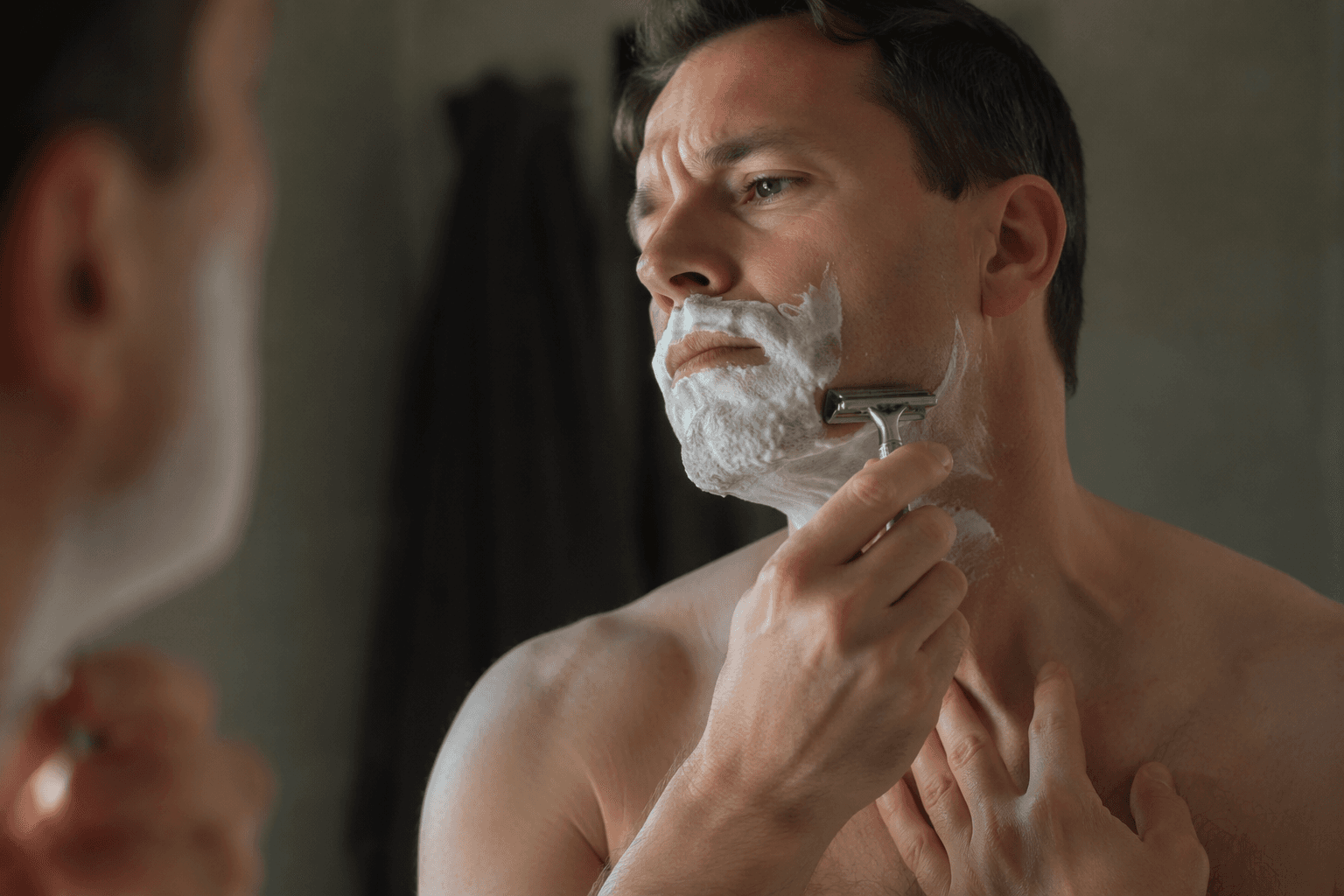
In a double-edge razor, aggressiveness comes down to how much of the blade is presented to the face, how the guard supports the stroke, and how easily the head can reach longer whiskers without demanding more pressure than your skin wants to give.
What razor aggressiveness actually measures
The clearest way to think about aggressiveness is as the relationship between cutting efficiency and skin exposure. Blade-bar span, safety-guard design, and blade exposure all shape how the head behaves on the face, which is why two razors that both get called “mild” or “aggressive” can feel very different in use.
Blade exposure deserves special attention because it tells you where the edge sits relative to the shave plane. If the edge sits below that plane, exposure is negative. If it sits on the plane, it is neutral. If it rises above the plane, it is positive. That small geometric difference changes how much the razor asks of your angle control and pressure management, and it changes how much the edge can bite if your stroke gets sloppy.
Aggressiveness is not just a static property of the razor head. It is part design, part execution. A head with more blade exposure can feel dramatically different depending on the hand holding it, the angle it meets the beard at, and how much residue is already on the skin from earlier passes.
Why more aggressive is not automatically better
The hobbyist instinct is to chase the razor that feels most efficient and call that progress. Wet shaving does not really work that way. Sharpologist puts aggressiveness at a balance of efficiency and comfort, and that balance is the whole game: the closest-feeling setup is not worth much if it turns your neck into a map of irritation.
Blade exposure and blade gap are the two key features behind what shavers usually mean by aggressiveness, as Henson Shaving puts it, and that makes the tradeoff easier to read. More aggression generally raises the chance of nicks, razor burn, or irritation when technique is poor. The razor is not punishing you for wanting a close shave. It is simply making the cost of imperfect angles more obvious.
The Razor Company defines milder razors as having a smaller blade gap and being more forgiving, while aggressive razors have more blade exposure and a larger gap. At Classic Shaving, a more aggressive head lets more hair enter between the blade and safety bar, so it can cut with fewer strokes.
How to match the razor to your beard and skin
The right setup depends less on chasing a label and more on reading your beard. Sensitive skin usually does better with a smaller blade gap and a milder razor, especially if you shave every day and want the blade to behave predictably with minimal cleanup. Wearify reaches the same conclusion on beard type: coarse-beard or infrequent shavers may benefit from more efficiency.
If your beard is light to moderate, your skin gets red quickly, or you already know you prefer multiple gentle passes, a milder setup is usually the smarter choice. If you go longer between shaves, grow dense stubble, or need a razor that clears more hair in fewer strokes, a more efficient head can make sense without forcing you into a wildly aggressive feel.
This is where the old assumption breaks down: more aggressive does not mean more capable in every face. A mild razor that matches your beard and routine often gives you a closer real-world result because it lets you keep your passes consistent, avoid irritation, and finish with less skin stress.
Technique can tame or amplify the head you already own
Aggressiveness is not only something the razor brings to the shave. You can change its behavior with your angle and hand position. For maximum aggressiveness with a negative or neutral exposure razor, the shave plane should stay as parallel to the skin as possible. That is a technical way of saying the head performs best when you respect its geometry instead of forcing it into the skin.
The same razor can feel forgiving in one hand and overbearing in another. A careful touch, a shallow angle, and enough discipline to avoid pressing can make a more assertive head feel controlled. A rushed stroke, too much tilt, or the instinct to chase closeness with pressure can make even a mild razor behave badly.
If you are getting irritation, the answer is not always “buy a milder razor.” Sometimes the answer is “stop asking the blade to compensate for angle errors.” But if your technique is already solid and your skin still protests, that is often the sign that the head itself is too much for your face.
Adjustable razors make the tradeoff visible
The Rockwell 6S is a useful example because it turns the whole conversation into something you can physically dial. Its six reversible base plates change blade gap and exposure from mild to more aggressive settings, which makes it easier to feel how a small geometry shift changes the shave.
On a day when your beard is longer or coarser, you can open things up. On a day when your skin is already irritated, you can back off.
When razor choice becomes a health issue
A review in the Journal of the American Board of Family Medicine estimates that pseudofolliculitis barbae affects 45% to 83% of men of subequatorial African ancestry, and the condition can lead to permanent scarring.
Defense Department data showed shaving-worsened PFB cases in the United States military had skyrocketed since 2000. A paper in the National Center for Biotechnology Information found that shaving can recapitulate inflammatory skin processes and compromise the skin barrier.
This article was produced by Prism’s automated news system from verified source data, official records, and press releases, then run through automated quality and moderation checks before publishing. The system is built and supervised by the people who set the standards it runs under. Read our full AI policy.
Did this article answer your question?