Sharpologist examines why more shaving passes can mean more irritation
Two passes often do the heavy lifting; after that, extra strokes can buy irritation instead of smoothness, and a smarter touch-up plan can preserve the finish.

A lot of wet shavers chase the same finish with the same instinct: one more pass should make it better. Sharpologist’s pass-strategy piece pushes back on that reflex, arguing that the razor is not just removing hair with each trip across the face, it is also adding more skin exposure every time it moves. Once you look at the shave that way, “more passes” stops sounding like a guarantee and starts sounding like a gamble.
Why pass count matters more than you think
Sharpologist has spent years living in this lane, and that matters here. The site was launched by Mark, known in the hobby as Mantic59, to advocate for the “fading art and science” of traditional shaving, so this is not a throwaway tip about squeezing in a little extra closeness. The underlying message is that pass strategy changes the entire complexion of the shave, because every pass alters the conditions for the next one.
That is why the familiar with-the-grain, across-the-grain, and against-the-grain sequence is only part of the story. Direction matters, but repetition and pressure matter just as much, and the later passes are not operating on the same surface you started with. The first pass is cushioned by longer hair, while the second and third passes are working on shorter stubble and more exposed skin, which is exactly where irritation can start to climb.
When closeness starts competing with comfort
The strongest version of the lesson is also the simplest: a shave is a balance between closeness and exposure, not a contest to see how many times the razor can cross your face. Sharpologist’s framing works because it shifts the question from “Can I get closer?” to “What is this extra pass doing to the skin I already treated?” That is the point where a lot of routine polishing starts to look less like refinement and more like overworking the finish.
The American Academy of Dermatology backs up that caution. It says shaving against the grain can cause irritation, and it recommends shaving when hair is soft, using a sharp blade, shaving lightly, and identifying the direction your facial hair grows if you are prone to razor bumps. That advice fits neatly with the pass-strategy idea, because it treats shaving as a set of decisions that should reduce friction and exposure, not escalate them.
Sharpologist’s separate irritation article sharpens the point even further by describing shaving irritation as cumulative exposure from repeated blade contact. In that view, discomfort does not appear because one pass was “bad,” but because the total exposure eventually exceeds what the skin can tolerate. That is the hidden logic behind the less-is-more reality check: the shave can be perfectly fine after two passes, then deteriorate as you keep chasing a little more smoothness.
Why extra strokes can make the finish worse
The technical literature says the same thing in different language. A PubMed-indexed review notes that multiple-stroke shaving and increased pressure raise the probability and extent of shaving-induced skin irritation. Another study in Skin Research and Technology found that safety razors produced lower shaving-induced erythema than cartridge razors, and tied the greater irritation risk of cartridge systems to multiple blades and the increased friction and pressure that can come with multiple passes over the skin.
That matters because a lot of hobby talk about irritation gets stuck on the tool, when the real problem may be the plan. If the pass structure is too aggressive for your skin, a better soap or a different razor will not fully rescue the shave. Sometimes the smarter move is to reduce one pass, lighten the pressure, or change the direction of a pass rather than keep grinding away at the same area.
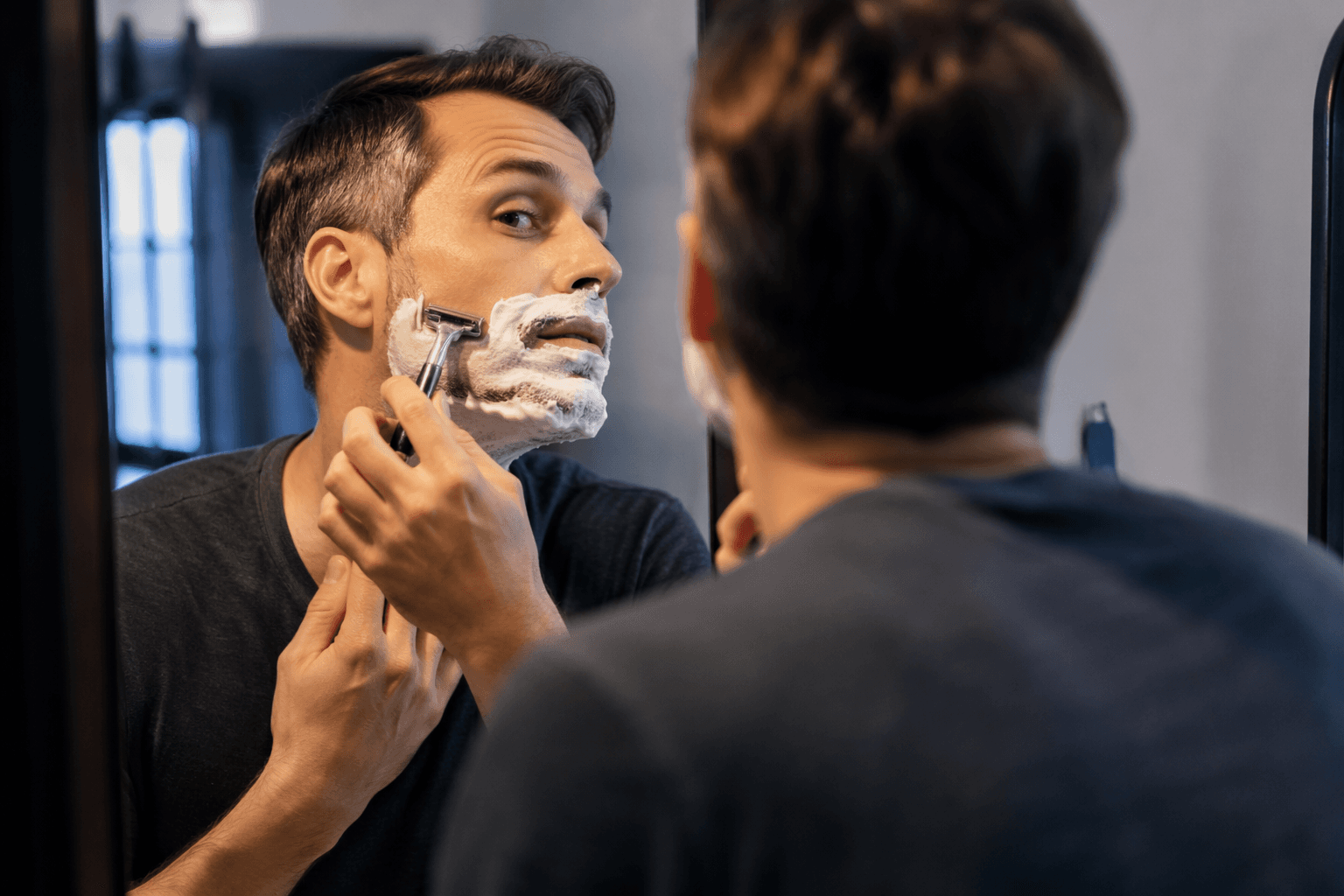
The AAD’s warning about persistent razor bumps raises the stakes beyond daily comfort. It notes that ongoing bumps can lead to permanent deep grooves and raised scars on the face, which makes pass discipline more than a matter of chasing BBS. For anyone who shaves often, the cumulative cost of overdoing it can last longer than the shave itself.
A practical stop-at-two-pass rubric
The best place to stop is often before the ritual starts to control you. Two passes are usually enough to deliver most of the reward, especially when the hair has been softened properly and the blade is doing clean work rather than forcing results. Once you are at that point, the right question is not whether you can feel a few stubborn spots, but whether a full extra pass would require more pressure, more strokes, or more against-the-grain work than your skin can comfortably absorb.
A useful check looks like this:
- Stop at two passes if the shave already feels smooth enough in normal daily use and the remaining roughness is limited to isolated patches.
- Stop if the next pass would mean revisiting the same territory with more pressure or more blade contact.
- Stop if the shave is already warm, tight, or irritated, because that is your skin telling you the exposure budget is nearly spent.
- Use selective touch-ups only on the spots that still need them, instead of giving the whole face another full round.
That last point is where the article’s thinking becomes genuinely useful. Selective cleanup preserves the gains you already made, while a full extra pass can erase them by adding irritation faster than it adds closeness. The goal is not to avoid refinement, but to reserve it for the places that actually need it.
The smarter path to a better finish
The deeper lesson here is that pass strategy is a skill, not a superstition. When the skin is soft, the blade is sharp, pressure is light, and the direction is chosen with care, two passes can be enough for a very close result without turning the face into a stress test. That is exactly why the old wet-shaving mantra needs updating: not every extra pass improves the shave, and not every chase for BBS is worth the cost.
Once you start thinking in terms of cumulative exposure, the third pass stops looking like free smoothness and starts looking like a decision with consequences. That is the real reality check in Sharpologist’s argument, and it is the one that sticks: sometimes the best way to get a better finish is to stop before the shave begins to slip.
This article was produced by Prism’s automated news system from verified source data, official records, and press releases, then run through automated quality and moderation checks before publishing. The system is built and supervised by the people who set the standards it runs under. Read our full AI policy.
Did this article answer your question?