Applewood torch blends epoxy and Britannia pewter on the lathe
Applewood, epoxy, and Britannia pewter turn a simple torch shape into a mixed-media build with real structural decisions behind the shine.
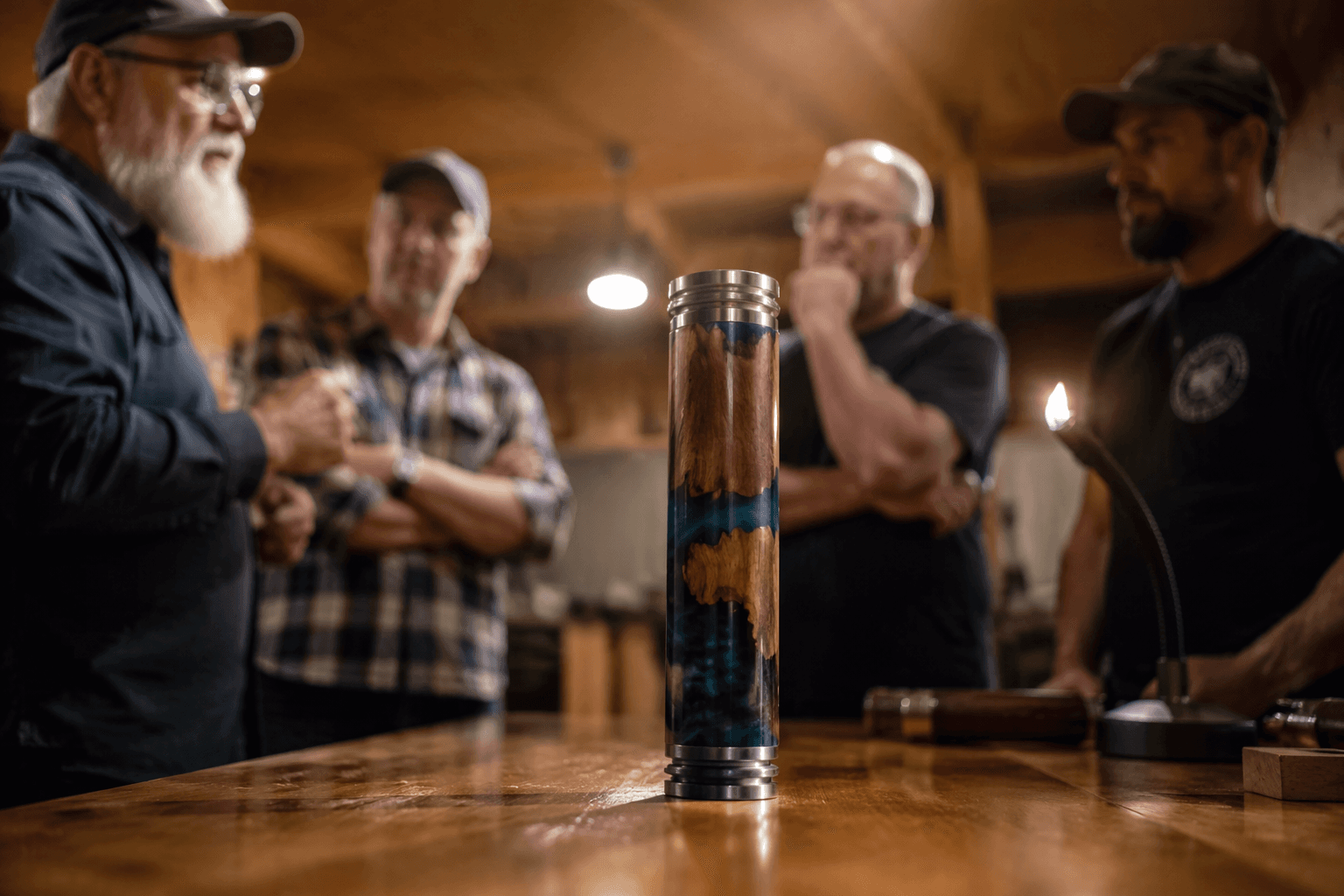
Why this torch grabs turners first
A flashlight blank usually looks like a straightforward lathe project until the materials start pulling in different directions. This torch build leans into that tension, using Applewood for the main body, epoxy for reinforcement, and Britannia Pewter for cast and turned metal parts that finish the piece as something meant to be held, used, and shown off.
What makes it worth a closer look is not just the finished form but the way the build crosses shop boundaries. The lathe is still central, but it is only one part of a broader fabrication process, the kind that has become more common in contemporary turning videos and in the mixed-material work documented by Woodturning Online and Woodworkers Institute. The project also has history behind it, with a newer MSN listing appearing three days ago and an earlier version of the same torch published about 1.2 years ago.
Why Applewood fits the body
Applewood is doing more than supplying a pretty surface here. As the main body of the torch, it brings the warm visual character that makes the piece feel like a crafted object instead of a shop exercise. That matters in a project like this because the wood has to carry the identity of the object while still leaving room for the metal to read as deliberate, not decorative afterthought.
The choice also makes sense in the way Applewood behaves visually against the pewter. In the related Applewood-and-pewter cafetière project described by MSN, the metal is used to add contrast and refinement to the wood body, and that same logic applies here. The wood is the part the hand reads first, while the metal gives the build a more engineered edge and a sharper sense of finish.
For advanced turners, that combination suggests a useful design rule: pick a wood that can hold attention without needing to dominate every surface. Applewood does that job well in a torch form because it supports both a compact silhouette and a mixed-material reveal.
Where epoxy stops being cosmetic
Epoxy is the quiet structural player in this build, and that is the detail that separates it from a simple decorative turning. The MSN video specifically notes that the Applewood body is reinforced with epoxy, which tells you the resin is not there just to fill a void or accent a seam. It is part of the engineering.
That matters any time wood and metal are being asked to coexist in a small object with repeated handling. A flashlight body needs to feel coherent, and epoxy can stabilize transitions where grain direction, end grain, or mating surfaces would otherwise be vulnerable. In a hybrid build, resin is often the thing that lets the maker commit to a more ambitious profile without sacrificing strength at the junctions.
The deeper lesson is that epoxy can let the lathe shape the final language of the object without pretending the object is still only wood. Once reinforcement becomes part of the plan, the turner can think more like a builder: where the load transfers, where the grip will live, and where the eye should be allowed to see the layered construction.
Why Britannia pewter changes the turning process
Britannia Pewter is not just a shiny accent. The metal parts in this torch are cast and then turned, which changes the project from pure subtraction to a sequence of casting, shaping, and fitting. That means the turning process has to accommodate a material that behaves very differently from wood, both in the way it cuts and in the way it signals precision.
ScienceDirect describes pewter as a tin alloy, typically around 92% tin, 6 to 7% antimony, and 1 to 2% copper. It also notes that it is valued for its ductility and castability, which explains why it works so well in small functional parts that need to be formed, then finished accurately on the lathe. Those same qualities make Britannia-type alloys a natural fit for this kind of torch, where the metal has to look refined without becoming fussy.
There is also a useful historical thread here. Tin-based white metals have long been used in cast parts and bearing materials, so the project carries more than craft-room novelty. The torch draws on a material tradition associated with precision and service, which gives the finished object a sturdier lineage than the average novelty build.
For turners, that means the metal components are not just a visual bonus. They alter the workflow. Once a project includes cast pewter, the maker has to think about heat, fit, cleanup, and the relationship between the turned wood and the metal geometry before the final assembly ever reaches the lathe.
What the mixed-media build teaches beyond the torch
This is the kind of project that nudges woodturning away from the idea that a lathe object must stay inside a single material family. The torch belongs to a broader trend in which makers move beyond wood into metals, plastics, bone, and other materials while still relying on familiar turning tools and shop instincts. That crossover is part of why the project reads as more than a novelty flashlight.
- Applewood provides the visible body and the warmth that keeps the piece from feeling industrial.
- Epoxy reinforces the structure where mixed-material stress makes the build vulnerable.
- Britannia Pewter supplies cast parts that can be turned to complement the wood rather than overpower it.
The most useful takeaway for experienced makers is how the materials divide responsibility:
That division opens the door to other designs that benefit from the same logic. A lamp body, a desk piece, a handle, or a presentation object can all gain from the idea that the lathe is one stage in a larger build, not the whole story. In that sense, the torch is a reminder that functional turning can look more like careful fabrication than isolated shaping.
The older MSN version of the project, and the newer video from three days ago, suggest that this idea keeps resonating because it solves a real problem for turners: how to make something small feel intentional, durable, and materially interesting at the same time. When the body is Applewood, the reinforcement is epoxy, and the details are Britannia Pewter, the torch stops being just a shape spun on the lathe. It becomes a built object, and that is exactly where mixed-media turning starts to get exciting.
This article was produced by Prism’s automated news system from verified source data, official records, and press releases, then run through automated quality and moderation checks before publishing. The system is built and supervised by the people who set the standards it runs under. Read our full AI policy.
Know something we missed? Have a correction or additional information?
Submit a Tip

