Central Oklahoma woodturners build community through classes and club meetings
Woodturning in Central Oklahoma now runs on club nights and small classes. COWA turns curiosity into bowls, toys and a close shop community.

Woodturning in Central Oklahoma is becoming more than a solitary shop skill. At the center of that shift is the Central Oklahoma Woodturners Association, where club meetings, classes and open studio time turn curiosity into finished work and a circle of people who know their way around a lathe.
How COWA became the local home base
COWA says it started in 1987, when a small group of woodworkers interested in wood turning set out to form a club. A year later, it became a chapter of the American Association of Woodturners, giving the group a place inside a much wider craft network while keeping its local identity intact.
The club says its mission is straightforward: provide organization through meetings, instruction through demonstrations and classes, and promote the craft and art of woodturning. That matters because woodturning can be a lonely pursuit if all you have is a lathe in the garage and a box of rough blanks. COWA gives the hobby a social structure, and that structure is what makes it stick.
What happens when the club meets
COWA’s events page boils its culture down to three words: “turn, teach, talk.” That is not just a slogan, it is the whole deal. Meetings are built around hands-on exchange, where members can watch, ask, practice and compare notes without the pressure of learning everything alone.
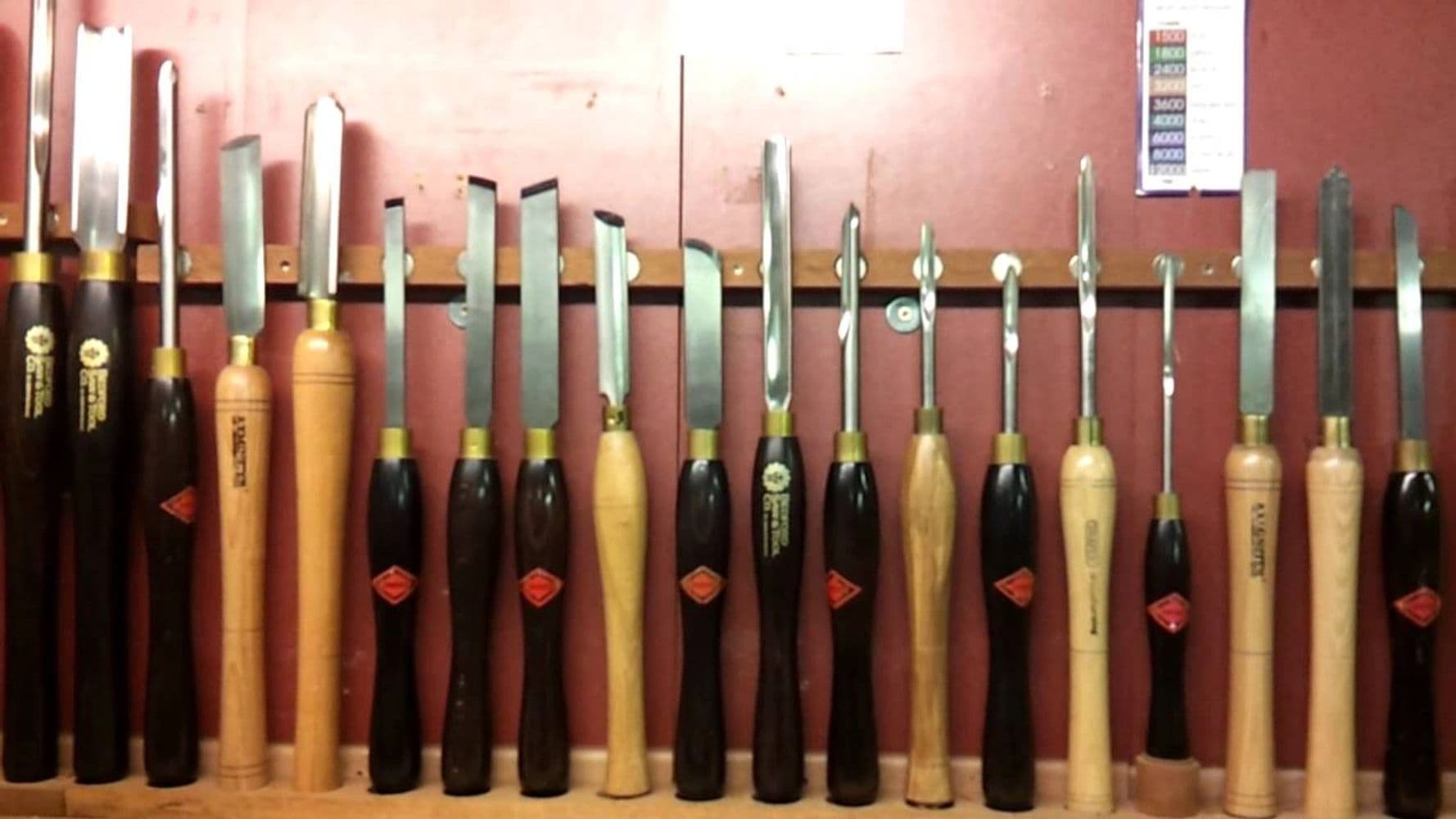
The club also says participants can bring their own tools or use the club’s tools, which is a practical touch that lowers the barrier for newer turners. If you are still figuring out whether you want to commit to a full set of gouges, scrapers and accessories, that flexibility matters. It lets you show up, make shavings and learn what you actually need before spending serious money.
Classes that make the craft feel reachable
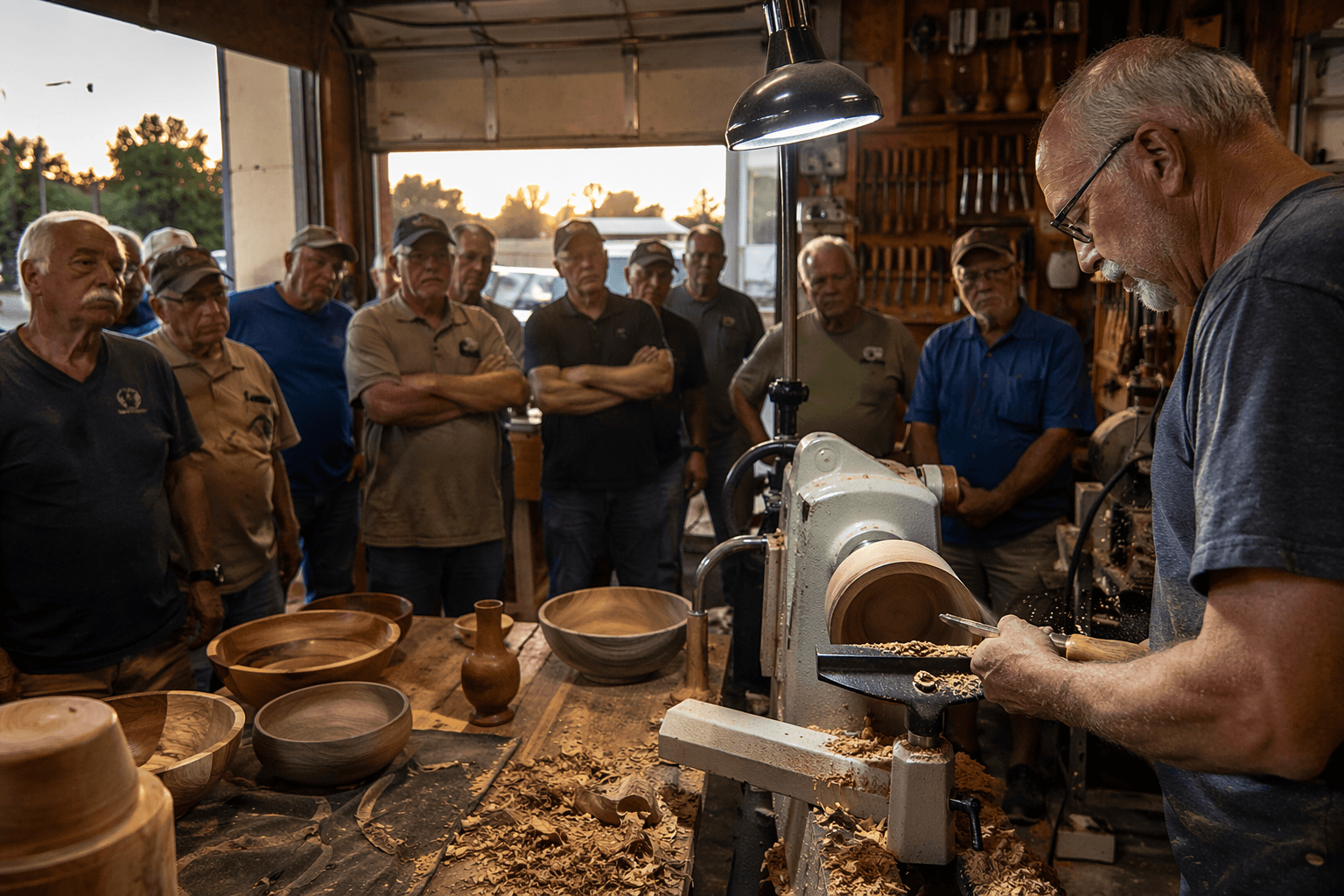
COWA has leased class space at 901 W. California in downtown Oklahoma City, giving the club a dedicated place to teach. That kind of fixed space changes the feel of the hobby fast. Instead of trying to squeeze instruction into a one-off demonstration, the club can run classes and open studio sessions for members and guests in a setting built for the work.
The class size is generally limited to 9 to 10 students, which is exactly where a woodturning class should be. Too many people and the room turns into a crowd around one lathe. With a smaller group, there is room for real instruction, a better view of tool position and enough time for the kind of correction that keeps a beginner from turning a wobble into a mistake.
The club is already signing up people for 2026 woodturning classes, which says something important about demand. This is not a hobby that stays abstract for long once people see what can be made. A bowl, a pen, an ornament or a toy has a way of turning interest into a plan.
The people who keep the shop moving
The club’s leadership page lists Jim Oliver, Paul Rupe, Barbara Bowman, Kurt Konrath, Jeremy Haysmer, Jason Kang, Carolyn Robbins and Doug Lawrence. That roster is the quiet engine behind the public face of the club. Woodturning groups depend on people who can organize classes, keep meetings useful and make sure the next person through the door has a clear path into the craft.
Jason Kang is also a good example of the club’s hands-on culture. At a gathering in Oklahoma City on Wednesday, Jan. 7, 2026, he was making a wooden toy. That image gets to the heart of why these clubs work: the bench is not just for experts showing off. It is where someone can show up with a block of wood and leave with something playful, finished and worth keeping.
There is also a social payoff that goes beyond the object itself. When members gather around the lathe, they are not only making bowls, pens and ornaments. They are trading techniques, comparing finishes, and keeping a craft alive in a way that makes room for both beginners and seasoned turners.
Why the wider woodturning network matters
COWA is part of a much larger world. The American Association of Woodturners says it has more than 360 chapters worldwide, and its journal archive dates back to 1986. That gives the hobby a real backbone, with local clubs plugged into a tradition that spans decades and reaches far beyond one city.
For Central Oklahoma, that larger network helps explain why a club like COWA can feel both practical and personal. The organization gives the hobby structure, the classes give it access, the meetings give it momentum, and the leadership keeps the whole thing running. Put together, those pieces do more than teach someone how to turn wood. They give the craft a place to live.
That is the real appeal of COWA’s model: a new turner can walk in for the first time, find a bench, learn the basics and end up with a toy, a bowl or a better feel for the lathe. The result is not just a finished piece. It is a community that makes people want to come back and keep turning.
This article was produced by Prism’s automated news system from verified source data, official records, and press releases, then run through automated quality and moderation checks before publishing. The system is built and supervised by the people who set the standards it runs under. Read our full AI policy.
Know something we missed? Have a correction or additional information?
Submit a Tip