Asheville Art Museum spotlights woodturning as a sculptural movement
Asheville Art Museum is giving woodturning a yearlong museum stage, and the show frames the lathe as a sculptural engine, not just a shop tool.
A museum-sized argument for woodturning
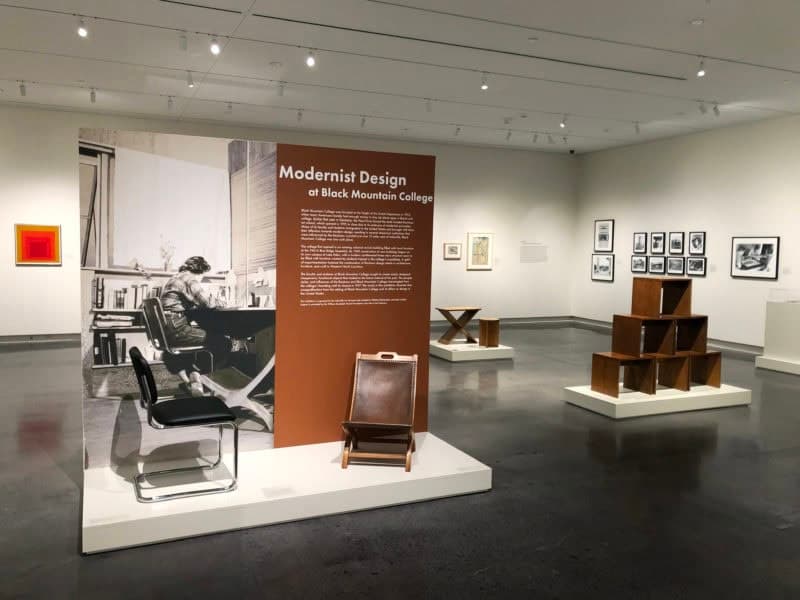
Asheville Art Museum is making a bold case that woodturning belongs in the fine-art conversation on its own terms. With On the Lathe: Shaping a Movement opening in the Debra McClinton Gallery and running from April 29, 2026 through March 21, 2027, the museum gives the medium nearly a full year to shed the old craft-adjacent label and stand as a sculptural movement with its own history, vocabulary, and standards.
That matters because the exhibition is not just hanging beautiful turned vessels on a wall. The museum says the show traces the American studio woodturning movement as artists pushed the lathe away from purely functional forms and toward expressive, studio-based work. In other words, this is the story of the bowl becoming a proposition, the vessel becoming an idea, and the machine in the corner of the shop becoming a tool for sculpture.
What changes when the museum steps in
A dedicated museum exhibition changes the stakes. It asks viewers to judge woodturning the way they would judge painting, ceramic sculpture, or metalwork: by form, surface, scale, invention, lineage, and risk. The Asheville framing also makes clear that the movement was built by people who centered woodturning in the artist’s studio, invented specialized tools, and tested materials that had once been sidelined, including spalted wood.
Jessica Orzulak, PhD, associate curator and curatorial affairs manager, organized the exhibition, and that curatorial choice matters. The museum is not presenting woodturning as an isolated technical specialty. It is presenting it as a living field shaped by teachers, students, and the exchange of ideas across generations. That shift from lone-maker mythology to networked history feels especially important for a medium where so much knowledge still travels by demonstration, critique, and the subtle correction of tool angle at the lathe.
The names that anchor the movement
The exhibition foregrounds makers whose names carry real weight in turning circles: David Ellsworth, Ed Moulthrop, Rude Osolnik, Melvin Lindquist, Stoney Lamar, and Robyn Horn. That lineup alone signals the museum’s intent. These are not decorative footnotes. They are the artists who helped define what a turned object could be once it stopped trying to behave like a chair leg or a salad bowl.
The broader historical frame strengthens that argument. The American Association of Woodturners traces the rise of artistic woodturning through pioneers including James Prestini, Bob Stocksdale, Melvin Lindquist, Rude Osolnik, and Ed Moulthrop, and places James Prestini’s wooden bowls from the 1940s among the early artistic breakthroughs. The Smithsonian American Art Museum has also framed lathe work as a major art form, especially in its earlier exhibition A Revolution in Wood: The Bresler Collection, which emphasized the range of expression possible on the lathe.
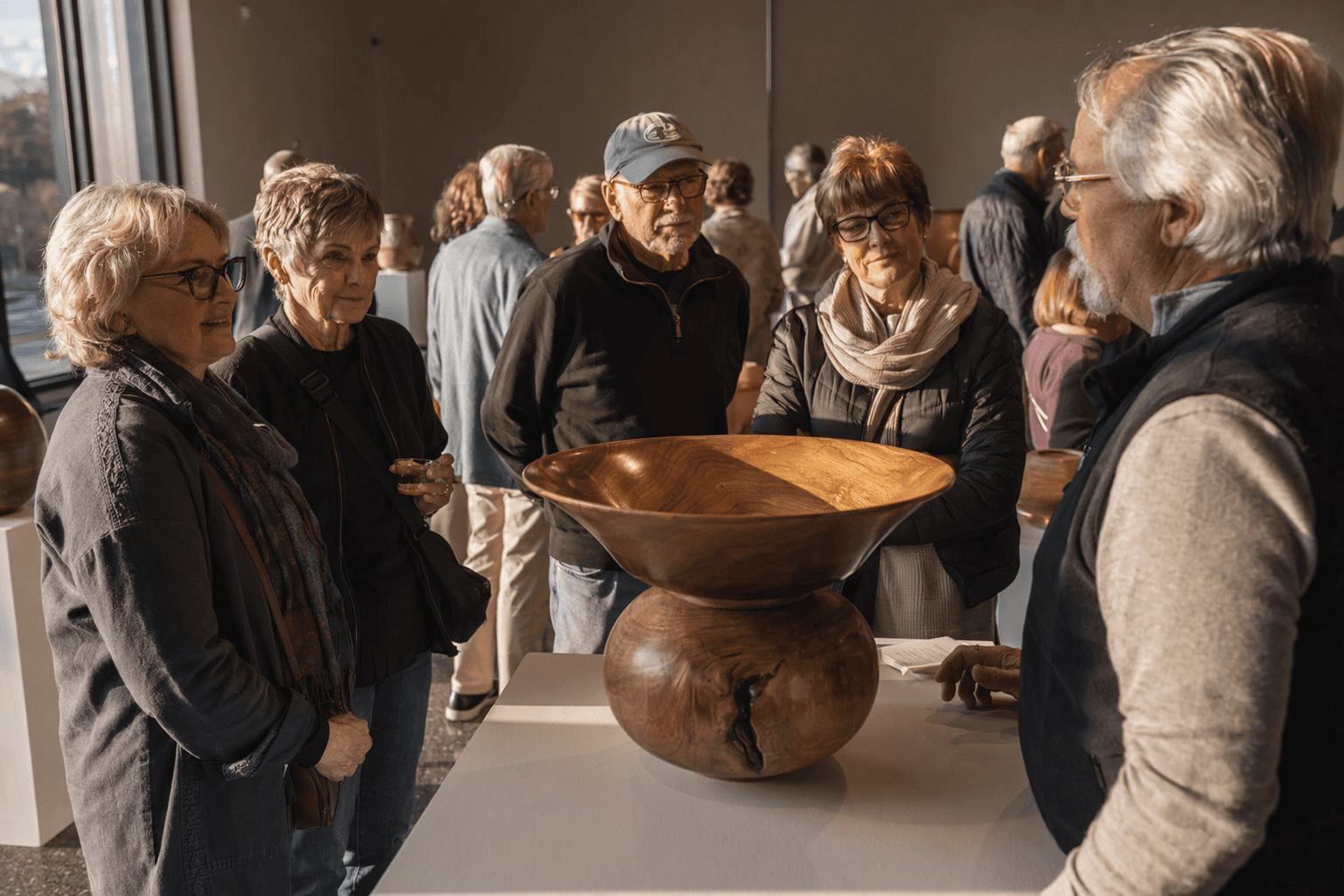
For turners, that lineage is the point. The field did not arrive fully formed. It was built by people who kept asking what else a turned form could be.
Forms and techniques to watch for
If you are looking at the exhibition with a maker’s eye, watch the forms that break from the expected vessel silhouette. The featured image of Philip Moulthrop’s Mosaic Pattern Vessel is a perfect clue. It is built from white pine mosaic and epoxy, which immediately signals a move away from a simple solid-wood blank and toward construction, pattern, and engineered surface. That kind of work pushes woodturning into the territory of design and assemblage while still keeping the lathe at the center.
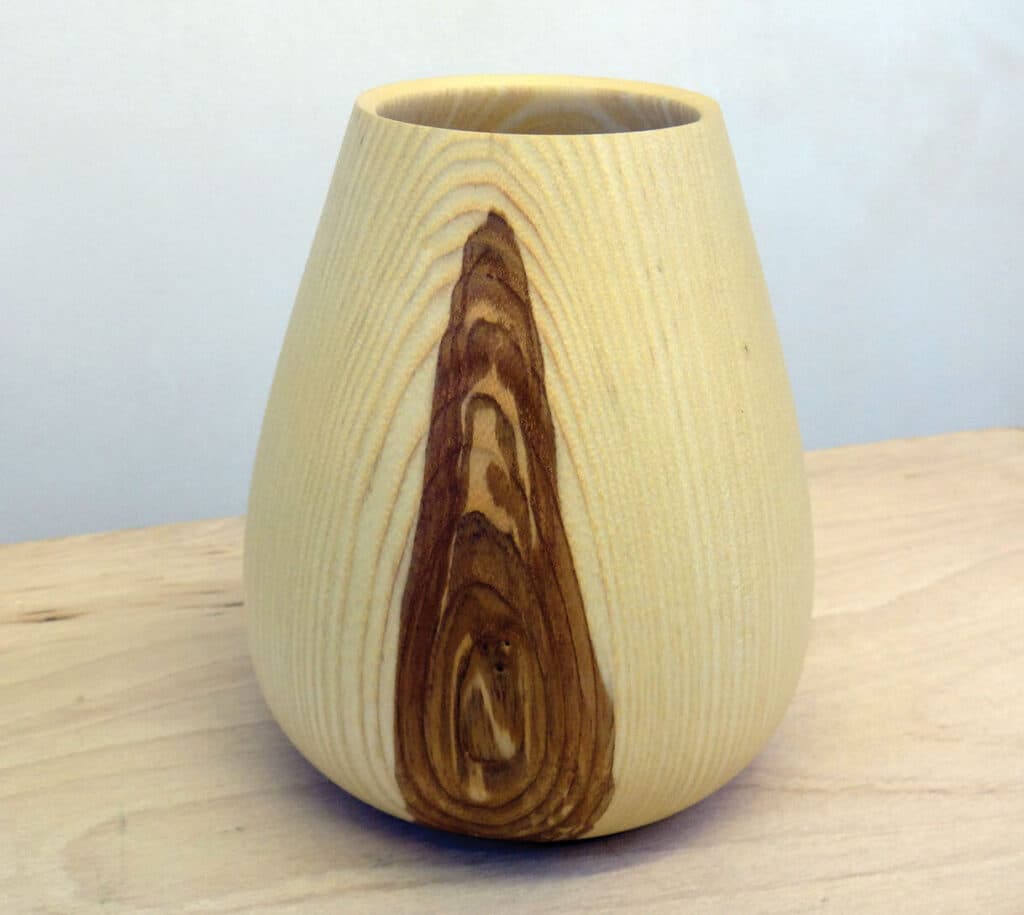
The museum also emphasizes early experimentation with spalted wood, specialized tools, and studio-based methods. Those are not throwaway details. Spalting changes the visual field completely, bringing line, stain, and natural interruption into the final object. Specialized tools, meanwhile, tell you where the movement headed aesthetically: toward cleaner cuts, thinner walls, more daring forms, and a greater willingness to let the turned surface become the whole experience.
- Look for hollow forms that emphasize silhouette over utility.
- Watch for laminated, mosaic, and epoxy-assisted constructions that treat the blank as built material.
- Pay attention to surfaces that preserve the drama of spalting, figure, and color variation.
- Notice where the tool marks disappear and where they are deliberately left alive, because that tension often marks the difference between a functional vessel and sculptural intent.
The mentorship thread that holds it together
One of the strongest ideas in the Asheville show is that woodturning history is relational. The museum says the movement grew through networks of teachers and students, and that is exactly how the best turning communities still operate. A lathe can make a form, but it takes a lineage to shape a movement.
That is where Rude Osolnik becomes essential. Asheville describes him as the “Dean of American Woodturners,” and its collection notes say he taught at Berea College until 1978, helping anchor the field in Appalachian craft education. That educational role matters as much as the work itself. It reminds you that a movement does not survive on finished objects alone; it survives because someone teaches wall thickness, grain direction, tool control, and the confidence to try a new blank.
From bowls to sculpture: Robyn Horn’s path
The exhibition’s sculptural argument also comes into focus through Robyn Horn. Asheville’s collection notes say she began working on the lathe in 1984, making bowls and vases before evolving toward carved wood sculpture. The shift is revealing. It shows how a turner can begin with familiar vessel forms and then keep moving, letting the lathe become one stage in a larger sculptural practice.
Her evolution also connects woodturning to broader art history. The museum notes that she studied artists such as Barbara Hepworth and David Nash, a reminder that turned wood does not exist in a sealed-off niche. It can converse with modern sculpture, abstraction, and the long tradition of carving as a way of thinking in three dimensions.
Why Asheville is an important setting
Asheville is not starting from zero here. The museum mounted Turning Traditions in 2018, focused on Edward, Philip, and Matt Moulthrop, and described them as three generations of Southern woodturners whose minimalist works captured the warm beauty and eccentricities of wood. That earlier exhibition shows a steady institutional interest in the medium, and the new show expands the frame from one family lineage to a broader movement history.
That progression feels significant. First came the family story, then the regional story, and now the movement story. Each step widens the audience and raises the artistic standard. A museum audience may come for the objects, but woodturners will recognize something more consequential: the field is being discussed in the language of form, innovation, and art history rather than only in the language of technique.
What this milestone means for the bench and the gallery
For anyone who turns wood, the real takeaway is not simply that a museum is paying attention. It is that the vocabulary of legitimacy has changed. When a major institution places studio woodturning in a dedicated exhibition, it gives equal weight to lineage, material experiment, and sculptural ambition. It says the lathe can generate not just useful objects, but serious forms that belong in the same critical space as other studio arts.
That is the story inside On the Lathe: Shaping a Movement. It is a museum exhibition, yes, but it is also a marker on the timeline of woodturning itself: a sign that the field has moved far enough from the workbench stereotype to demand a place on the gallery wall and, more importantly, in the art-historical record.
This article was produced by Prism’s automated news system from verified source data, official records, and press releases, then run through automated quality and moderation checks before publishing. The system is built and supervised by the people who set the standards it runs under. Read our full AI policy.
Did this article answer your question?