Illinois Tech student Nathan Silverman turns bowls into art
Nathan Silverman’s bowls start as utility pieces, then sharpen into gallery work, showing how architecture training can change the way a turner sees form.

A bowl guy in a design school
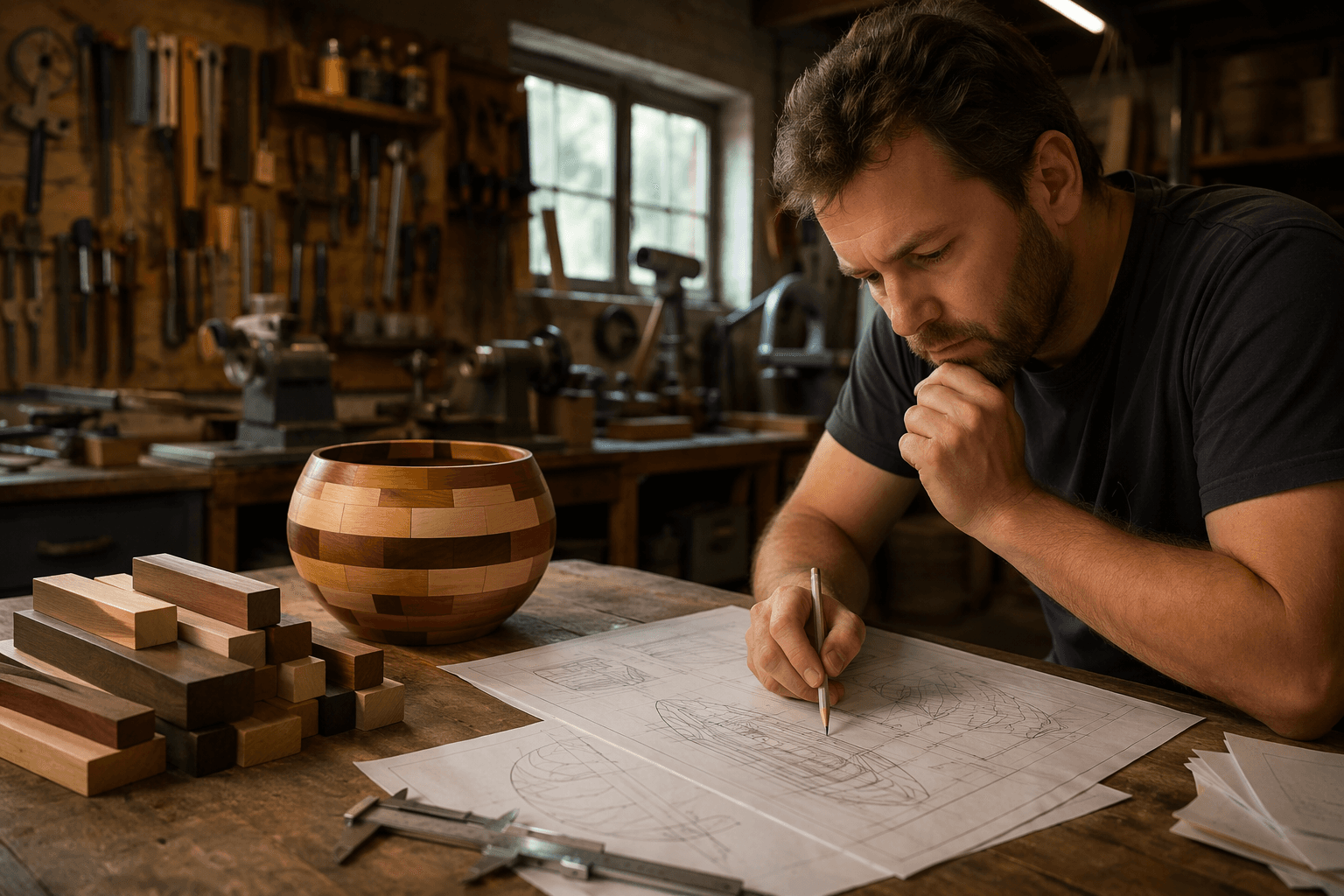
Nathan Silverman has the kind of reputation that sticks because it tells the whole story in three words: the “bowl guy.” On the Illinois Institute of Technology campus, that nickname fits a College of Architecture student whose lathe work has become part of his identity, not a side hobby he mentions only when asked. His April 18 exhibition pushed that work into the open, presenting his hand-turned wooden bowls as objects meant to be handled, used, and looked at.
The show was listed by Coming Soon, a storefront gallery inside Chicago artist Andi Crist’s studio, and the description framed Silverman’s bowls as a kind of travelogue, “a tour of the world through Silverman’s eyes.” That line matters because it gets at what separates his work from generic practice pieces. Silverman is not just making round things. He is choosing wood with a point of view, shaping it into one-of-a-kind objects, and using the bowl as a format that can live in a kitchen, a dorm room, or a gallery wall context without losing its purpose.
Architecture training shows up in the turning
Silverman says he has spent roughly four to five years learning and refining his turning, and that timeline is easy to hear in the way he talks about form. Architecture school trains the eye to see what something can become, and that is exactly the mindset he brings to the lathe. In turning, grain, wall thickness, profile, and finish all have to line up. If one of those decisions is off, the piece can look clumsy, feel awkward in the hand, or simply fail as a vessel.
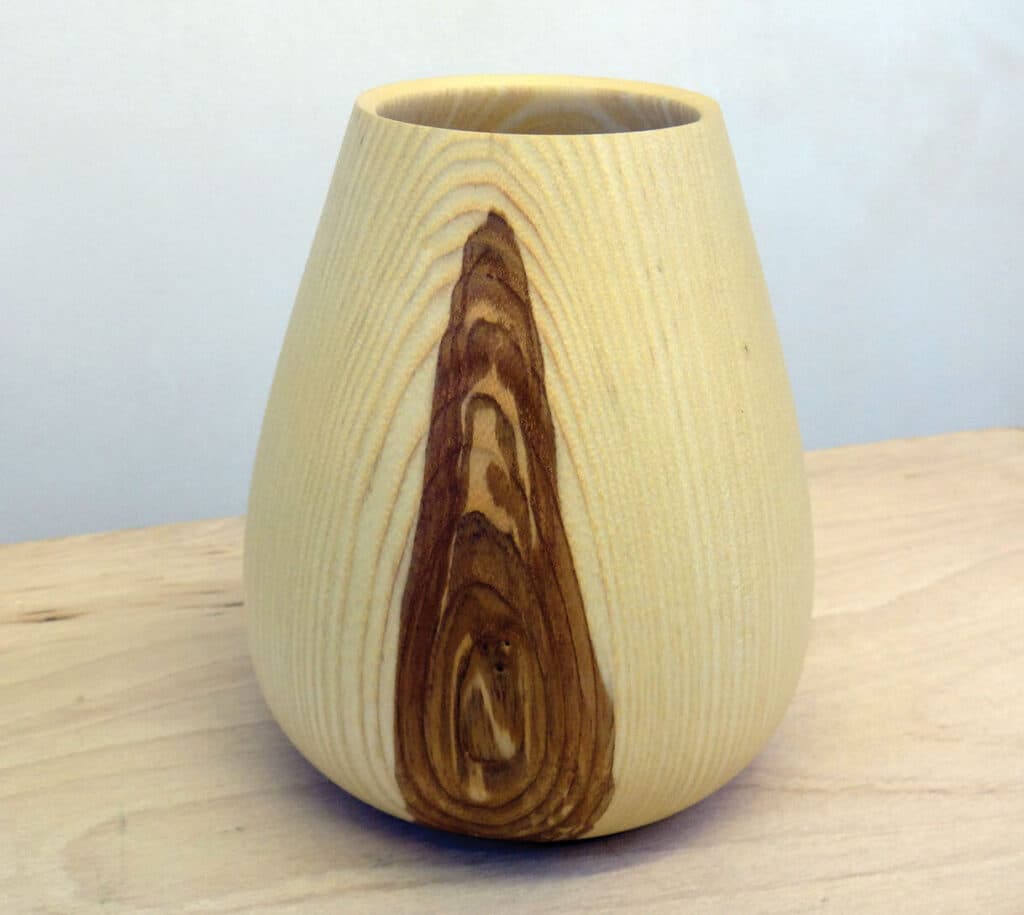
That is why his bowls land in such a useful middle ground. Most of his work right now is functional enough to serve as eating vessels, but it is also finished with the kind of care that lets the same piece sit as decorative art in a home. That dual identity is the point. Silverman’s turning shows how design education can shape a maker’s choices long before the tool touches the wood, especially when the maker is thinking about utility and presentation at the same time.
The appeal is personal, but the learning curve is real
The story behind the bowls started with a gift for a friend, which is a familiar origin for a lot of serious hobbyists. One project leads to another, then the next piece asks harder questions. In Silverman’s case, that gift expanded into an obsession with different woods, figures, and the possibilities locked inside a log once it meets the lathe.
He also gives a more honest version of learning than the polished exhibition photos suggest. Some projects did not turn out the way he hoped, and a few left him with cuts and blood. That kind of damage is part of the truth of turning, especially when form chasing gets ahead of patience or tool control. What is notable here is not that the mistakes stopped him. They did the opposite. They helped him recognize that the work had moved beyond experimenting and into art worth showing.
That is the practical lesson buried inside the profile: if the only thing keeping you interested is the finished object, you are likely to stall out. Silverman kept turning because the work made him happy, and that kind of motivation tends to survive the ugly days at the grinder and the lathe.
Silverman’s bowls sit in a real craft lineage
His exhibition also makes more sense when you place it against the history of woodturning as an art form. The Museum for Art in Wood identifies Bob Stocksdale as a pioneer of contemporary wood turning, and notes that his lathe-turned bowls helped revive the craft as art. That is the same basic move Silverman is making, even if the scale and context are different. A bowl can be a utility object, but it can also be sculpture that still remembers it once held food.
Craft in America offers another useful reference point in Ed Moulthrop, the architect who left the profession in the 1970s to pursue woodturning professionally and became known for large-scale turned bowls. That history gives Silverman’s work a sharper outline. He is part of a tradition where bowls are not just containers. They are proof that wood can be coaxed into a form that feels both domestic and expressive.
For a younger maker inside a college of architecture, that lineage is especially relevant. It shows that the border between functional craft and fine art has been porous for a long time. Silverman is working in that seam, and his bowls benefit from it.
Why the wider woodturning community matters
Silverman’s work also sits inside a broader network of turners, clubs, and educators. The American Association of Woodturners describes itself as a nonprofit dedicated to advancing the art and craft of woodturning worldwide, and it says it has more than 360 chapters around the globe. That matters because a specialized practice like turning can feel solitary until you realize how much knowledge, safety guidance, and shared vocabulary already exist around it.
The AAW also publishes a safety guidebook for woodturners, which is worth keeping in mind when Silverman talks about blood on the learning curve. The lathe rewards precision, sharp tools, and attention. Artistic ambition does not cancel out the need for safe technique. In fact, the better the eye for form becomes, the more important the discipline around the machine gets.
What Silverman is really proving
Silverman’s studio materials describe him as Chicago-based and focused on one-of-a-kind objects inspired by the wood itself, and that description fits the work seen in the exhibition. The bowls are not trying to pretend they are something else. They are honest about the material, honest about the process, and polished enough to stand on their own as art.
That is what makes his story interesting to turners and design-minded makers alike. He is showing a version of “functional” that is not narrow or dull. It can mean a bowl that works on a table and still carries the logic of a gallery piece. It can mean a student in the College of Architecture using an old craft to sharpen a contemporary eye. And it can mean a younger maker turning wood into an argument for how form, utility, and presentation can all live in the same object without compromise.
This article was produced by Prism’s automated news system from verified source data, official records, and press releases, then run through automated quality and moderation checks before publishing. The system is built and supervised by the people who set the standards it runs under. Read our full AI policy.
Did this article answer your question?