Keith Fenton Demonstrates Xulons and Tubes at Oxon Woodturners April Club Night
Turning tubes wet and side-grain to harness post-drying movement was the standout lesson from Keith Fenton's Xulons demo at Oxon Woodturners on April 7.
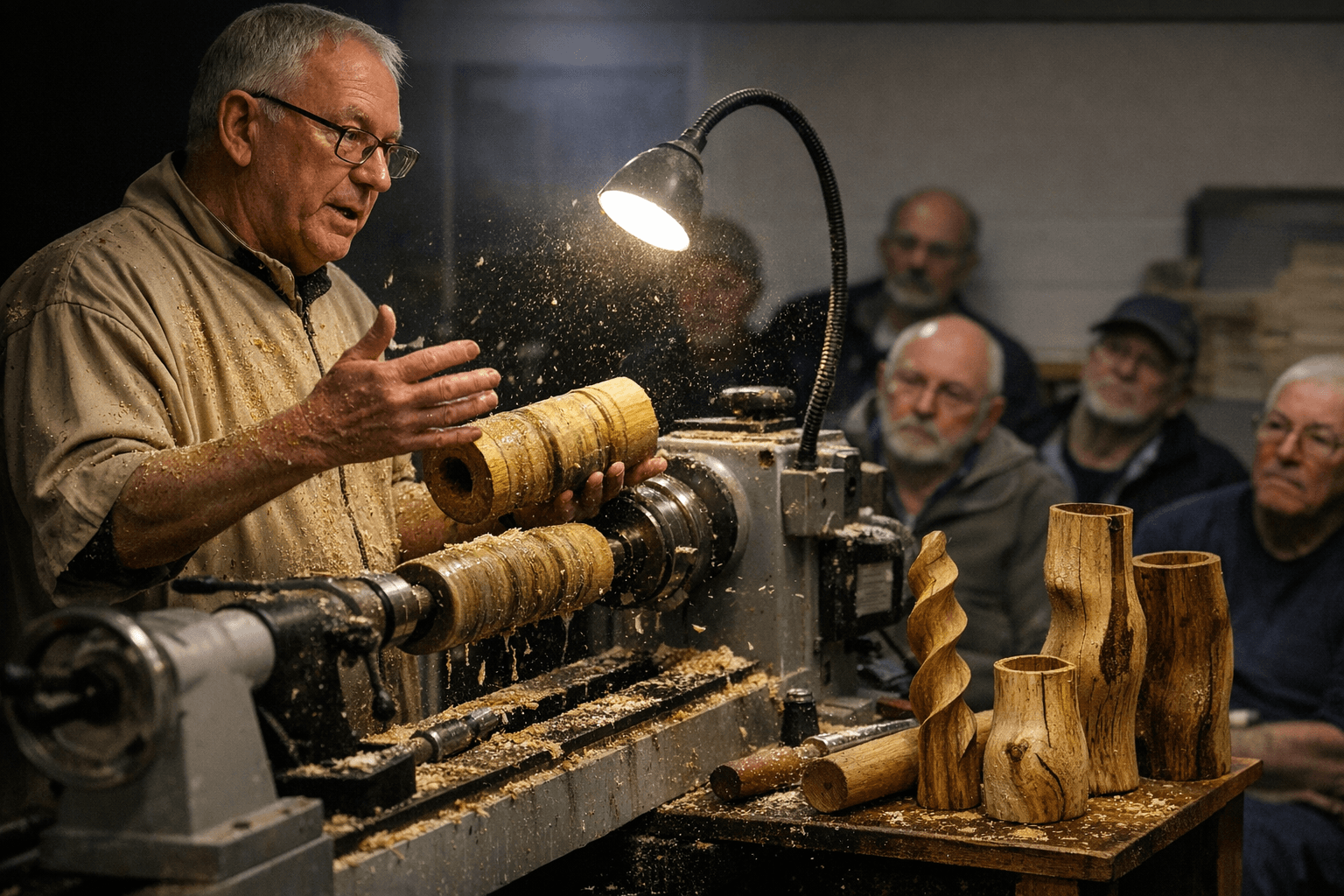
The most immediately useful thing Keith Fenton left behind at the Oxon Woodturners' April club night wasn't a finished piece. It was a principle: mount the tube side-grain, turn it wet, and let the wood do the finishing itself after it leaves the lathe.
Fenton, a professional turner based in the Forest of Dean in Gloucestershire, visited the club's meeting on April 7 to demonstrate Xulons and tubes. Xulons are aesthetic turned objects produced across both end-grain and side-grain orientations. The tubes in his demonstration were specifically side-grain work, and that orientation determines everything about how the piece behaves once it's off the lathe.
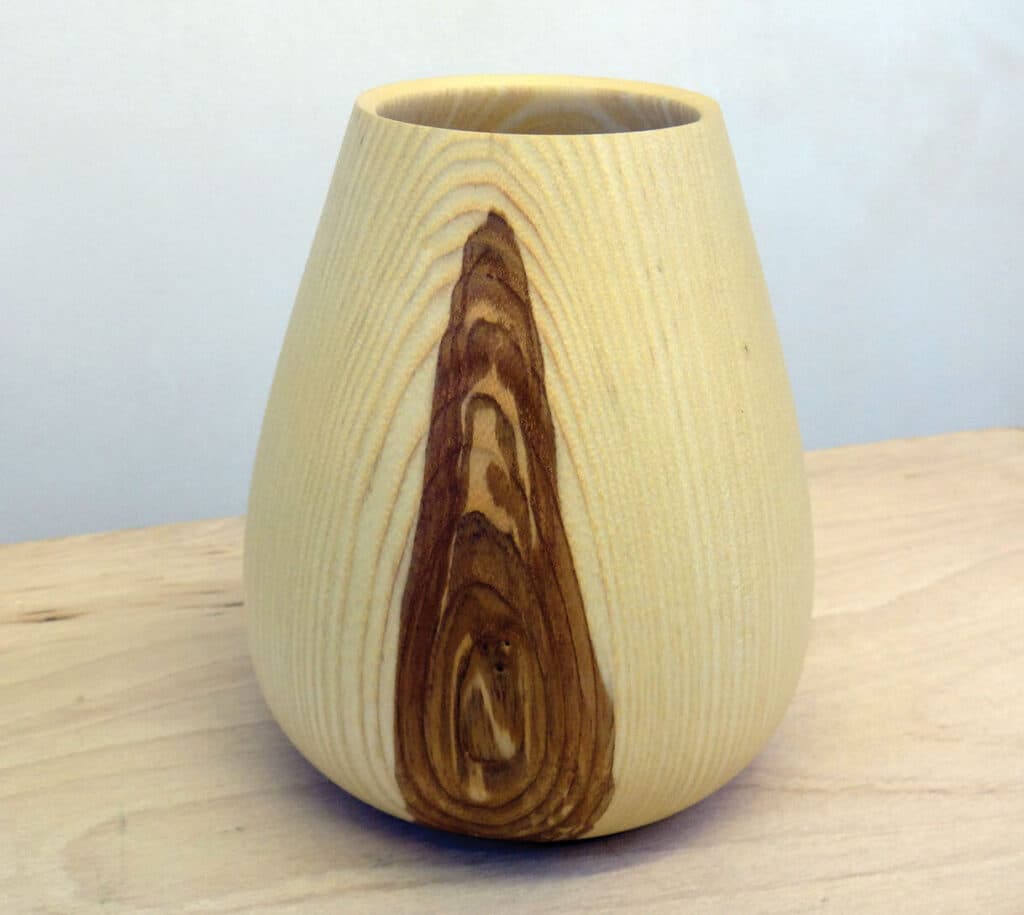
Turning a tube from wet stock, oriented side-grain, encourages the piece to oval slightly as it dries, a controlled deformation that produces organic, non-uniform profiles no lathe pass alone can replicate. Fenton presented this not as a problem to engineer around but as a deliberate technique: set the starting form, then let natural movement complete it. The tool choices and finishing practices documented during the demo reinforce the same logic, with selection made in light of how the piece will continue to change post-turning rather than treating the lathe-off moment as the endpoint.
Club members raised practical applications during the evening. Napkin rings were cited as one alternative use for that aesthetic movement, a form where post-drying ovalling adds character rather than causing a functional problem, and a useful scrap-wood drill for anyone wanting to observe the technique's effect before committing green stock to a longer project.
The meeting also included a club competition with placements across both advanced and intermediate sections, winners identified by name alongside the species each chose to turn. That pairing of result with material reflects Oxon's consistent position that wood selection is a craft decision, not an afterthought, and the competition placings give members a concrete benchmark of executed standard to aim toward.
Dalmann, the Leckhampstead-based timber supplier whose stock covers exotic African hardwoods and home-grown turning blanks, held a free open day on April 11 with Les Thorne demonstrating. For members who went, it was an unusual opportunity to watch a well-known professional at no cost while also walking the full timber range. Looking forward, Oxon members are scheduled to provide live turning under a gazebo at Harcourt Arboretum's Spring Fair on May 9, a public-facing event that doubles as real-world demonstration practice.
Fenton's own sourcing practice runs parallel to the philosophy behind those events. He works almost exclusively with timber from native-grown trees, chain-sawn in the fields and hand-sawn into blanks before air drying, selecting for grain character and natural markings. It is an approach that treats the raw material as a collaborator from the outset, which is precisely what his wet-tube demonstration made concrete: the turner makes decisions, and the wood makes the rest.
This article was produced by Prism’s automated news system from verified source data, official records, and press releases, then run through automated quality and moderation checks before publishing. The system is built and supervised by the people who set the standards it runs under. Read our full AI policy.
Did this article answer your question?