Mike Peace turns scrap wood into elegant decorative birds
Mike Peace’s new bird turning shows how scrap offcuts can become fast, elegant pieces that sell well, build skill, and fit a craft-fair table.
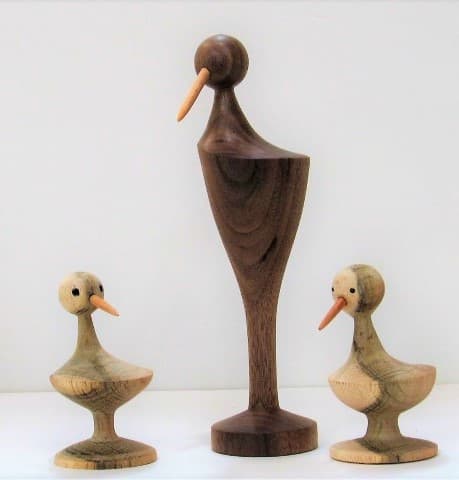
A scrap offcut becomes a polished little bird in Mike Peace Woodturning’s latest video, and that is exactly why the project lands so well. The title, “Woodturning - Turn Scrap Wood Into Beautiful Birds!!”, says the whole thing plainly: this is a beginner-friendly project, a giftable object, and a high-demand craft-fair item, all pulled from material that might otherwise sit in the cutoff bin.
Why the bird shape works so well
The strength of the project is how little explanation it needs. A bird reads instantly, even from a distance, so the silhouette does the heavy lifting before you ever get into the details of grain choice or finish. That makes the form feel elegant rather than gimmicky, because the appeal comes from proportion and balance, not from tricks or complicated joinery.
That simplicity also gives you room to show real turning skill in a compact package. A small decorative bird still asks for careful shaping, clean transitions, and smart finishing choices. In other words, it is not merely a cute object, it is a concise test of whether your tool control and eye for form are solid enough to turn plain scrap into something worth displaying.
From offcuts to inventory
The scrap-wood angle matters just as much as the shape. Turning a bird from leftover stock changes the project from a one-off novelty into a repeatable production idea, especially if you already keep a box of small offcuts by the lathe. That is a useful mindset for anyone trying to make hobby time pay off in visible results, because it turns material that would normally be ignored into an object that can be gifted, boxed, or sold.
Axminster Tools makes the same case from a different angle, describing a turned wooden bird as a beginner project that is easy to make, takes about 1 hour, and works well for craft fairs or as a gift. That time estimate matters. A project that can be completed in roughly an hour is easier to batch, easier to refine, and easier to imagine as part of a small seasonal stock run rather than a labor-heavy special order.
A bird like this earns a place in a production mix because it checks several practical boxes at once:
- low material cost when you start from scrap
- short making time, around 1 hour
- compact size for table display and packaging
- obvious gift appeal without much explanation
- enough variation potential to keep a run from looking identical
That combination is what separates a useful shop project from something that only looks good once. If you can repeat it cleanly, vary the species or finish, and keep the silhouette crisp, it becomes more than a demonstration piece. It becomes inventory.
Why this is a confidence-building project
The other reason the bird format works is that it lets you finish something complete without committing to a big bowl or a complicated hollow form. You get the satisfaction of taking a block of wood from rough stock to finished object in one sitting, and that matters more than people outside the lathe often realize. Small wins build rhythm, and rhythm is how a turner gets faster, cleaner, and more consistent.
The American Association of Woodturners has long framed practical projects as a route to proficiency, saying the quickest and best way to become proficient at the lathe is to stretch your skills by making useful projects. It also says its archive includes thousands of articles, projects, videos, and tips, which tells you this approach is not an outlier in the turning world. It is central to how many turners learn and improve.
That same project-based culture shows up in the AAW’s bird-related content as well. A free article on a Small-Scale Bird Feeder Ornament, turned by Kurt Wolff-Klammer, shows that bird forms keep returning as a useful teaching format. The reason is obvious once you spend time at the lathe: birds are friendly to make, easy to recognize, and rich enough in shape to teach restraint, proportion, and finishing in one compact object.
A small bird with a long craft lineage
It is easy to see this as a modern social-media-friendly project, but the larger craft backdrop is much older. Ornamental Turners International says plain turning has been practiced for at least 3,500 years, and that Egyptian lathes were in use around 1500 BCE. Put beside that history, a decorative bird made from scrap wood feels like a contemporary expression of something very old: the urge to take a simple spinning blank and coax it into a form that feels alive.
That historical context gives the project a quiet credibility. It is not just a cute make for the feed or the sales table. It is part of a tradition that has always valued small, well-formed objects, especially when they show skill without wasting material.
Why Mike Peace’s channel is part of the appeal
Part of what makes this project land is the credibility of the source. Mike Peace Woodturning’s YouTube channel currently lists 63.8K subscribers and 896 videos, so this is a channel with a substantial practical following and a deep library of turning content. The bird video sits comfortably beside other compact, beginner-friendly, gift-oriented pieces on the channel, which signals a clear understanding of what many turners actually want to make: useful, appealing work that can be completed without a huge material commitment.
That is the real value of the bird project. It is fast enough to stay fun, simple enough to teach, elegant enough to sell, and repeatable enough to matter in a small shop economy. If you are deciding whether it belongs in your own rotation, the test is straightforward: if a project can be made from scrap, finished cleanly in about an hour, and still look polished enough to sit on a craft-fair table, it is probably worth keeping. This one clears that bar with room to spare.
This article was produced by Prism’s automated news system from verified source data, official records, and press releases, then run through automated quality and moderation checks before publishing. The system is built and supervised by the people who set the standards it runs under. Read our full AI policy.
Did this article answer your question?