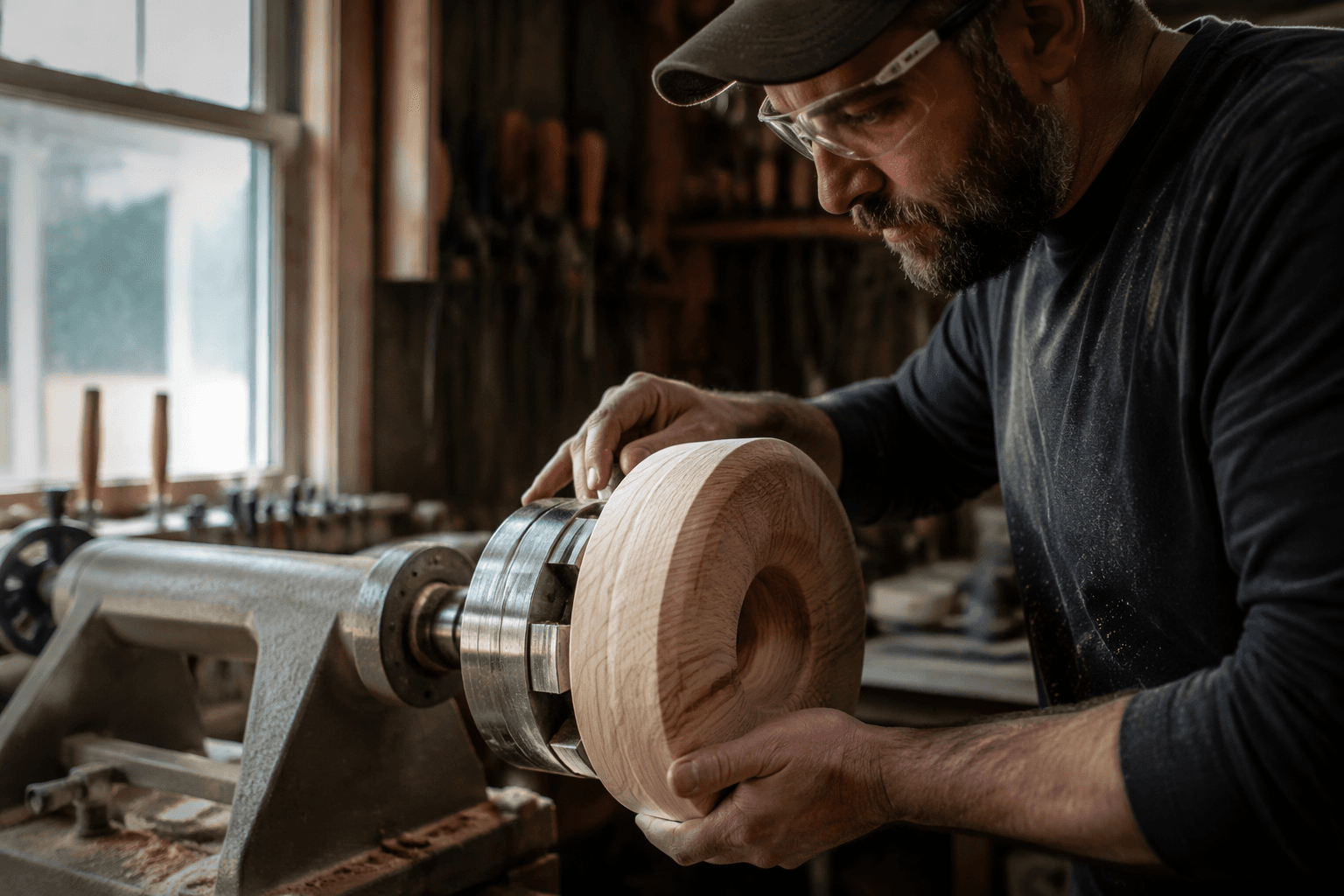
Seated woodturning opens the lathe to more makers, safely and comfortably
Seated turning shifts the shop around the maker, not the other way around, and the AAW’s resources show how to tune height, reach, lighting, and tool handling today.
A stable chair or bench, a lathe stand set to the right level, and solid foot support change the geometry of a cut. That is why the American Association of Woodturners puts “Should I stand or sit?” at the center of its “Physical Limitations” learning path: the answer is not about ideal posture, it is about making the lathe fit the turner so the work stays safe, controlled, and comfortable.
A shop that fits the maker
The simplest adaptation is also the most important: the lathe setup has to match how you actually work. If you turn seated, lathe height, seat height, and foot support all change the geometry of the cut, and the tool rest must land close enough to avoid overreaching. A stable chair or bench, a lathe stand set to the right level, and a position that keeps the shoulders relaxed do more for control than trying to force a standing posture into a seated body.
That shift also changes how you think about distance. The closer the tool presentation is to the work, the less strain you put on the wrists and hands. For anyone dealing with reduced strength, limited balance, or fatigue, that means less constant compensation from the body.
Tool handling without forcing the grip
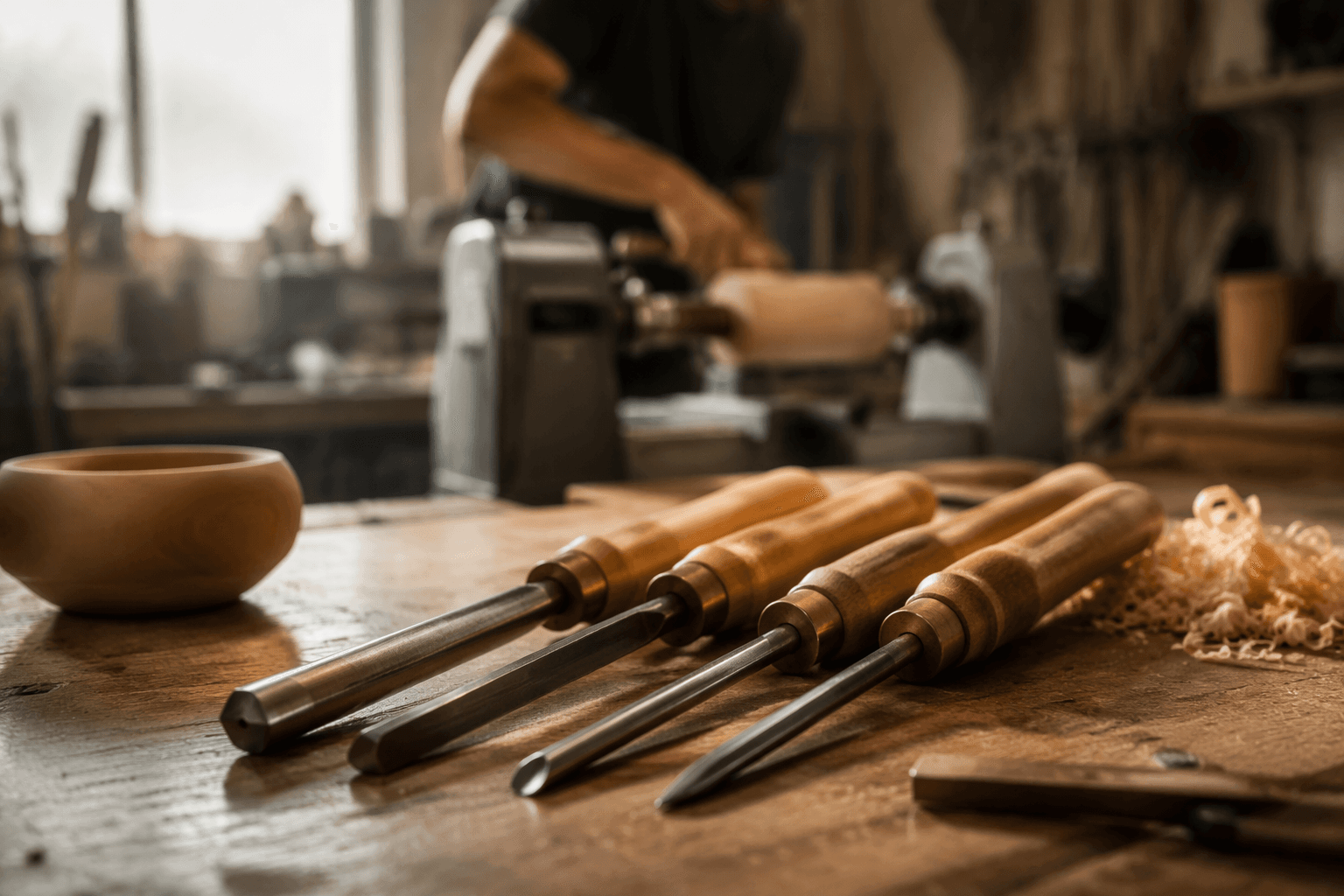
The AAW physical limitations path includes the prompt, “I can’t get to grips with these tools,” and seated turning has to answer that in real time. Larger tool handles, better hand placement, and reduced reach all help keep the cut under control without asking the turner to fight the tool.
In practice, that means using the body more efficiently. The shoulder, elbow, and torso can help guide a tool presentation when the wrist alone would be doing too much work. The goal is steady leverage, not a heroic hold, and that is especially important when you are making repeated cuts or working through a long session at the lathe.
Ergonomics is part of turning skill
Woodturning education has treated body mechanics as a legitimate part of the craft for years. The AAW’s Woodturning FUNdamentals issue WF0702-2018 includes “Lofstrom on Biomechanics.” Motion, posture, and force are part of getting a clean cut and staying in the shop long enough to keep improving.
That same idea shows up in the July 2015 Woodturning FUNdamentals issue WF0404-2015, which lists “Seated Turners” by Chris Grove.
Set up the workstation like a system
The 2014 special edition of Woodturning Fundamentals, “Setting Up Your Woodturning Workstation,” covers space planning, lighting, electrical, dust collection, and workshop design/layout. Those areas map directly onto what seated turners need to think about before they ever start a cut. If the room is cramped, badly lit, or hard to move through, a seated setup gets more difficult fast.
Lighting is especially important because seated work often narrows the usable reach around the lathe. You need to see the bevel, the edge, and the curve without leaning into the danger zone. Dust collection matters too, because a seated position can place your face and breathing zone closer to the stream of shavings if the hood, hose, or airflow is poorly arranged.
- Lower the lathe or raise the seat until the cut feels natural, not stretched.
- Keep the tool rest positioned so the tool can glide with minimal reach.
- Use a seat with stability and the right height for your feet and knees.
- Place frequently used tools, calipers, and sanding supplies within easy reach.
- Aim task lighting at the work, not the room.
A practical seated setup usually benefits from a few adjustments:
Make safety and comfort work together
Seated turning is not about taking a shortcut around safety. It is about reducing fatigue so your judgment stays sharp, your grip stays relaxed, and your body is not fighting the setup. That matters for woodturners recovering from injury, living with chronic pain, or simply trying to keep turning after long years at the lathe.
The Physical Limitations page uses “Join the Conversation” and “Next Phase,” treating adaptation as part of an active discussion rather than a one-time accommodation. The education hub serves new turners and experienced makers, and seated work fits squarely inside that range.
Access in the real shop, not just on paper
The photo caption on the Physical Limitations page reads: “The visiting group from the Division of Services for the Blind, North Carolina Department of Health and Human Services (DHHS), with the pens they have just turned. Happy campers.” It shows turning as a shared, achievable activity for makers with visual impairment, not only for those with perfect sight and full mobility.
Inclusive demos and club sessions need room for seated positioning, clear sight lines, repeated explanation of tool presentation, and a shop layout that does not assume every body stands the same way. Clubs and instructors can help by setting up one station that is lower, more accessible, and easier to approach, then teaching the mechanics of adaptation as part of normal woodturning practice.
AAW was founded in 1986.
This article was produced by Prism’s automated news system from verified source data, official records, and press releases, then run through automated quality and moderation checks before publishing. The system is built and supervised by the people who set the standards it runs under. Read our full AI policy.
Did this article answer your question?