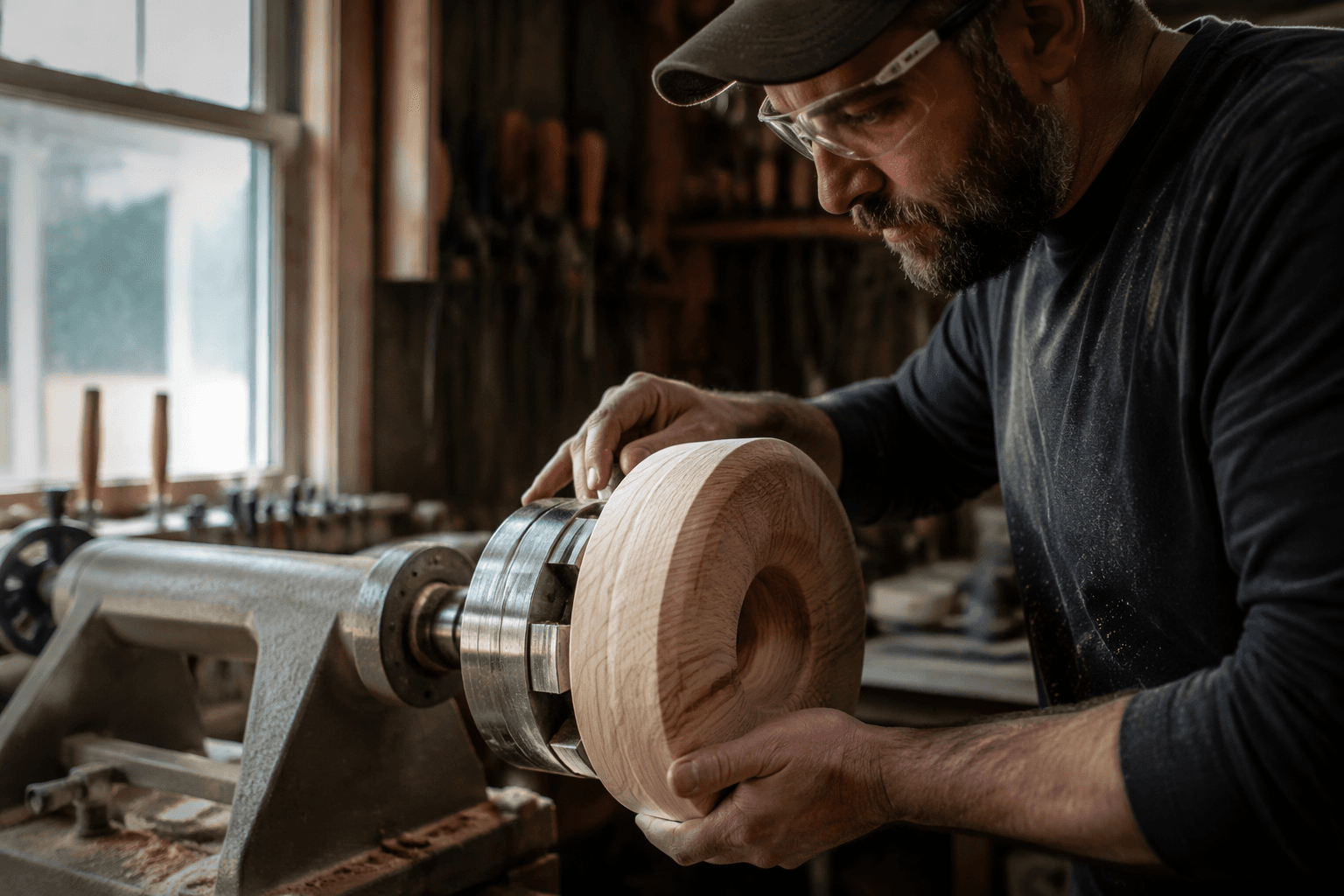
Woodturning beginners need these four essential lathe tools first
Start with four spindle tools, not a shopping spree. The right starter kit gets you making clean cuts faster and keeps costly first-lathe mistakes off the bench.
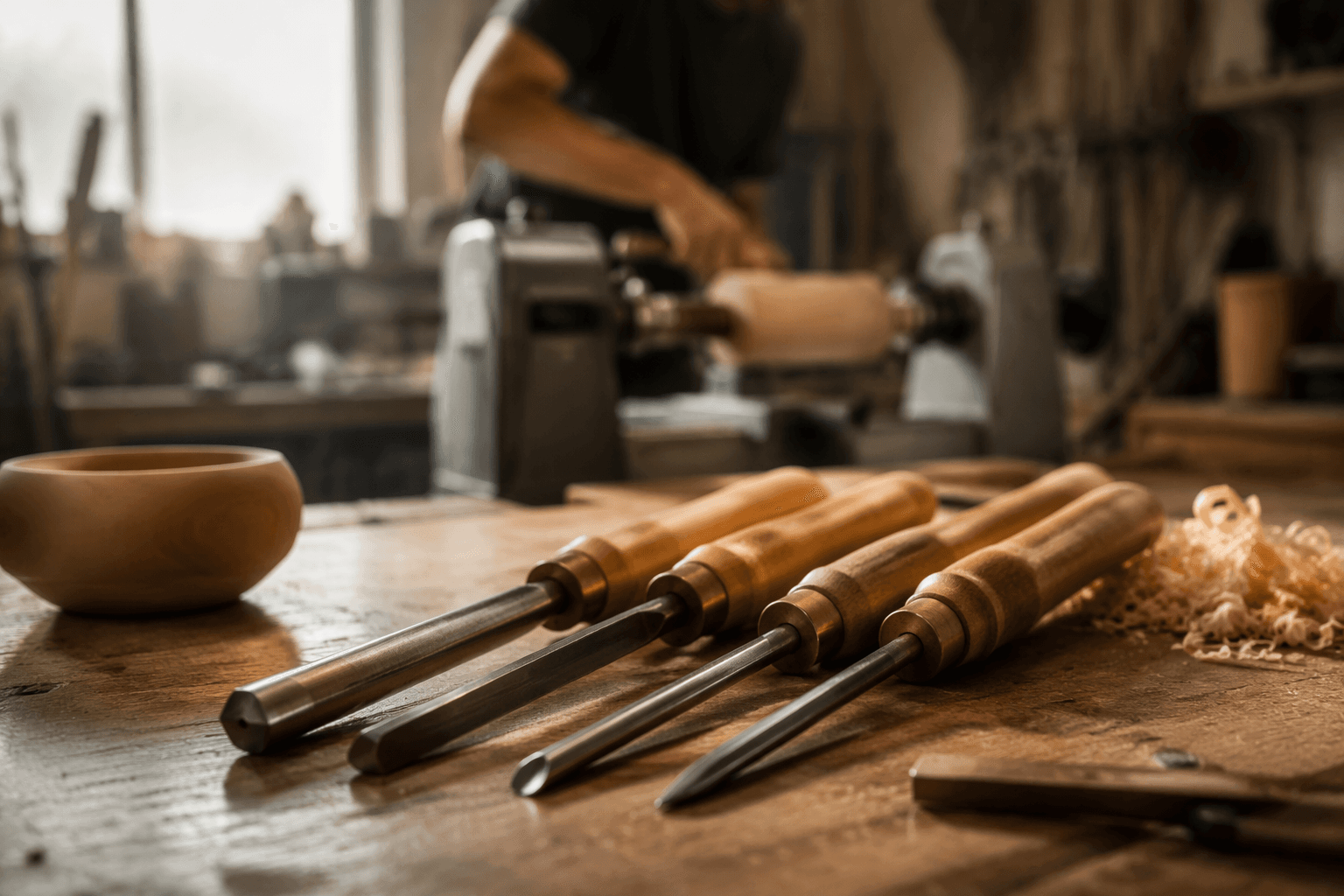
The fastest way to waste money in woodturning is to buy for the fantasy project instead of the first cut. A smarter first kit is smaller and more specific: the 1/4-inch spindle roughing gouge, spindle gouge, skew chisel, and parting tool that show up again and again in real spindle work. Axminster Tools’ beginner video from December 2, 2020 even shows the order clearly, with bowl gouge and round-nose scraper sitting behind the core spindle tools, not ahead of them.
The 1/4-inch spindle roughing gouge
This is the tool that gets square stock round, and that job alone makes it the first buy for most between-centers work. WOOD Magazine’s beginner guide puts the 1/4-inch spindle roughing gouge at the front of the line because it turns square or out-of-round stock into a cylinder fast, which means you can move from rough blank to controlled cuts without wrestling corners. One important limit matters here: use it on spindle work, not bowls.
That one warning saves beginners from a common and expensive mistake. Pair the gouge with the other buying advice WOOD Magazine gave in its December 30, 2020 turning-tool article: buy high-speed-steel blades and start with smaller tools. Smaller tools are not a downgrade; WOOD said they can remove stock faster in beginner hands because they are easier to control than oversized cutters.
The spindle gouge
Once the blank is round, the spindle gouge becomes the tool that makes the piece look intentional. It is the shaper in this starter set, the one you reach for to form beads, cut coves, and blend flowing curves into a spindle without leaving the faceted look of a rough cut. If the roughing gouge is about speed, the spindle gouge is about shape, and that is where the work starts to feel like turning instead of trimming lumber.
This is also where sharpening habits start to matter. WOOD Magazine’s October 9, 2025 “First Tools for Learning Turning” says a bench grinder fitted with a 60- to 80-grit aluminum-oxide wheel is the most efficient way to sharpen turning tools, while its June 24, 2025 “Lathe Basics” video notes that a slow-speed grinder is a relatively inexpensive way to get into sharpening. Dennis Belcher’s February 2023 American Association of Woodturners sharpening video reinforces the point by giving the spindle gouge its own sharpening segment alongside the bowl gouge, parting tool, scraper, and skew.
The skew chisel
The skew chisel has a fearsome reputation because it punishes sloppy handling, but that is exactly why it belongs in a beginner roadmap. Used correctly, it is a precision tool for planing cuts, V-cuts, and smoothing spindle surfaces, and it can leave a finish that reduces sanding if the edge is sharp and the presentation is controlled. The trick is not brute force. It is a light touch, a stable toolrest, and enough practice to understand how the bevel rides the wood.
This is the tool where a mentor at a local club or a hands-on class pays for itself quickly. The American Association of Woodturners says safe, effective lathe use requires study, understanding the operator’s manual, and following label warnings, and its safety materials stress protecting the eyes, face, hands, lungs, and ears. That caution matches the Bay Area Woodturners Association’s blunt reminder that woodturning means powerful machines, sharp tools, dust, and noise, which is exactly why a skew should be learned with someone watching your stance before you chase a clean planing cut on your own.
The parting tool
The parting tool looks simple, but it is the quiet workhorse of the first kit. It cuts grooves, defines diameters, and creates the tenon you need for chucking, which means it shows up early whether you are turning a candlestick, a handle, or a basic spindle form. In practice, it is the measuring tool as much as the cutting tool, because it gives you the crisp shoulders and reference points that keep the rest of the piece honest.
That is why the starter set stays so small and still covers so much ground. A 1/4-inch spindle roughing gouge gets the blank round, the spindle gouge shapes it, the skew chisel refines it, and the parting tool sets the dimensions and the chucking tenon. Add a reliable sharpening setup and you have enough to make pens, handles, candlesticks, and simple spindle forms without drifting into the common first-kit trap of buying specialty tools before you can make a clean cut. That approach is not new either: the American Association of Woodturners notes that woodturning is an ancient craft, and for many hundreds of years before the Industrial Revolution the foot-powered lathe was the only woodworking machine in common use. The old lesson still holds. Start with the four cuts you will actually use, learn them well, and let the exotic tools wait.
This article was produced by Prism’s automated news system from verified source data, official records, and press releases, then run through automated quality and moderation checks before publishing. The system is built and supervised by the people who set the standards it runs under. Read our full AI policy.
Did this article answer your question?