Spindle roughing gouge: the essential tool for spindle turning
The spindle roughing gouge turns square stock into a cylinder fast, but only in spindle work. Used correctly, it is a shop-floor shortcut with strict safety limits.
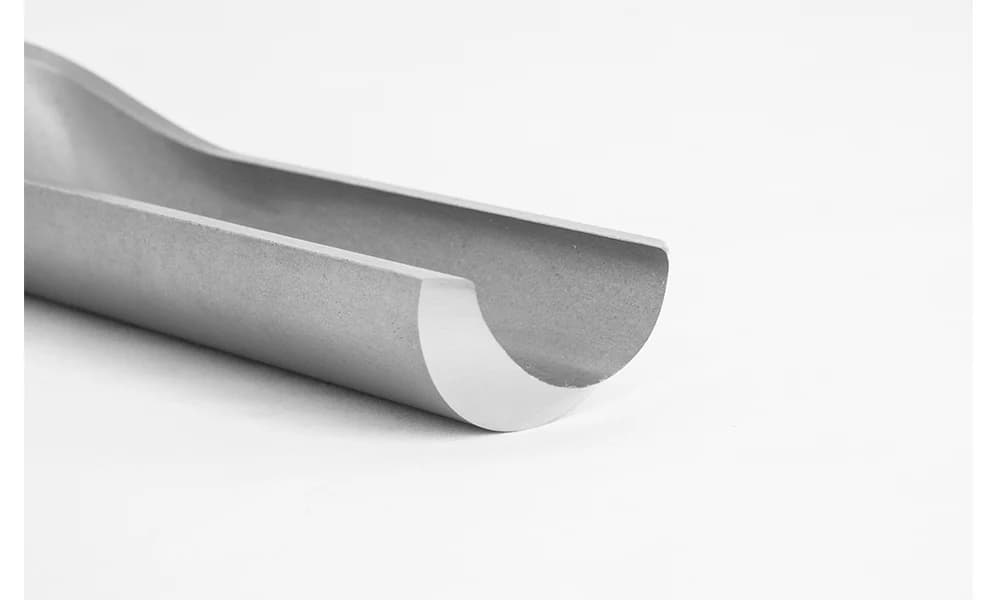
A spindle roughing gouge turns square timber into a round blank fast at the lathe, whether the project is a chair leg, table leg, tool handle, candlestick, or any other long-grain form that starts life as square stock. The same tool can create trouble quickly if it is used outside its lane.
What the spindle roughing gouge is built to do
The spindle roughing gouge is “used for spindle turning only,” the American Association of Woodturners says. Its large cross-section at the cutting end is effective for roughing down square stock and removing wood quickly. That design is why the tool feels so efficient on a spindle blank. It takes off corners with broad, fast cuts instead of the narrower, more selective action you get from shaping tools.
Carter and Son Toolworks calls the same tool a workhorse, ideal for shaping square blanks into smooth, rounded spindles. If the job is to get a blank from rough and angular to round and ready for layout, the spindle roughing gouge is often the first tool to reach for.
Where it belongs, and where it does not
The biggest beginner mistake is treating the spindle roughing gouge like a general-purpose rouging tool for any lathe job. It is not for faceplate turning or bowl blanks. The distinction matters because spindle work generally has grain running lengthwise, while bowl work and other faceplate jobs involve interrupted or changing grain directions that demand different tools and a different cutting approach.
The AAW’s “spindle turning only” instruction keeps the tool on work where it does its best work and away from situations where its broad cutting edge and geometry can become a liability. If you are converting square stock into a cylinder, you are in the right neighborhood. If you are hollowing a bowl or working a faceplate blank, you are not.
How the cut should be presented
Craft Supplies USA’s safety guidance places the cutting edge slightly above the centerline of the work, with the handle held 2 to 3 inches below the tool rest. That stance gives the edge a controlled bite instead of a digging, unstable cut.
That small adjustment is what separates a clean roughing pass from a catch-prone one. The handle position keeps the tool supported and the edge angle manageable, while the centerline relationship helps the gouge cut the fibers instead of levering into them. On spindle stock, that translates into smoother stock prep and less fighting the tool.
The beginner failure points that cause trouble
The first common failure is trying to rough a square blank too aggressively before the tool is aligned. The gouge is designed to remove material quickly, but quick is not the same as uncontrolled. If the blank is still presenting a sharp corner, the turner needs to work patiently and keep the cut deliberate as the form becomes round.
The second failure is poor tool presentation. If the edge is not slightly above centerline, or if the handle is floating too high instead of staying 2 to 3 inches below the rest, the cut can become grabby. The roughing gouge is a large tool, but size does not replace technique.
The third failure is the dangerous one: using the gouge on faceplate or bowl work because it seems fast and familiar. That is exactly the kind of shortcut the tool’s spindle-only rule is meant to prevent. The roughing gouge is for continuous-grain spindle stock, not for blanks where the grain presentation changes across the cut.
A repeatable spindle-roughing sequence
1. Mount the square blank securely and inspect the setup before the lathe starts.
2. Bring the spindle roughing gouge to the rest with the handle kept 2 to 3 inches below it.
3. Set the cutting edge slightly above centerline and take light, controlled passes to knock off the corners.
4. Keep working until the blank becomes a true cylinder.
5. Switch to a spindle gouge, detail gouge, or skew chisel once the roughing job is done.
In that sequence, the roughing gouge handles bulk removal first and refinement later. It is not meant to finish the form, only to make the next tools more effective by giving them a clean cylindrical starting point.
Sizes you are likely to see
The AAW guide lists 1 1/4-inch and 3/4-inch sizes as common spindle roughing gouge sizes. That gives a useful clue about the tool’s range without turning it into a one-size-fits-all purchase. Bigger versions can feel more substantial in heavy roughing, while the smaller size is often easier to manage on modest spindle work.
The size does not change the rule. A larger spindle roughing gouge is still a spindle roughing gouge, and it still belongs on spindle stock. Size may affect comfort and capacity, but not the tool’s fundamental job.
Why it still matters in a shop full of other tools
It is easy to assume newer cutters can replace the roughing gouge entirely, especially when carbide systems are everywhere. But the roughing gouge remains central because it matches the physics of spindle turning so well. It clears square stock quickly, shapes long-grain forms efficiently, and gets the job to round faster than most alternatives.
The AAW’s broader wood lathe safety guidance requires study and knowledge of procedures, and it tells turners to read and follow the label warnings on the lathe and the owner/operator’s manual. In practice, that means the roughing gouge should be treated as a precise spindle tool, not as a general rough-cut accessory.
This article was produced by Prism’s automated news system from verified source data, official records, and press releases, then run through automated quality and moderation checks before publishing. The system is built and supervised by the people who set the standards it runs under. Read our full AI policy.
Did this article answer your question?