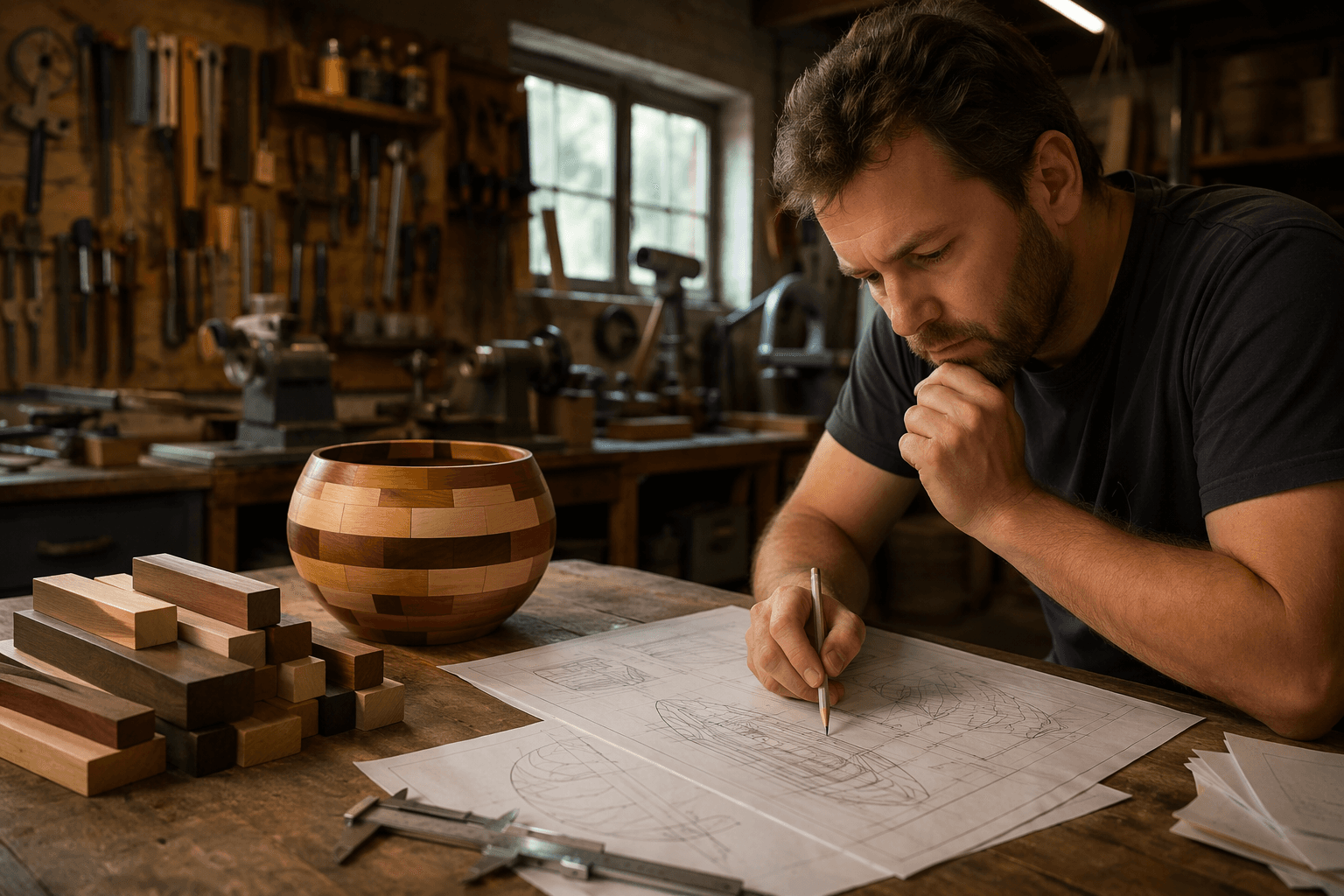
Turner Transforms Massive Mallee Burl Into a Showstopping Finished Piece
Big Sky Carvers' Montana shop turned a massive mallee knuckle into a show piece on March 29, proving big-blank work is as much about reading wood as cutting it.
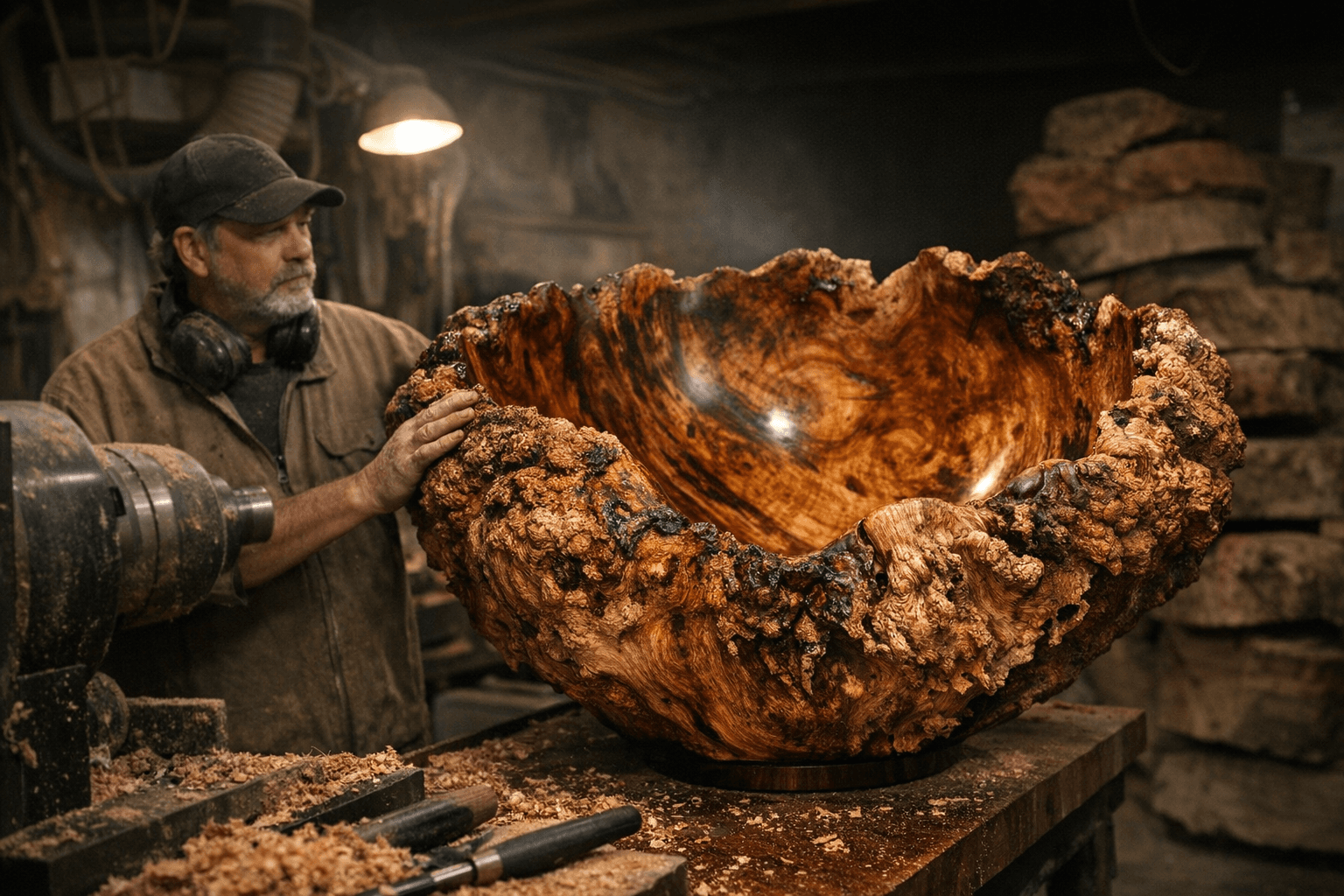
Big Sky Carvers' Montana blog documented a turning session on March 29 that opened with the question most club members rarely face: how do you safely move a massive mallee burl to the lathe before you even think about turning it? The post, titled "Woodturning — Massive Mallee Knuckle Shredder," ran as a gallery-style entry with photos and short commentary, tracking the blank from raw knuckle to a substantial, show-stopping finished piece.
Mallee is a multi-stemmed Australian eucalyptus, and the "knuckle" refers to the gnarled root junction where those stems converge. It is prized precisely because it resists easy reading: grain runs in competing directions, voids open without warning during roughing, and bark or cambium pockets hide stress points that only reveal themselves under tool pressure. On a blank of this scale, those uncertainties multiply with every pass.
Mounting is the make-or-break decision. A faceplate bolted into the densest, most defect-free zone of the blank gives the most reliable anchor for a heavily out-of-balance burl. Once on the lathe, speed must be dialed well below standard bowl-turning range until the blank is trued, a process that demands patience and repeated step-backs to let the wood reveal its next surprise. Staged hollowing follows the same logic: removing material incrementally keeps the balance point stable and prevents the kind of mid-session shift that can end a project or damage a tool.
The Big Sky Carvers post, compact and photo-forward, showed the full arc from raw knuckle to finished work. For a club that runs regular how-tos and shop-floor documentation, it also served as a practical reminder that large-blank logistics, from band-saw handling to safe chucking, are as much a part of the craft as any finishing coat. Large burls consistently draw attention at club meetings and regional shows, and posts like this one make the workflow visible to members who have not yet attempted the scale.
This article was produced by Prism’s automated news system from verified source data, official records, and press releases, then run through automated quality and moderation checks before publishing. The system is built and supervised by the people who set the standards it runs under. Read our full AI policy.
Did this article answer your question?