Turner Transforms Unusual Blank Into Stunning Decorative Piece at the Lathe
When an unusual blank hits the lathe, the real craft begins: reading the wood, deciding what to accentuate or remove, and turning raw potential into an intentional decorative piece.
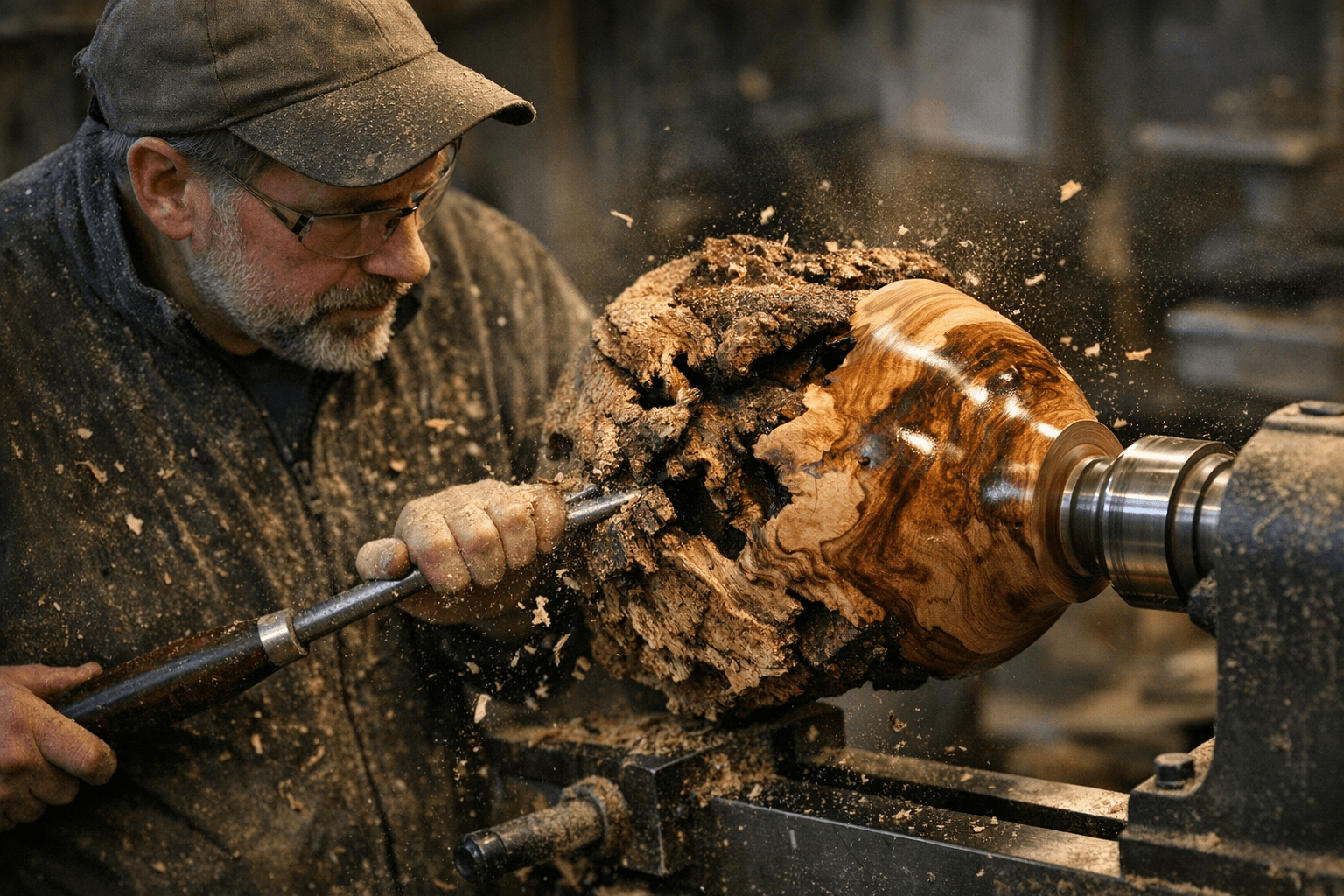
Put an irregular blank on the lathe and you've already made the most consequential decision of the project. Everything else, the tool choices, the form, the finish, flows from one central question: what does this piece of wood want to become?
That's the premise at the heart of a compact but instructive demonstration circulating in the turning community right now, which follows a turner taking an atypical blank all the way through to a finished decorative piece. It's the kind of shop video that resonates because it compresses exactly the decision-making process that separates a turner who gets lucky from one who works with intention. Here's how to apply that same thinking at your own lathe.
Read the Blank Before You Touch a Tool
The first job isn't roughing, it's reading. When ready to turn, inspect the blank for figuring, unusual markings, color or texture changes, or features requiring extra consideration. Now is the time to decide whether to accentuate or eliminate. That fork in the road defines the entire piece.
An unusual blank might carry bark inclusions, spalting, burl pockets, voids, or bird's-eye figure. None of these are automatically problems. The challenges presented by blanks with unusual characteristics, including bark inclusions, burl, spalting, quilting, voids, and other figured grain conditions, are features that experienced turners come to enjoy. A piece of embedded bark, for example, could either be stabilized with adhesive or eliminated by keeping it out of the planned turning. The key is making that call deliberately rather than hoping for the best once the chips start flying.
Preparing a turning blank involves selecting the right piece of wood, ensuring it is properly dried to reduce moisture content, and cutting it to the appropriate size and shape for your lathe project. With an unconventional blank, that preparation stage is also when you assess balance, figure out the strongest axis for mounting, and identify any structural concerns before the lathe is ever switched on.
Mounting an Off-Square or Irregular Blank
Mounting an unusual blank demands more care than dropping a tidy cylinder between centers. The reason you should take the time to center a blank is so that it is balanced on the lathe and you obtain the highest yield of material. It's also less dangerous to have the blank balanced, and it is less likely to fly off the lathe.
Starting a lathe at high speed with an unbalanced blank can cause dangerous vibration or even send the piece flying. Always begin at the lowest speed and increase gradually once the blank is round and balanced. For a true irregular, that initial roughing phase at slow speed is non-negotiable.
For your first cuts, set the tool rest 1/8″ to 1/4″ away from the work, even with the center of the lathe axis. Always turn the piece by hand to ensure that the rest is clear of the work before turning on the lathe. With an odd-shaped blank, that hand-rotation check is especially critical because the blank's profile may extend unevenly past where a round blank would clear cleanly.
The Roughing Phase: Commit to a Cylinder
A roughing gouge transforms a square blank into a cylindrical shape, and for anything non-standard, it earns its place at every pass. Fundamental techniques include roughing, shaping, smoothing, and parting, with roughing removing the corners of a square blank to create a cylinder. The goal at this stage is balance, not beauty.
There's one cut direction tip that pays dividends specifically with off-square or irregular stock: when turning anything that is not round, for the outside edge, always cut in from the edge, not out from the wood, otherwise you are just about guaranteed to chip out the edge. Burn this into your muscle memory before you start on anything unconventional.
Turning tricky wood is the opposite of production lathe work. Every piece is unique, and the best results come when you don't rush. It's important to stop the lathe frequently to examine the blank and see how it is reacting to the tooling or sanding, and with the work stationary, new figuring or unusual characteristics may be revealed.
Shaping With a Design Intention
Once the blank is round and the lathe speed can be brought up, the decorative decisions begin in earnest. The form for a purely decorative piece is liberated from functional constraints, which sounds like freedom but can actually make the design challenge harder. A bowl must hold things; a decorative vessel only has to be compelling.
Adding decorative features such as beads, grooves, or textured patterns increases visual appeal. Combining different wood species for multi-wood pieces creates striking contrasts and elevates the artistry of the piece. If your unusual blank carries strong figure, let the wood lead: a heavily spalted or burl section often dictates an organic, asymmetrical form far better than a forced symmetrical profile would.
One of the most common mistakes is forcing the tool through the wood. A gouge is designed to slice, not pry, and pushing too hard can lead to chatter, catches, or a ruined surface. Let the sharp edge do the work by making light, controlled passes. Taking multiple shallow cuts is slower, but it produces a smoother finish and requires less sanding.
Keeping Tools Sharp Through the Process
Unusual grain structure, interlocked figure, and inclusions all punish a dull edge far faster than straight-grained domestic stock does. Sharp tools are essential with any kind of turning, and with tricky wood even more time at the grinder is required. A sharp cutting edge will help keep a bark inclusion intact and enable you to shape the workpiece with more control and less feed pressure.
The habit to build: sharpen before you think you need to, not after the surface tells you that you've waited too long. The sharpening mantra shared among experienced turners is: cutting beats scraping beats sanding, and the instruction to "sharpen often, cut clean" reflects just how central edge maintenance is to the entire process.
Surface Refinement and Finish
With the form established and any inclusions or character features preserved as intended, surface work begins. To achieve a smooth surface, sandpaper ranging from 120 to 400 grit is used, followed by finishing oils or waxes to protect the wood and bring out its natural beauty. On a piece with heavy figure or natural edges, work through the grits carefully and by hand in any areas the lathe rotation can't reach evenly.
The finish choice matters for a decorative piece just as much as for a functional one. Oil finishes penetrate and emphasize grain and figure without building a thick film that obscures the wood's texture. Wax over a sealed surface adds depth and sheen. Either way, the finish is the last amplifier of everything you've done to honor what that unusual blank had to offer.
What Unusual Blanks Teach You
Many finished pieces that provided various lessons in what not to do are still unique and beautiful; they just aren't good enough for some turners to sign and sell. Don't be discouraged if a tricky woodturning project doesn't come out as planned. It takes practice and at least a few mistakes to get a feel for this kind of turning.
The turners who consistently produce striking decorative work from atypical stock aren't working with better raw material than everyone else. They're asking the right question at the start and committing to an answer: read the blank, decide what stays and what goes, mount it safely, rough it down with discipline, and then shape toward an intention rather than away from a problem. That's the whole process, and it begins the moment the blank lands on the bench.
This article was produced by Prism’s automated news system from verified source data, official records, and press releases, then run through automated quality and moderation checks before publishing. The system is built and supervised by the people who set the standards it runs under. Read our full AI policy.
Did this article answer your question?