Ukrainian turner reverse-engineers linear rail hollowing rig with forum help
A Kiev turner put his linear-rail hollowing rig on the forum bench, and 32 replies quickly turned into a live debate over stiffness, damping and reach.
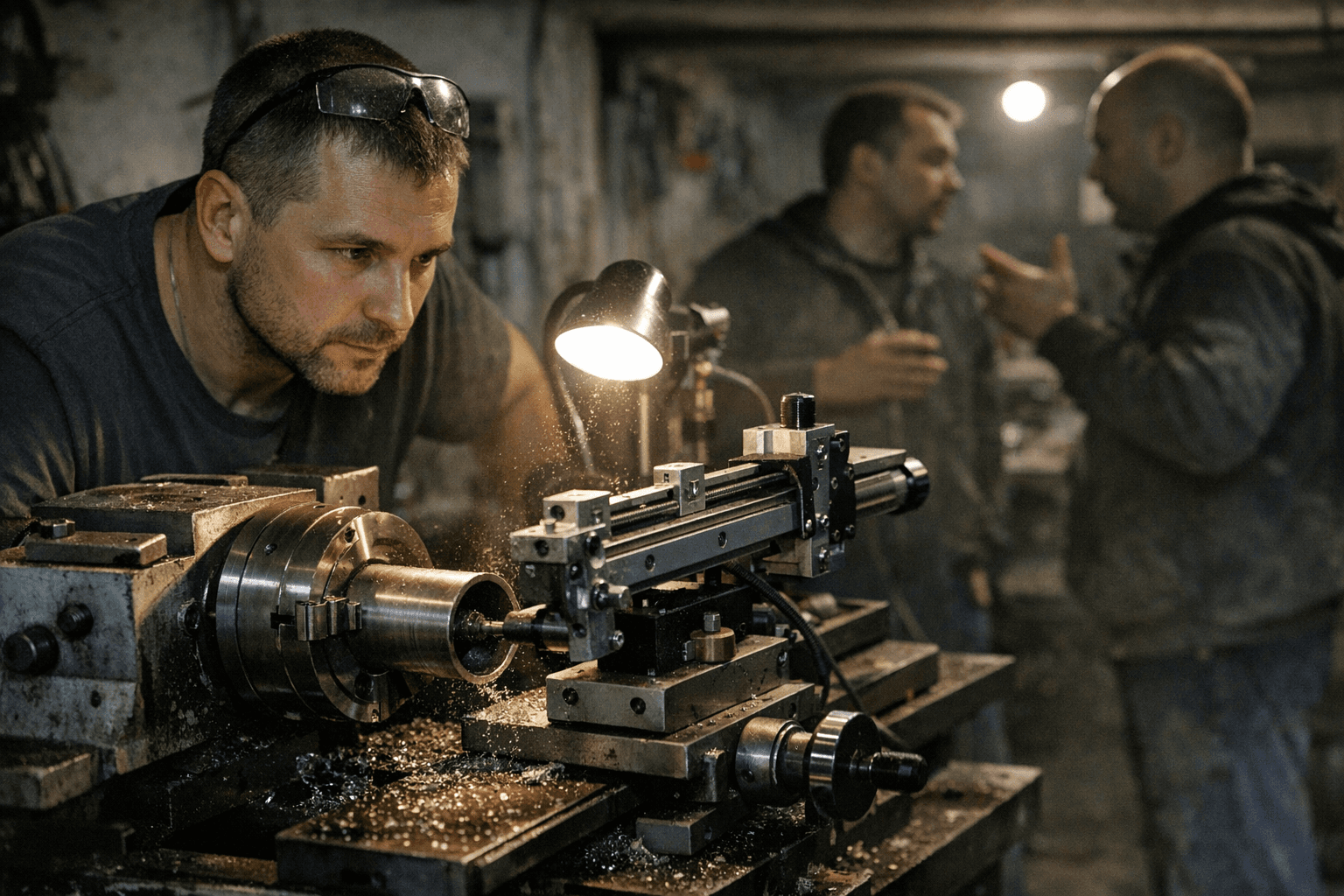
Tymur Kharkivskyi’s hollowing rig did not land on the American Association of Woodturners forum as a polished reveal. It arrived as a work in progress, with the Kiev, Ukraine turner asking other members to pick apart his thinking as he reverse-engineered Alan Trout’s linear-rail system for himself.
That openness is what made the thread snap to attention. The forum index showed 32 replies and 646 views, and Kharkivskyi’s post read less like a finished-project brag than a shop-floor engineering session in public. He joined the AAW forum on April 9, 2026, and his profile showed 29 messages and 15 likes, but the bigger story was the way he framed the build: not as a black box, but as a design he wanted criticized, refined and stress-tested by other turners.
At the center of the discussion was the base material for the guide rails. Kharkivskyi laid out three candidates: steel, phenolic or textolite, and aluminum T-slot profile. Steel would give rigidity, but it would also demand precision welding and surfacing. Phenolic would add damping, but he judged it expensive and difficult to tap. Aluminum ended up as his compromise, the option that best balanced geometry, mounting convenience and practical shop build choices. For readers planning a similar rig, that is the heart of the lesson: the material that looks strongest on paper is not always the one that is easiest to align, fasten and maintain.
He was just as deliberate about the shaft and rail sizing. Kharkivskyi compared 40 mm, 50 mm and 60 mm shaft diameters, then settled on 50 mm while building a 60 mm version in parallel. On the rail side, he moved from size 20 to size 25 and said a 60 mm bar would need at least a size 30 rail. That is the sort of detail deep-hollowing builders know matters, because every jump in diameter changes rigidity, weight and bearing load before the first cut is made.
The wider context helps explain why the thread resonated. Alan Trout’s Pro-Rail Hollowing System has long carried a reputation in the AAW world, where users have called it the “Cadillac” of hollowing systems and described it as able to “easily go 18 inches deep with no vibration.” Trout is also tied to Tobin Hill Turning Studio in the historic Tobin Hill neighborhood on the north end of downtown San Antonio, Texas, and his Syntho-Organic Forms have made him a recognizable benchmark for turners who want depth without chatter. In another sign of how active the community remains, the AAW’s 2026 International Woodturning Symposium is set for June 4 to 7 in Raleigh, North Carolina, keeping the same conversation about tools, technique and design choices very much alive.
This article was produced by Prism’s automated news system from verified source data, official records, and press releases, then run through automated quality and moderation checks before publishing. The system is built and supervised by the people who set the standards it runs under. Read our full AI policy.
Did this article answer your question?