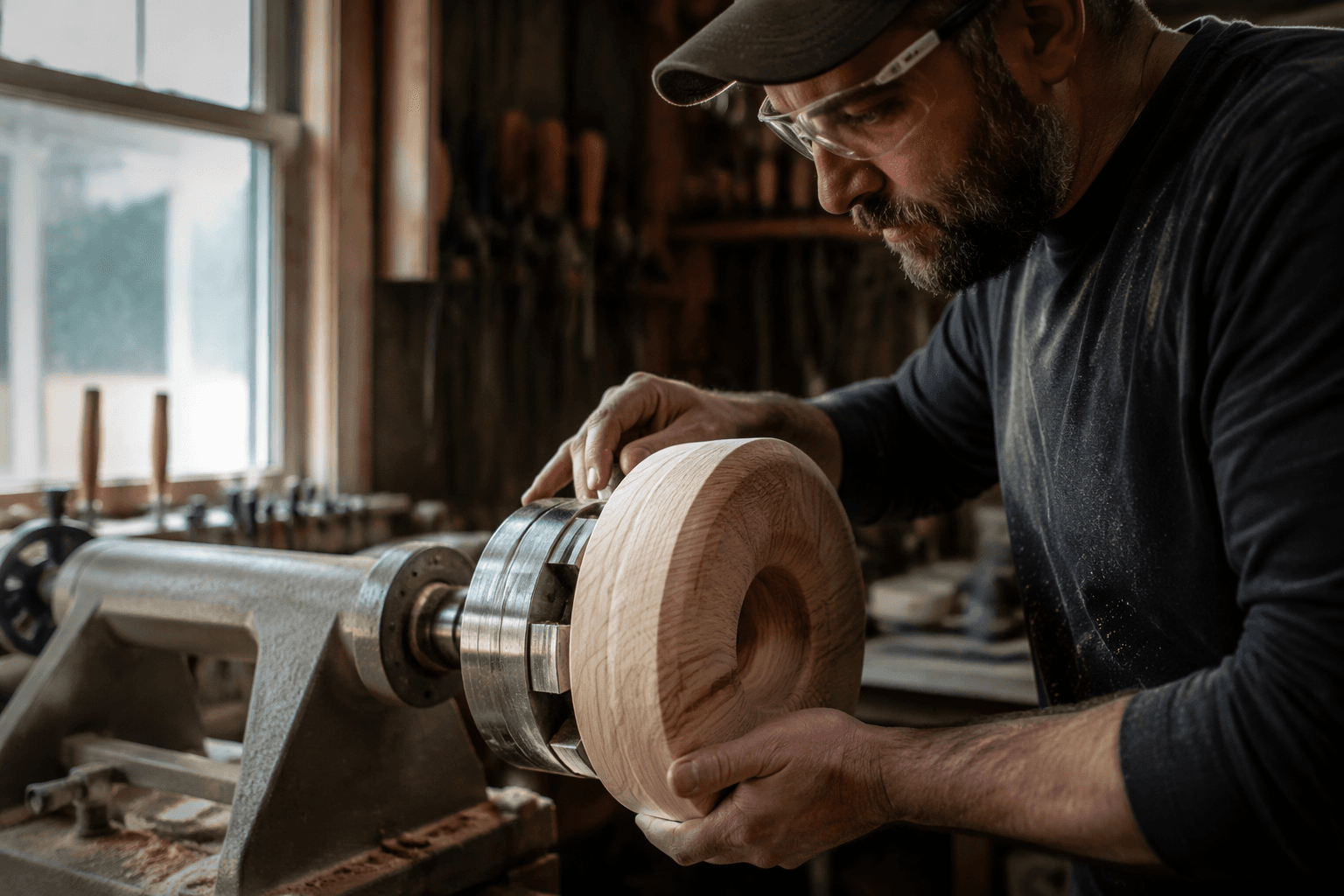
West Riding Woodturners brings ancient craft to a new generation
West Riding Woodturners is using funded, hands-on taster sessions to pull younger beginners into the craft, and the model is easy for other clubs to copy.
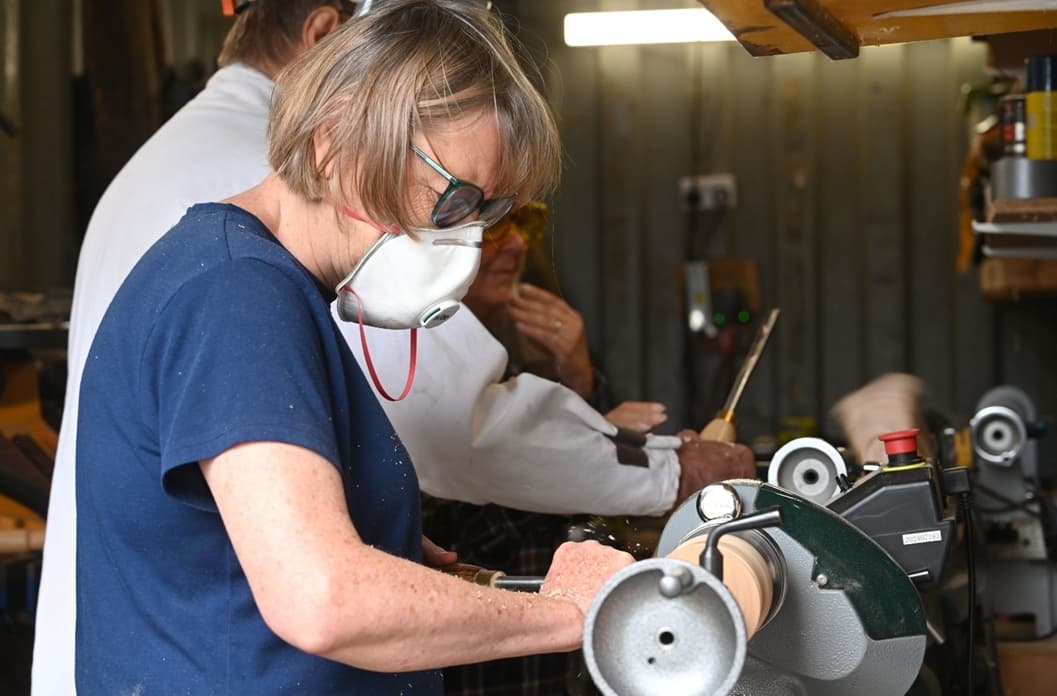
West Riding Woodturners is taking the lathe off the sidelines in Bradford, using new funding to move hands-on sessions beyond its shop in Riddlesden and into the wider district. The club’s pitch is simple and practical: make a first turn feel possible, then keep the door open with free tasters and a welcoming path into membership.
How West Riding is widening the circle
The club’s outreach is not built around a lecture or a glossy brochure. It is built around actual time at the lathe, with hands-on sessions now extending across the Bradford district. The barrier for many newer makers is not curiosity but access, and West Riding Woodturners is removing some of the cost and uncertainty that usually sit at the front door.
The offer of two free taster sessions is the clearest part of the strategy. Two sessions give a newcomer enough contact to move past the first nerves, enough repetition to understand the basics, and enough exposure to decide whether the craft is for them without having to commit money up front. The project is a bid to bring the ancient craft of woodturning to a new generation, and the club is aiming to introduce the art of woodturning to all.
Why the younger-beginner focus works
The club is focusing on younger beginners. Woodturning clubs depend on the steady handoff of skills, and when the average age of a club creeps upward, the whole local ecosystem gets thinner, from demo nights to committee roles to the volunteer turners who show up with a bowl blank and a box of gouges.
The funded taster model fits that problem. A younger newcomer is more likely to try something if the first visit feels low-pressure, social, and hands-on, rather than formal or expensive. West Riding’s approach keeps the entry point short, keeps the instruction practical, and makes it obvious that the lathe is not reserved for people who already know the jargon.
What other clubs can copy before demo season
If your club is trying to keep a turning room busy next season, West Riding’s outreach points to a few moves that are easy to adapt.
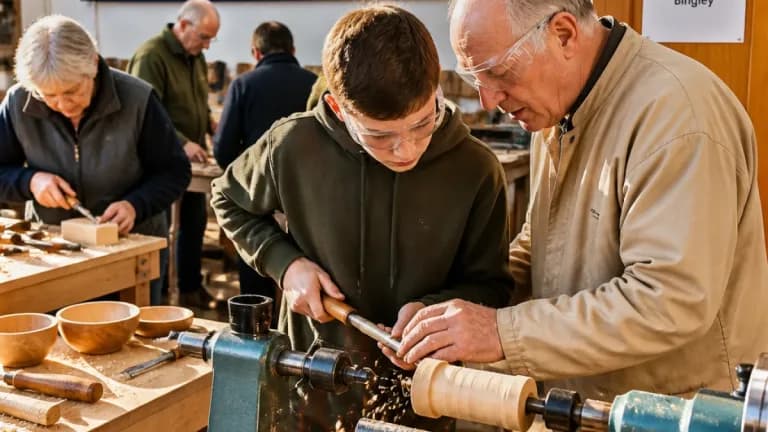
- Use funding to underwrite the first visit, especially for free tasters or introductory hands-on sessions.
- Take the craft outside the club room, with sessions spread across the district rather than only at one base.
- Build around actual turning, not a passive talk, so newcomers leave with a real feel for tool control and timber response.
- Put younger beginners in the invite list from the start, not as an afterthought.
- Give people more than one chance. West Riding’s two free taster sessions do that work better than a single open house ever could.
Prospective members can visit three times before being asked to pay a yearly subscription of £50. That low-friction structure keeps beginners from feeling like they are being pushed into a commitment after one conversation.
Riddlesden gives the outreach a home base
The Riddlesden shop gives people a visible home base for the craft. It gives new turners somewhere to go after the taster session and gives the club a practical anchor for instruction, tools, and follow-up.
This article was produced by Prism’s automated news system from verified source data, official records, and press releases, then run through automated quality and moderation checks before publishing. The system is built and supervised by the people who set the standards it runs under. Read our full AI policy.
Did this article answer your question?