Woodturner Combines Walnut and Purple Resin to Create Striking Bowl
A walnut bowl cast with vivid purple resin shows just how far the wood-and-resin hybrid trend has come — and why turners keep reaching for the pigment pot.
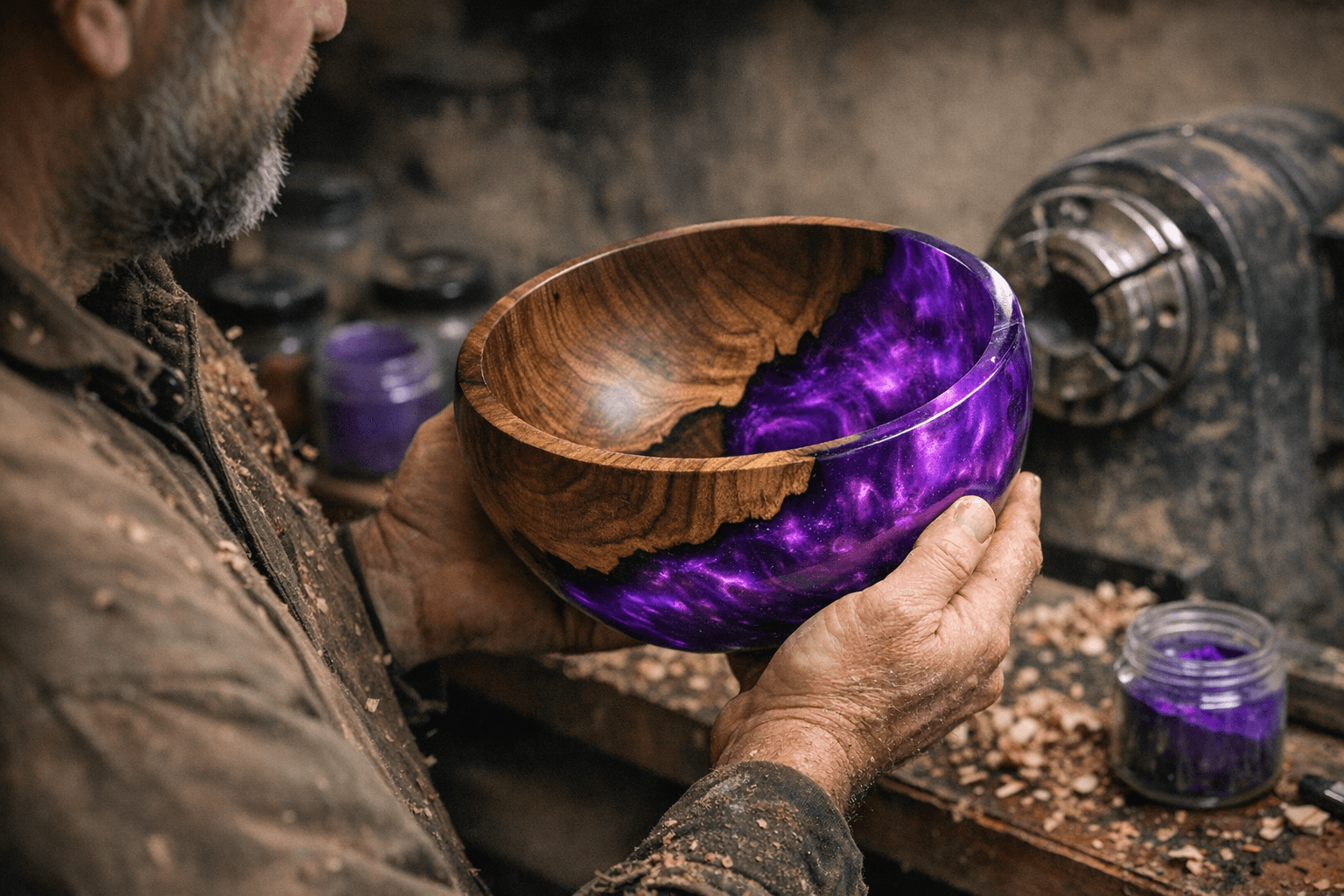
Pairing walnut's rich chocolate grain with a jolt of purple resin sounds like it shouldn't work. It does. A demonstration video posted March 20, 2026 captures the full process of combining the two materials into a single turned bowl, and the result is the kind of piece that stops the scroll.
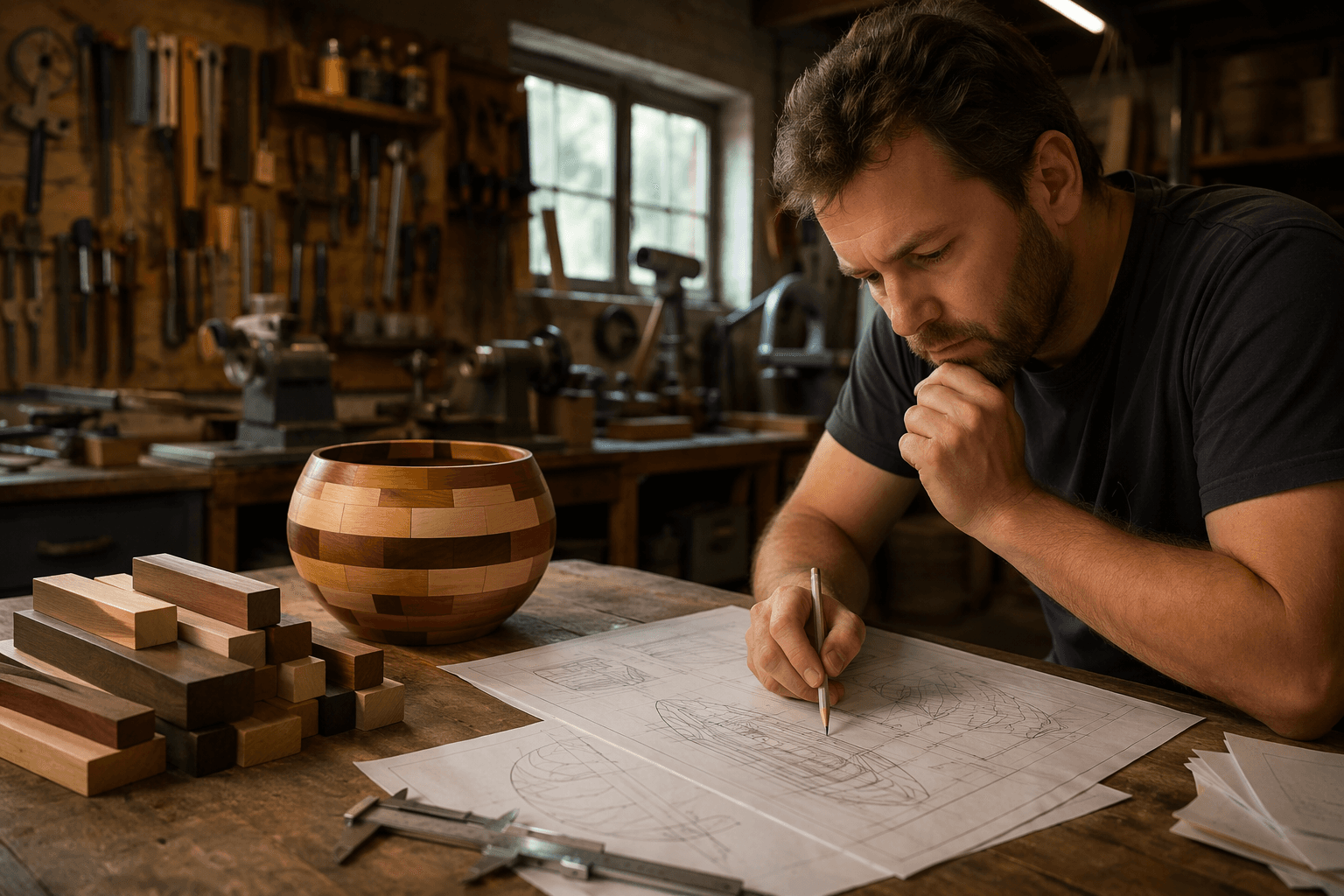
The clip is a tight, efficient example of what's become one of the most active sub-genres in turning: bowl turning where the blank is a hybrid of wood and resin, shaped on the lathe as it spins while specialized tools carve out the form and reveal the patterns and colors locked inside. Walnut is a natural for this treatment. Its deep, straight grain and dark figure read as clean contrast against almost any color, and purple sits at the bold end of that spectrum.
What makes the hybrid approach genuinely interesting rather than just flashy is the technical challenge underneath it. Epoxy introduces a modern twist that requires extra skill, since resin reacts differently under the lathe than wood, demanding precise control to achieve a smooth, glass-like finish, while managing air bubbles, curing variations, and seamless transitions between materials. Walnut is particularly unforgiving in this regard. Finishing has always been a challenge, especially with the walnut/resin combo.
The community has developed a fairly consistent finishing protocol for these pieces. Jim Sprague, whose YouTube channel "Sprague Woodturning" is a go-to reference for this style of work, specializes in inlay and wood/resin hybrids, uses a Hunter Hercules carbide cutter to shape the resin, then sands and buffs with Tripoli, and has settled on Waterlox VOC compliant sealer/finish after testing several options. On the AAW forum, the general consensus is to sand to a higher grit than you would for a plain wood bowl, with 800 as a minimum.
Hybrid bowls made with wood and colored resin are being turned across the country in many colors of resin and many varieties of wood, but walnut paired with a saturated pigment remains one of the more visually arresting combinations, because the wood's own darkness amplifies rather than competes with the resin color.
The March 20 video doesn't reinvent the technique, but it demonstrates it cleanly at a moment when more turners are looking to add color without sacrificing the wood itself. The piece shows what's possible when you treat the resin not as a void-filler or a gimmick, but as a design element with as much intention behind it as the blank selection.
This article was produced by Prism’s automated news system from verified source data, official records, and press releases, then run through automated quality and moderation checks before publishing. The system is built and supervised by the people who set the standards it runs under. Read our full AI policy.
Did this article answer your question?