Activewear loses its single silhouette as new brands win yogis over
Yoga style is splintering into micro-communities, and new labels are winning by selling identity, not just compression.
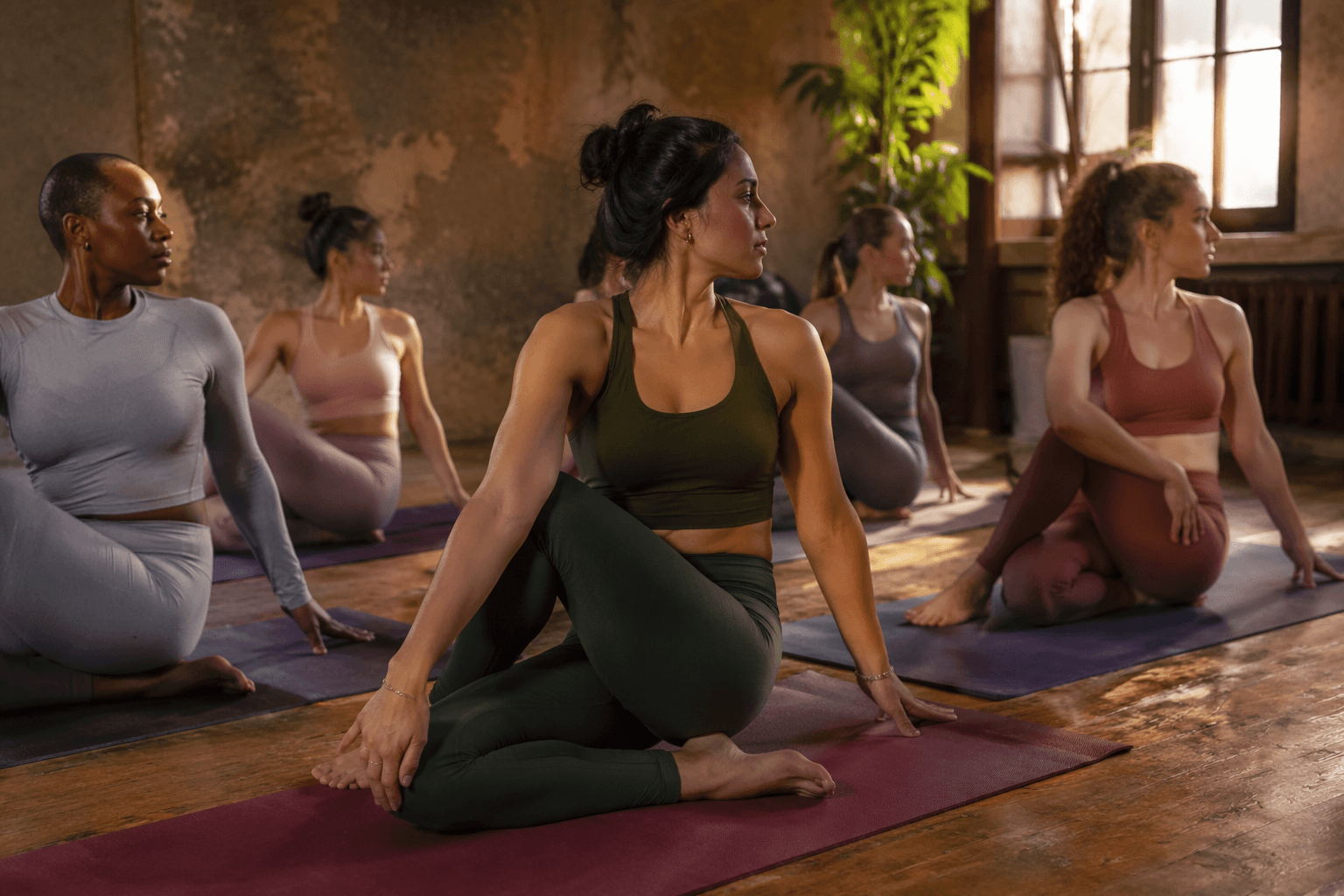
Black leggings, a polished tank, and a familiar logo once served as the default yoga wardrobe. That era is fraying. Activewear is no longer being pulled by a single dominant silhouette or a single dominant brand, and the shift is showing up most clearly in the yoga-adjacent corner of the market, where clothing has always moved between studio and street.
A market that has run out of easy growth
Boston Consulting Group projects activewear sales growth of only 3% to 5% annually through 2029, a pace that signals saturation after years of rapid expansion. The reason is simple enough to feel in any packed drawer: consumers already own enough leggings, bras, layers, and joggers that brands cannot count on category tailwinds alone. They have to earn relevance item by item, and more often now that means earning it through aesthetics, agility, and a sense of belonging.
Yoga clothing is still a major business inside that crowded field. The global yoga clothing market is projected at $31.93 billion in 2025 and $34.37 billion in 2026, with growth reaching $66.34 billion by 2034. North America alone held a 33.27% share in 2025, which helps explain why the conversation around yoga apparel is so commercially loud even as the broader activewear shelf fragments. The category is not shrinking, but it is becoming more specific, and that specificity is changing what people expect a brand to signal.
The incumbent still sets the benchmark
The clearest reference point is lululemon athletica inc., the Vancouver, British Columbia company that built much of the modern yoga retail playbook. In its first-quarter fiscal 2026 results, lululemon reported revenue of $2.5 billion, up 4% year over year, with comparable sales up 1% on a reported basis and down 2% on a constant-dollar basis. It then cut full-year fiscal 2026 sales guidance to $11.0 billion to $11.15 billion, down from an earlier $11.35 billion to $11.50 billion range.
lululemon is still the category’s scale benchmark. Its Power of Three ×2 plan calls for the business to double from $6.25 billion in 2021 net revenue to $12.5 billion by 2026, which means the current slowdown is not just a quarterly wobble. It tests whether a brand built on technical credibility, premium pricing, and studio-to-street polish can still command the kind of growth investors once expected from the entire sector. The company also lowered its earnings outlook for fiscal 2026 to $10.95 to $11.15 per share.
Small labels are winning the feed before they win the shelf
The newer brands making noise are not trying to look like broad-market athletic companies. Set Active, 437, and Oner Active are leaning into founder-led storytelling, faster social content, and tightly curated aesthetics that make each drop feel like entry into a small cultural membership. That approach is especially visible on TikTok, where 437 shows about 173,100 followers and Set Active shows about 164,100 followers and 2.7 million likes. The numbers are not wholesale scale, but they are strong evidence of how social-first loyalty is being built now.
The clearest sales flashpoint belongs to Lindsey Carter’s Set Active. The brand sold $1 million of its resort collection in one hour, a pace that says as much about anticipation as it does about product. Teasers, reminder links, and behind-the-scenes content turned the launch into a live event, which is exactly the kind of momentum smaller labels now use to chip away at incumbents’ share.
What yoga shoppers are really buying now
In yoga, the category has never been only about technical function. A pair of leggings still has to move well in class, hold up in folds and balances, and survive repeat wear, but it now has to do more social work too. The label can suggest a local studio tribe, a sustainability stance, a more inclusive fit range, or simply a fresher visual language than the old aspirational uniform.
This is where the fragmentation of yoga identity becomes visible. One practitioner may want the polished, minimal look that still reads premium on the way to class. Another may want a brand that feels community-rooted and less glossy. A third may be looking for a label that feels native to the platforms where style discovery now happens, with drops and content that feel current rather than corporate. The activewear market is not just splitting by price point; it is splitting by values, and yoga apparel sits right in the middle of that shift.
This article was produced by Prism’s automated news system from verified source data, official records, and press releases, then run through automated quality and moderation checks before publishing. The system is built and supervised by the people who set the standards it runs under. Read our full AI policy.
Did this article answer your question?