Bad Bunny Broke My Fear of Spanish Music in Yoga Playlists
Laura Harold confronted her fear of using Spanish-language music in yoga playlists and highlights how Bad Bunny's "200 MPH" can make classes more inclusive and personally meaningful.

Laura Harold writes that she wanted to incorporate Spanish-language music into her playlist for several reasons, and that fear nearly stopped her. Her account traces a familiar instructor dilemma: wanting to honor culture and community while worrying about backlash. That tension dissolved around an unlikely ally - Bad Bunny's track "200 MPH" and its lyric "Debajo De Sol," which translates to "Under the Sun," a line she thought would be ideal for a Sun Salutation warm up.
Harold's reflection names practical motivations behind playlist choices: personal taste, visibility, and tribute. "I was into a then up-and-coming Puerto Rican artist, Bad Bunny," she writes, and she adds that one goal was clear - "Also, I wanted to make people who might not have felt seen or comfortable in yoga spaces feel seen." She ties music selection to identity when she explains, "Finally, I wanted to honor my Tati and myself in this way. Still, I was scared."
The fear was not abstract. Harold recalls the sting of a past negative reaction when she included a Snoop Dogg song in class. "At some point, I received a negative review for including a Snoop Dogg song in my class playlist," she says, describing how anonymous feedback made her reconsider how much of herself to bring into teaching. "I was new to the brutality of anonymous reviews and I was rethinking my entire existence in the yoga space." The reprieve from that anxiety was slow - Harold considered turning her personality down, playing instrumentals only, or even stopping teaching entirely.
Representation emerges as a central throughline. Harold notes that when she started practicing, "all but one of my talented and amazing instructors were white." That demographic reality informed how students responded to her presence as a teacher. Not long after she began teaching yoga, "a couple of students came up to me after class and told me that they chose my class on the schedule because of my last name. They expressed that seeing a Latino name made them less intimidated about trying something new. I, too, remember doing that 20 years prior."
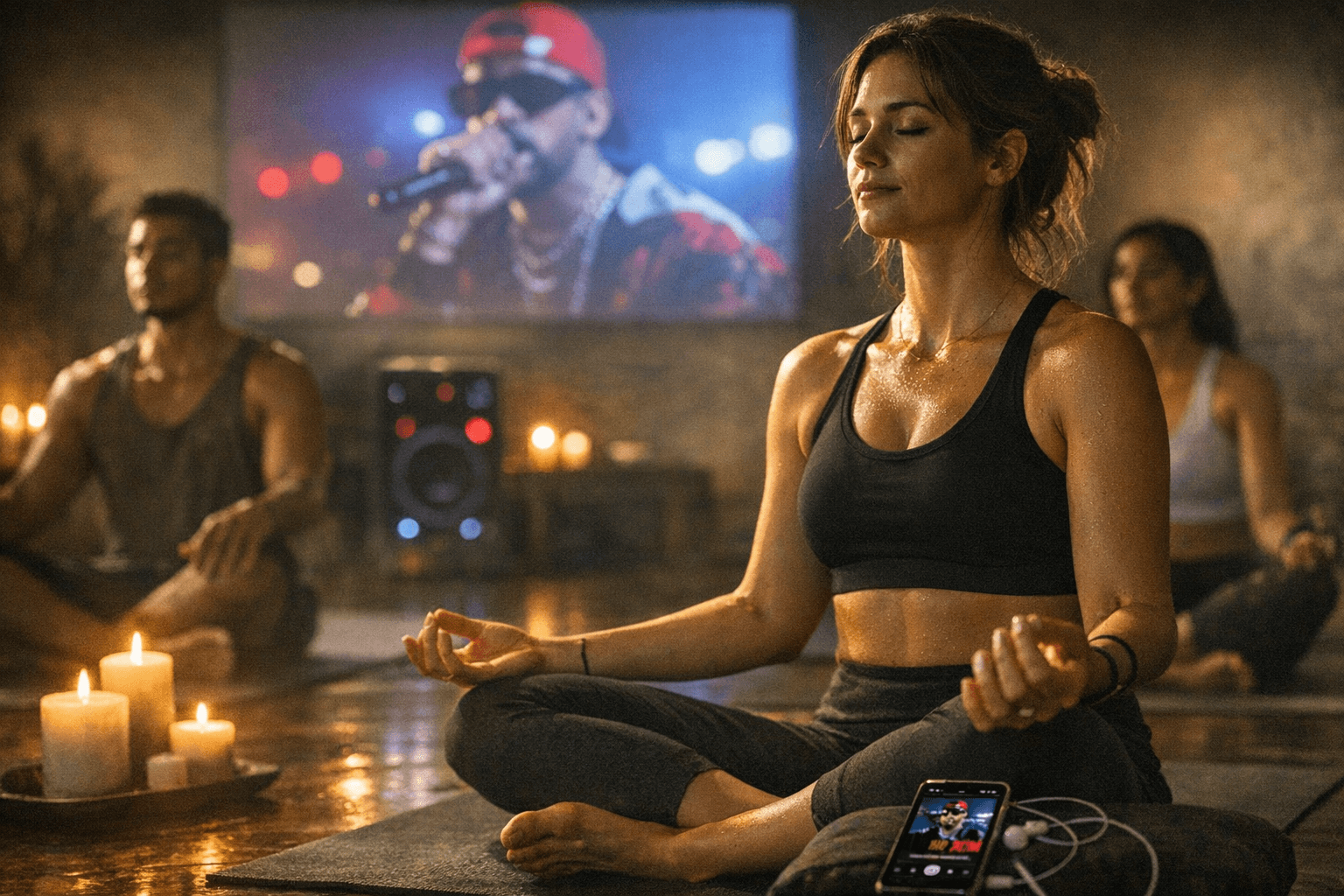
The story also connects to on-the-ground practice: in Phoenix, yoga teacher Anaiz Ochoa teaches with Bad Bunny playlists at Sweatshop Central, illustrating that bringing Spanish-language tracks into vinyasa and Sun Salutation sequences is already part of some studios' sound. For teachers curating playlists, Harold's piece offers a model - match lyrical themes and tempo to the sequence, center inclusivity, and let personal meaning guide choices.
What this means for readers is practical and immediate. Playlist curation is an accessible way to signal belonging and to honor students and teachers who have felt unseen. Whether you teach a drop-in vinyasa or lead a neighborhood community class, consider one intentional Spanish-language song that fits your sequence. Harold's experience suggests that the risk of a single negative review is outweighed by the quiet power of making someone feel seen in savasana and Sun Salutations alike.
This article was produced by Prism’s automated news system from verified source data, official records, and press releases, then run through automated quality and moderation checks before publishing. The system is built and supervised by the people who set the standards it runs under. Read our full AI policy.
Did this article answer your question?