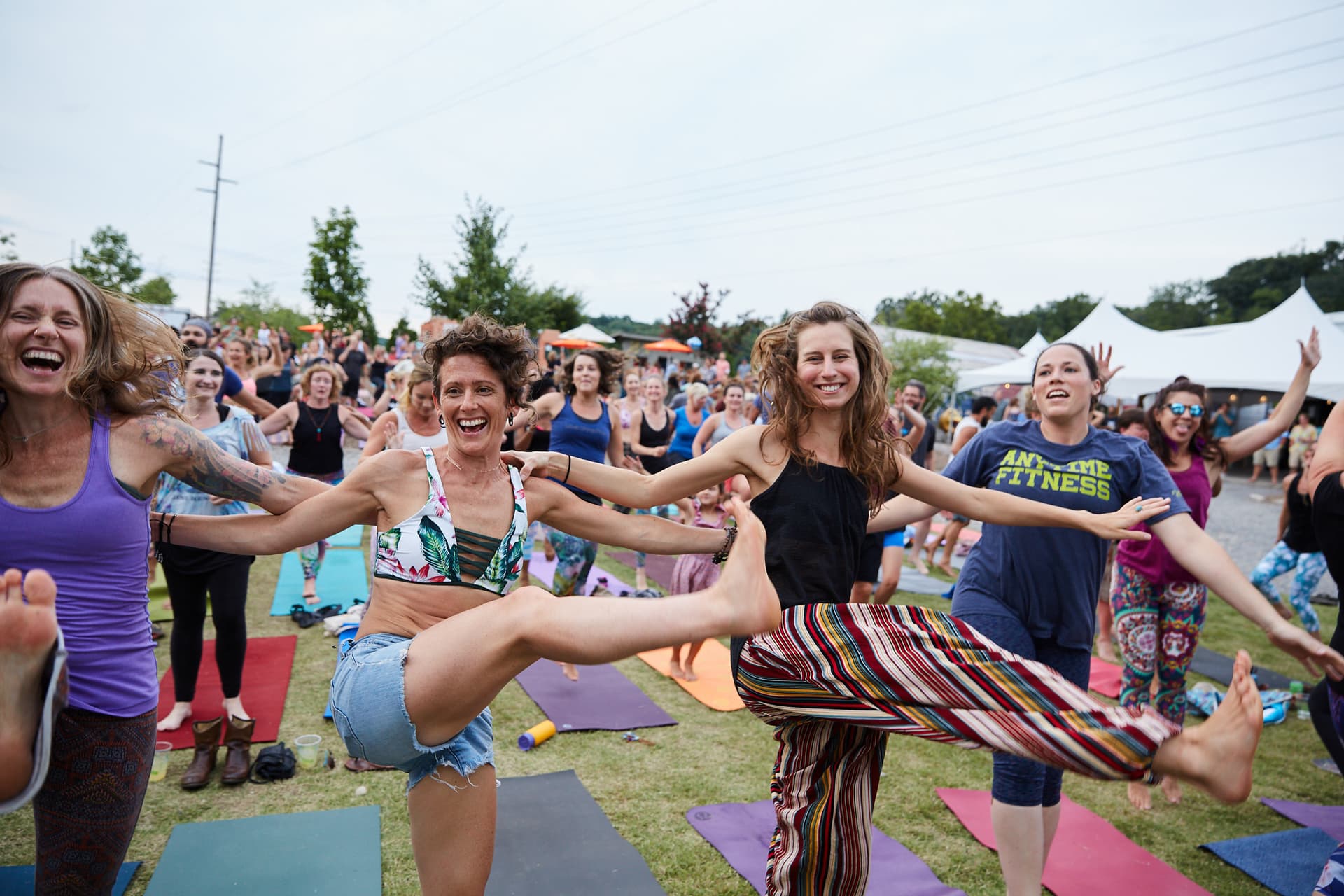
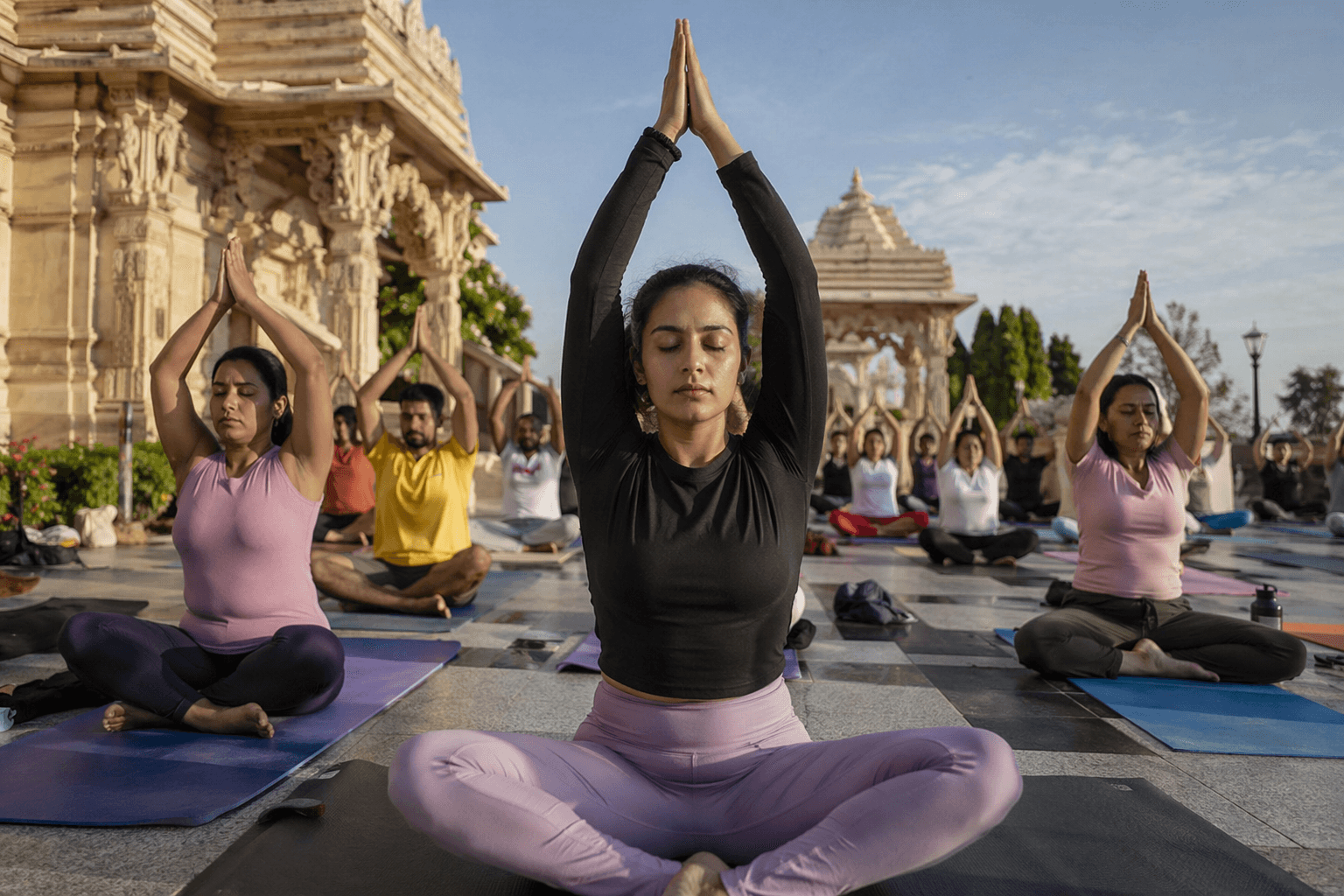
Chair yoga makes classic poses accessible for beginners and people with injuries
A chair can turn yoga into a practical first step. The supported versions keep movement, breath, and balance available to beginners, older adults, and people with injuries.
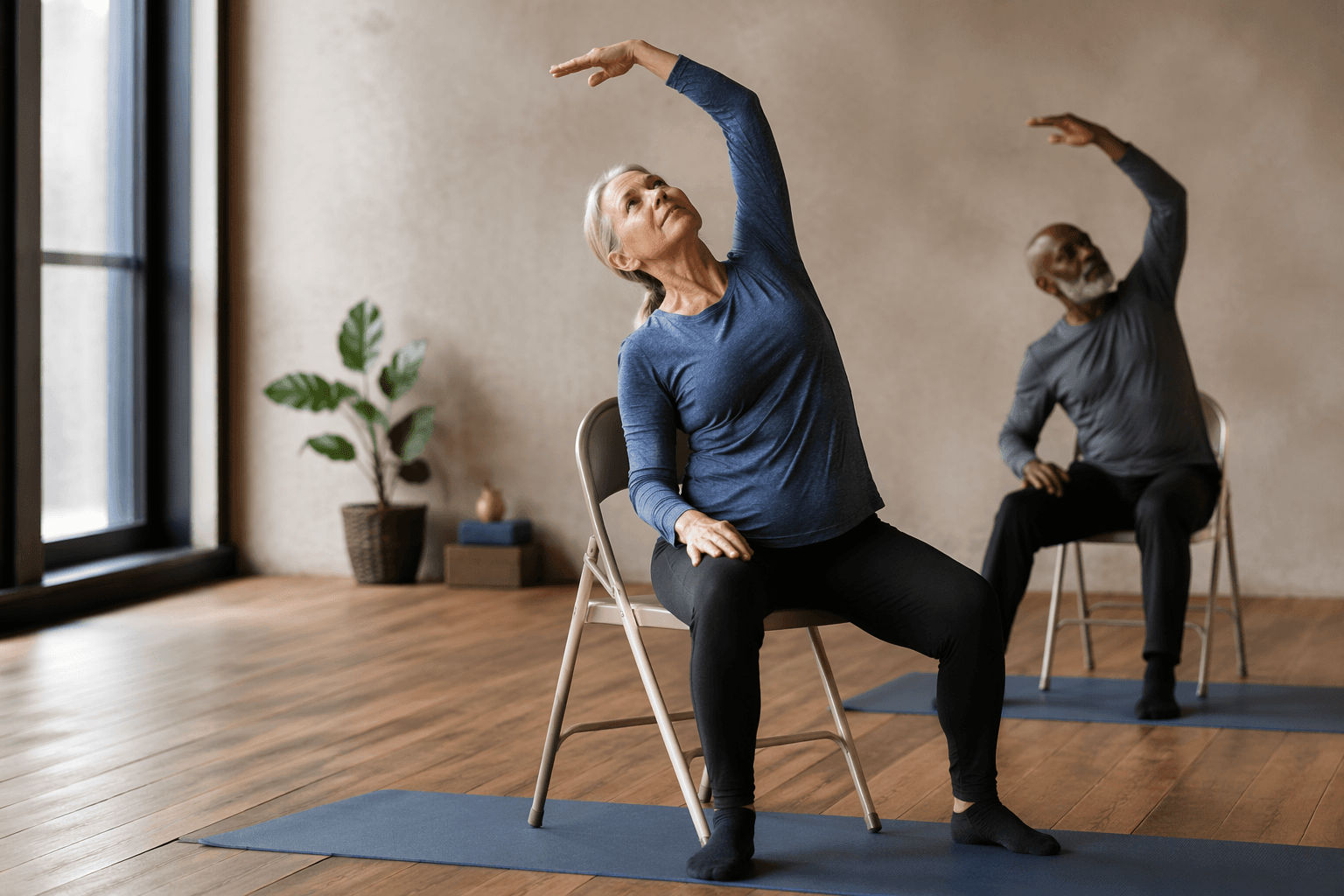
Chair yoga works because it lowers the threshold without lowering the practice. A chair lets you keep the parts that matter most, movement, stretching, breath awareness, and balance, while leaving out the floor work that can make a beginner or someone recovering from injury stop before they start. It also fits real schedules: the same approach can serve people managing illness, older adults building stability, and desk workers carving out a 15-minute break.
A practice built around access, not perfection
The appeal is not that chair yoga is easier in a trivial sense. It is that the chair becomes the tool that makes participation possible for people who are not ready to get down on the floor, need extra support, or want a gentler way into yoga. That includes beginners, people with injuries, and people living with illnesses such as cancer or Parkinson’s disease.
The AP chair-yoga package also points to older women with osteoporosis as a group that can benefit from strength, balance, and flexibility work while minimizing falls. It goes a step further for everyday life: a desk worker can fit a 15-minute workout into the office day, which makes the practice less like a special event and more like a repeatable routine.
The classic shapes still do the work
Chair yoga is not a separate yoga universe. It is a modification strategy that preserves the spirit of familiar postures while adapting them for seated or supported practice, which is why the lineup includes Cat and Cow, Seated Twist, Chair Pose, Downward Facing Dog, Runner’s Stretch, Side Angle, Warrior 2, and Tree Pose.
- Cat and Cow keeps spinal movement accessible.
- Seated Twist preserves rotational work without asking for floor contact.
- Chair Pose keeps the leg and core engagement while the chair adds security.
- Downward Facing Dog, Runner’s Stretch, Side Angle, Warrior 2, and Tree Pose all translate into supported versions that let balance, opening, and strength stay in the practice.
That list matters because it shows how little has to disappear when yoga is adapted well. The pose names are still recognizable, but the entry point changes, and that change is often what makes the practice sustainable for someone with limited mobility.
The public-health case is strong
The Centers for Disease Control and Prevention says adults 65 and older need aerobic, muscle-strengthening, and balance activity each week. It also says regular physical activity can reduce fall risk, support independent living, and improve brain health in older adults, which gives chair yoga a clear place in a weekly routine rather than a once-in-a-while stretch break.
The fall-prevention numbers are hard to ignore. CDC’s STEADI resources say more than one in four older adults report falling each year, and about 41,000 older adults die as a result of a fall. In that context, even a modest chair-based practice that builds steadiness, confidence, and movement consistency earns attention far beyond the yoga room.
What the research says for illness and recovery
For cancer, the National Center for Complementary and Integrative Health draws a careful line. It says no complementary health approach has been shown to prevent or cure cancer, but yoga may help manage cancer symptoms and side effects of treatment.
The American Cancer Society is similarly direct about exercise. For most people, it says exercise is safe and helpful before, during, and after cancer treatment, and it can improve energy and quality of life. That combination makes adapted yoga useful as support, not as a replacement for medical care.
Parkinson’s disease brings another layer of promise. A randomized controlled pilot study found significant improvement in Unified Parkinson’s Disease Rating Scale scores after 12 weeks of yoga, which suggests that measured, consistent practice can affect function, not just mood. A separate chair-yoga trial in older adults with multiple long-term conditions found the intervention feasible and interesting, but not definitively clinically effective, a reminder that the evidence is encouraging but still developing.
Why chair yoga keeps showing up in bigger conversations
The broader reach of yoga helps explain why chair work keeps gaining ground. The United Nations proclaimed June 21 as the International Day of Yoga in 2014, and the observance was endorsed by a record 175 member states. The World Health Organization says the day exists to raise awareness of yoga’s benefits, and it also frames yoga as something that can be practiced anywhere, at any time, by anyone regardless of age, gender, culture, or nationality.
That global framing matches what has happened in the United States, where NCCIH says adult yoga participation rose from 5.0% in 2002 to 15.8% in 2022. When participation grows that much, the most important question is no longer who can do the fullest pose, but who can keep coming back to the practice.
Chair yoga answers that question with a chair, a few minutes, and a handful of familiar shapes. It is not a smaller version of yoga so much as a more reachable one, and that is exactly why it belongs in everyday routines, not just on the mat.
This article was produced by Prism’s automated news system from verified source data, official records, and press releases, then run through automated quality and moderation checks before publishing. The system is built and supervised by the people who set the standards it runs under. Read our full AI policy.
Did this article answer your question?