Beginner's Yoga Guide: Styles, Essential Poses, Breathwork, Class Tips
A practical beginner's yoga primer outlines key styles, essential poses, breathwork, class basics, and how to start safely with 2 to 3 sessions per week.
New students can start a safe, sustainable yoga practice by focusing on alignment, breath, and a small set of accessible poses. This article lays out common styles, essential poses, basic pranayama, class tips, and practical steps to choose in-person or at-home options so readers know how to begin with confidence.
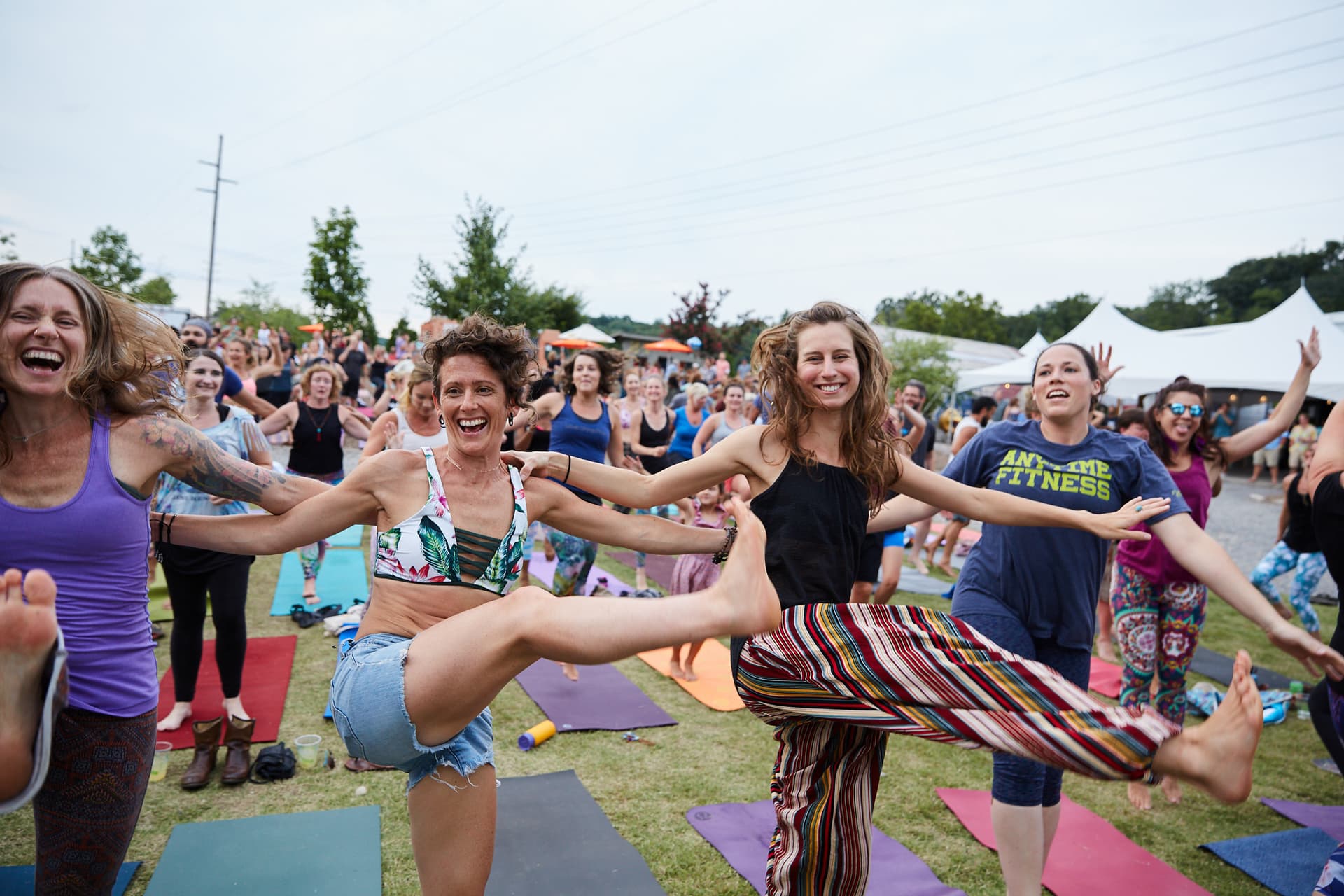
Hatha, Vinyasa, Yin, and Restorative cover broad approaches beginners will encounter. Hatha emphasizes alignment and steady instruction, Vinyasa links breath to movement in continuous flow, Yin focuses on long-held passive stretches, and Restorative prioritizes supported relaxation with props. Knowing these distinctions helps match goals - strength, mobility, calm, or recovery - to class offerings.
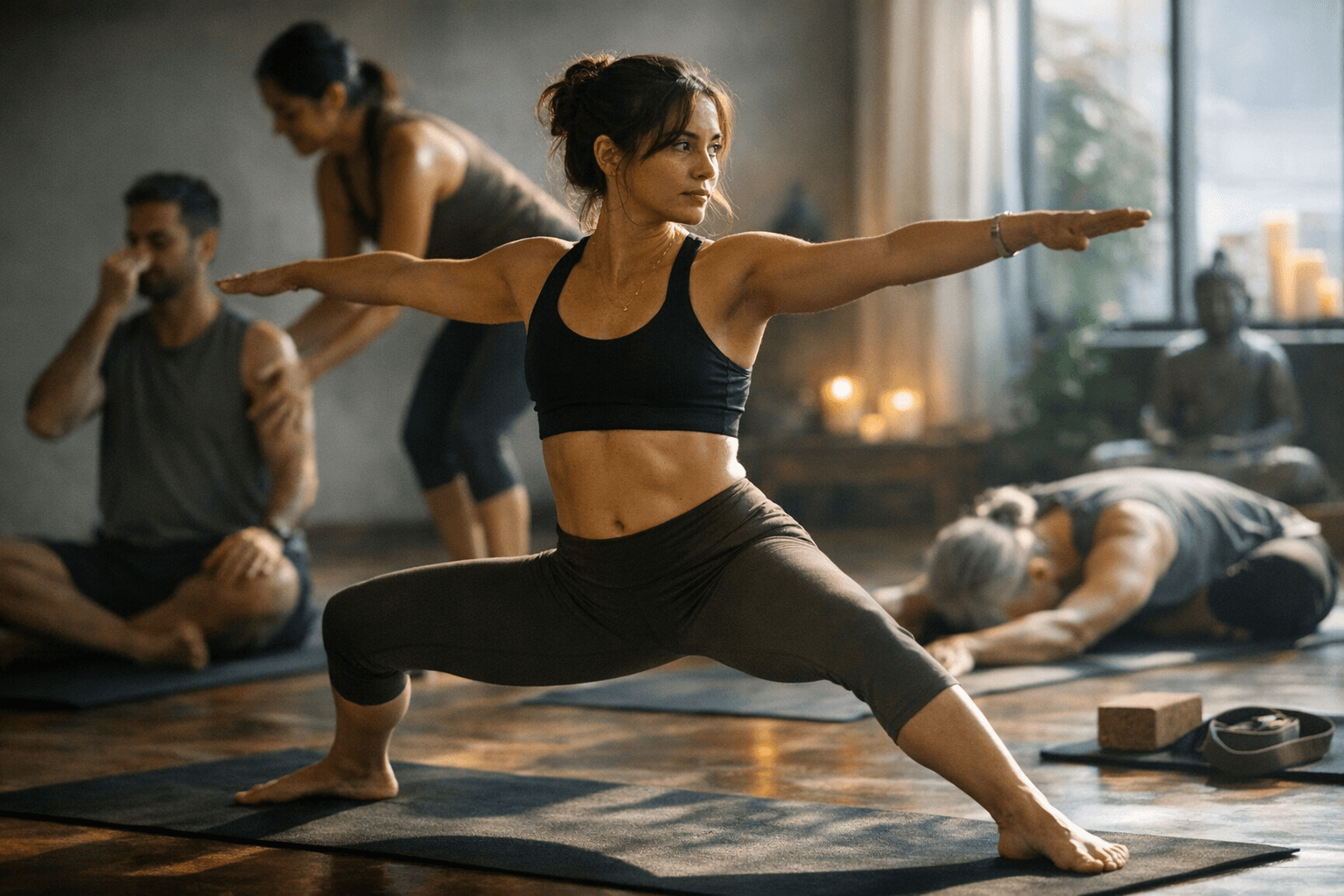
Start with core poses that teach foundation and safety. Tadasana (Mountain) builds posture and balance. Cat-Cow warms the spine and teaches coordinated inhalation and exhalation. Downward-Facing Dog basics provide a full-body stretch and a reliable reset position. Child’s pose offers a restorative rest point, and simple standing balances train focus and ankle stability. Use modifications and props to make each pose accessible; blocks, straps, bolsters, and folded blankets are practical tools for alignment and comfort.
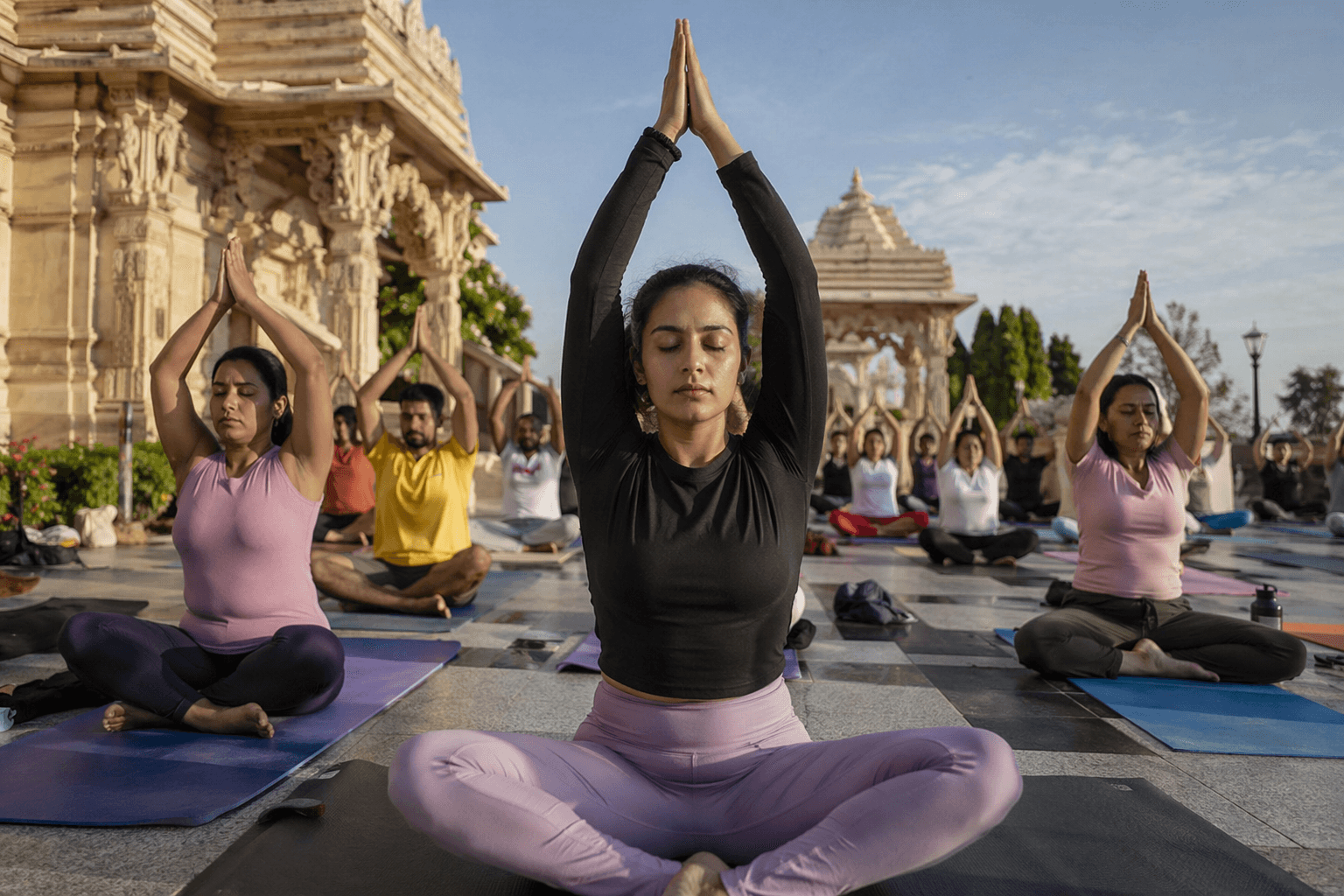
Breathwork matters as much as movement. Basic pranayama exercises teach breathing patterns that support relaxation, movement sequencing, and class pacing. Pair breath practice with familiar poses - for example, inhaling in Tadasana to lengthen the spine, exhaling through Cat-Cow to articulate the vertebrae - to anchor body-mind integration.
Class selection and etiquette shape progress. Seek beginner-level classes or teachers who outline alignment and offer modifications. Approach teachers about injuries before class so instructors can suggest safe alternatives. Decide between studio classes and at-home videos based on need for hands-on adjustments and community versus convenience and schedule flexibility. Use online resources carefully by choosing reputable teachers, checking credentials, and starting with shorter sessions to gauge form and intensity.
Practical recommendations make starting easier. Aim for 2 to 3 sessions per week to build habit without overloading the body. Wear breathable, flexible clothing that allows movement and bring a mat plus any props the teacher recommends. Keep phone notifications off and communicate with instructors about specific concerns or limitations.
This primer is designed to convert curiosity into consistent mat time with clear steps and community-minded practices. Readers who begin with the listed poses, basic pranayama, and a realistic class rhythm will likely see improved mobility and calmer breath within weeks. Keep exploring different styles, ask teachers for tailored modifications, and treat the first months as skill-building rather than performance; steady practice and good guidance set the stage for a lifetime of useful yoga.
This article was produced by Prism’s automated news system from verified source data, official records, and press releases, then run through automated quality and moderation checks before publishing. The system is built and supervised by the people who set the standards it runs under. Read our full AI policy.
Did this article answer your question?