Experts Say Breath Cues in Yoga Are Invitations, Not Rules
Breath cues in yoga are offered as invitations, not strict rules, and many teachers stress student choice to reduce anxiety and preserve agency.
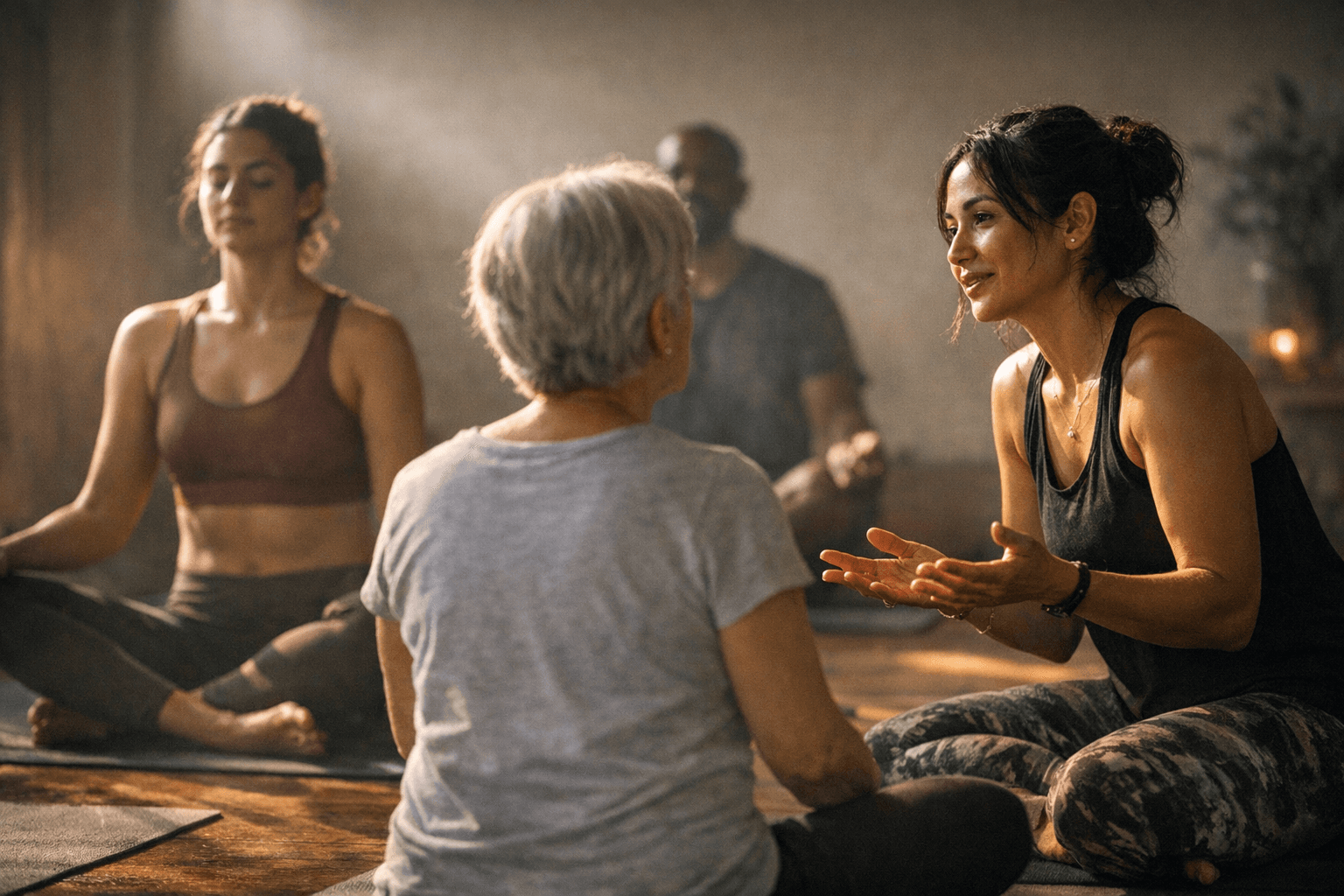
Many yoga teachers still pair breath with movement - inhale to lift, exhale to fold - but that familiar script is increasingly framed as an invitation rather than a mandate. Trauma-sensitive instructors and community teachers alike say offering choice around breath reduces anxiety and preserves agency for students in class.
Ramoutar, a Trauma Center Trauma-Sensitive Yoga (TCTSY) Facilitator who trains teachers, says “students are given the opportunity to explore what works best for them.” Ramoutar uses invitational language in class: “You may notice your breath, or you may not. As your arms come up, you may notice yourself inhaling, or not.” She adds, “Agency is priceless, really. It’s up to each person how they want to move and breathe, never a ‘you must,’” and in group classes she tends to allow students the autonomy to choose when they want to breathe in and out and even whether or not they pay attention to their breath at all.
The inhale/exhale pairings remain a core teaching tool because they map a simple rhythm onto transitions: “Inhale as you reach your arms up. Exhale as you lower your arms down.” Common shorthand like “inhale to lift, exhale to fold” guides movements that expand the chest or lift the body, such as Cow Pose and rising from Standing Forward Bend to Mountain Pose, and cues exhalation for poses that contract the abdomen or lower to the mat, such as Cat Pose, forward folds, and Chaturanga.
Not everyone agrees about how prescriptive cues should be. Ringberg warns that “it creates unhelpful beliefs that you must breathe and move in a specific coordination, which can lead to fear of breathing or moving the wrong way.” That concern captures why some teachers adopt trauma-sensitive phrasing and why others give fewer breath cues during a flow.
Community conversations reflect the variety in practice. In a vinyasa teachers thread one instructor wrote, “Personally, I don’t cue any transitions ... without linking it to the breath. ... So each cue for me is (1) breath; (2) action.” That poster offered examples: “Inhale to warrior two, exhale to extended side angle, inhale to rise to warrior two;” and “inhale arms above the head, exhale into seated forward fold.” Other forum contributors offered classroom-tested tips and simple poses for practice and recovery: “Savasana, translates to corpse posture. Just lie on the ground like a dead body,” “Legs up the wall!!!,” “You can start with some sun salutations every morning/day,” and “Cobra, was a life changer.”
For your practice, treat breath cues as helpful guidance rather than rules. If a cue feels constricting, choose a modification, return to a foundational pose such as Child’s Pose or Seated Forward Fold, or follow the invitation to simply notice breath or not. Teachers can model invitational language in classes, and you can ask an instructor to offer that choice up front. That shift keeps vinyasa flowing while protecting the breathing room students need to learn, adapt, and feel safe on the mat.
Know something we missed? Have a correction or additional information?
Submit a Tip